Graham Waite
Jul 2, 2026

Espresso Briefing: Cambridgeshire Is Growing. Ordinary Life Still Has To Work. |
Cambridgeshire is very good at announcing futures.
New homes.
Fine.
Some of it is needed.
More homes are needed.
But residents are allowed to ask the rude little question underneath all the glossy wording:
Who is Cambridgeshire actually being built for?
Because “growth” sounds exciting until you are the person trying to: get a child into school,
Cambridge East could bring thousands of homes and jobs.
Where can we afford to live?
That is this week’s issue.
Not anti-growth.
Just one big Cambridgeshire question:
If we are building all this, can ordinary local life still work? |
Tiny Poll: What Is Cambridgeshire Being Asked To Absorb Too Fast? |
Pick one.
No essay required.
Although this is Cambridgeshire, so someone will absolutely mention planning policy, water supply and the A14 before lunch.
A. More homes without infrastructure
|
 |
|
Cambridge Airport is not just “the airport” anymore.
It is now one of the biggest “what next?” questions in the county.
The Cambridge East site has been bought for a major new urban quarter, with plans talked about in terms of thousands of homes,
thousands of jobs, a new community, green space, transport links and long-term growth.
On paper, you can see the attraction.
Cambridge needs homes.
But the real-life questions start quickly coming up.
According to recent listings, many ordinary three-bedroom family homes around Cambridge are already being marketed at £500,000–£700,000, while monthly rents for newer family properties can easily exceed £1,700–£2,200.
Affordable housing targets matter, but residents have heard the phrase before.
The real test is whether key workers, first-time buyers and growing families genuinely end up with options they can reach without moving another 20 miles away.
The real question isn’t whether Cambridge needs more homes.
It clearly does.
The awkward question is whether a nurse at Addenbrooke’s, a teacher in Cherry Hinton or a couple starting out in Ely will ever look at these new streets and think:
“That’s for people like us.”
Or whether they’ll simply watch another development arrive with prices that work beautifully on a brochure and less beautifully on an ordinary salary. |
 |
Huntingdonshire’s Housing Growth: Is This Planning Or Just A Numbers Game? |
Now look west.
Huntingdonshire is facing the kind of housing growth that sounds neat on a plan and very different when you start naming places.
Former RAF Wyton.
The numbers being discussed are not small.
Thousands of homes here.
That is the seriously flawed bit no one encouraging these developments seems to be talking about.
Most people know more homes are needed.
But “more homes” is not a magic phrase that solves everything.
Homes need roads.
Tom in Godmanchester put it like this:
“I’m not against homes. I’m against pretending homes are just roofs and front doors.”
Exactly.
The grown-up question is not:
Should Cambridgeshire build homes?
It is:
Can we build places that still work five years after the ribbon is cut?
|
 |
The New Homes Checklist Locals Should Use Before Believing The Brochure |
Before any new estate, urban quarter or village extension gets sold as “vibrant,” locals should ask the boring questions.
Boring questions are where the truth usually hides.
Here is the Cambridgeshire New Homes Reality Checklist:
This is where buyers, renters, estate agents, conveyancers, surveyors and mortgage advisers all matter.
Because the house itself is only part of the decision.
The real question is:
Does the life around it work?
Send us your new-build question they wish they had asked earlier to our team of experts |
 |
Expert Corner: The Question First-Time Buyers Forget To Ask |
First-time buyers are often told to focus on deposit, mortgage rate and monthly payment.
All are important.
But in Cambridgeshire, there is another question that deserves more attention:
What will this home cost you to live in?
Not just buy.
Live in.That means:
service charges,
A cheaper home further out can be a clever move.
It can also become expensive if it adds:
£200 a month in fuel,
Priya from St Ives said:
“Everyone asked what we could afford to buy. Nobody asked what the week would cost after we moved.”
That is the better first-time buyer question. Not just:
Can I afford the mortgage?
But:
Can I afford the life attached to the address?
Ask your local first-time buyer questions or recommend a mortgage adviser who explains the whole picture. |
 |
Looking at buying or selling property in Cambridge click the link to join the Cambridge Home Seller Insider |
 |
East West Rail: Useful Link Or Years Of “You’ll Thank Us Later”? |
East West Rail is one of those projects that sounds completely different depending on where you live.
East West Rail Consultation Hub
The latest route-wide consultation ran from 14 April to 9 June 2026 ahead of a planned Development Consent Order submission in 2027
If you want better Cambridge–Bedford–Oxford links, it can sound like a missing piece of the future.
If you live near the route, it can sound like years of construction, disruption, uncertainty and meetings where someone says “mitigation” as if that fixes your view, road or sleep.
That is why the debate never stays neat and tidy.
People are not just asking whether a railway is good.
They are asking:
who gets the station,
For Cambourne, St Neots, Cambridge, Hardwick, Toft, Comberton, the Eversdens, Shelford and villages along the route, this is not theoretical.
It is home.
Dan from Cambourne put it neatly:
“Every transport promise sounds great until your village becomes a map annotation.”
That might be the East West Rail argument in one sentence.
Does EWR feels like opportunity, disruption or both. |
 |
Bus Franchising: Will It Fix Rural Buses Or Just Create Better Posters? |
Bus franchising sounds promising.
More public control. Better standards. Routes planned around need rather than pure profit.
The mayor Paul Bristow announced the move to public control in February 2025, calling it the biggest overhaul of local buses in forty years
Here are the details of the announcement
That's Fine.
But residents will judge it by Tuesday afternoon, not policy wording.
Can someone in March get to work without begging for lifts?
Can a teenager in a village reach college?
Can an older resident in Fenland get to an appointment?
Can someone in Ely, Huntingdon, St Neots or Wisbech rely on a bus after 6pm?
Here are the details of how the proposed scheme will operate
Amelia from March had the short version:
“I don’t need a perfect bus network. I need one that exists when my life does.”
That is the test.
Not whether franchising sounds clever.
Whether ordinary people notice. |
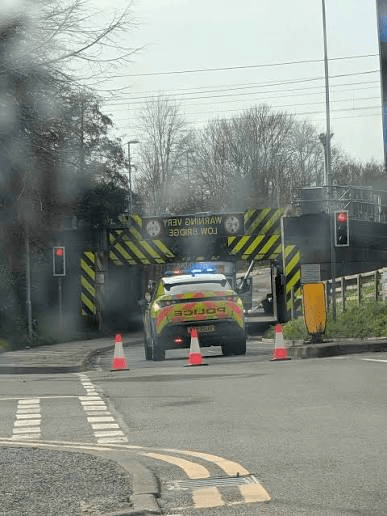 |
Ely’s Bridge Road Railway Bridge: At This Point, Is It A Bridge Or A Local Personality? |
Cambridgeshire Driving Traps Only Locals Understand Every county has landmarks.
Cambridgeshire has Ely Cathedral, King’s College Chapel, Wimpole… and one railway bridge that appears to treat vehicle roofs as light entertainment.
Ely’s Bridge Road railway bridge is the obvious one. But every area has its own trap.
Some quite literally such as the notorious St Ives guided bus trap or those elsewhere on the route.
Plus of course the infamous bollards in central Cambridge.
The awkward turn. The low bridge. The junction where confidence goes to die. The car park exit that turns polite people into philosophers of rage.
Locals know.
Visitors don’t.
So let’s build the county list.
Where is Cambridgeshire’s biggest “locals know, visitors don’t” driving trap? |
 |
Expert Corner: The Survey Question That Saves Buyers From Expensive Optimism |
House viewings are emotional.
People walk in and start picturing: where the sofa goes,
Then the sensible part arrives later.
Survey.
In a fast-growing county, buyers can feel pressured to move quickly.
But speed and certainty are not the same thing. A surveyor’s job is not to make you panic.
It is to help you know the difference between: normal maintenance,
Oliver from Huntingdon said:
“We were so worried about losing the house, we nearly forgot to check whether the house was worth winning.”
That sentence belongs on a mug.Maybe we should start selling them lol.
Before you buy, ask:
What would genuinely stop me?
Submit a house-buying worry or recommend a surveyor/conveyancer who explains clearly. |
 |
Peterborough Landlord Fined: The Renter Safety Question Is Not “Red Tape” |
A Peterborough landlord has been fined after safety and licensing offences.
It is easy for some people to hear landlord enforcement and immediately say “red tape.”
But renters know the other side.
Damp.
This is not anti-landlord.
Good landlords should be more annoyed than anyone when bad ones drag the whole sector down.
Because safe homes should not be controversial.
A renter should be able to ask:
Is there a gas safety certificate?
Sofia from Wisbech said:
“You should not need legal confidence just to ask whether your rented home is safe.”
That is the point.
And with rental reform moving through the system, renters and landlords both need clearer explanations, not more guesswork.
Renters & Landlord Submit safety, repairs or rental questions to our rental experts.
|
 |
Would You Pay More Rent To Keep The Dog? |
Renting with pets is one of those issues where everyone says they understand.
Until the advert says no pets.
Then understanding becomes a locked door. More renters are trying to keep dogs, cats and other pets while finding somewhere decent to live.
Landlords worry about damage, noise, neighbours, cleaning and insurance.
Renters say:
I’ll pay a bigger deposit if allowed.
And here is the uncomfortable question:
Would you pay more rent to keep your pet? £25 more a month?
This is where dog behaviour matters too.
A well-settled, trained dog is easier to argue for than one who treats every hallway noise as a national emergency.
Jade from Cambourne had the blunt version:
“I’d give up the spare room before I gave up the dog.”
A lot of people would.
What would you realistically give up before giving up a pet
|
 |
ATTENTION CAMBS PET OWNERS - sign up for the |
 |
Dog-Walking Fields: The Place You Need Before Your Dog Embarrasses You In Public |
Not every dog is ready for a café.
There. We said it.
Some dogs are “dog-friendly pub garden” dogs. Some dogs are “secure field first, public manners later” dogs.
And some dogs are currently operating at “beloved chaos with paws.”
That is why secure dog-walking fields and quiet training-friendly spaces matter.
They are useful for:
reactive dogs,
Grange Farm at Wittering is one example people may know, but we want a county-wide list.
Cambridge.
And if your dog needs more than a field, that is where proper training support helps.
Not harsh.
Real help so dogs and owners can actually enjoy local places without everyone gripping their latte in fear.
Nominate secure dog fields and calm dog-friendly places |
 |
Cambridge Pride And Strawberry Fair: The County Needs More Than Roads And Housing Rows |
Not everything in Cambridgeshire has to be a planning argument.
Thank goodness.
Cambridge Pride returned to Jesus Green on Saturday 13 June, with a free event, parade, entertainment, stalls, food, drink and community visibility.
Strawberry Fair returned to Midsummer Common on Saturday 6 June, continuing its long-running free, volunteer-led mix of music, arts and community energy.
These things matter.
Not because everyone attends. They matter because places need shared moments. Free events.
But here is the county-wide question:
Where are the equivalent moments outside Cambridge?
What does Ely have that people would fight to keep?
|
 |
Quick Quiz: Cambridge Event Or Village Hall Fever Dream? |
Guess which of these sounds most like something that could happen in Cambridgeshire.
A. A serious planning consultation with eight display boards and no biscuits
Share the most Cambridgeshire event you have attended |
 |
World Cup Watch List: Where Would You Actually Watch A Big Game? |
The World Cup is the kind of thing that reveals the truth about local pubs, bars and big screens very quickly.
Because “showing the football” is not enough.
The real test is:
Can you see the screen?
We are building a Cambridgeshire World Cup watch list.
Here are some of the most popular venues according to our readers
The Grain & Hop Store — Big screens, large groups and one of the obvious Cambridge football choices.
The Tram Depot — Spacious and usually lively for major sporting events in Cambridge city.
The Cambridgeshire Hunter — A local St Neots pub showing all England matches and comprehensive World Cup coverage.
The Lime Tree — If you want football you couldn't pick a better Peterborough pub than this one it's a real sporting community pub with atmosphere and great beer.
The Lord Protector — A Craft Union pub that is popular with footie fans around the local area and villages a place to "enjoy every game" of the World Cup with a strong match-day atmosphere.
The Cobblestones— This March pub prides itself on its welcoming atmosphere and is a good family-friendly pub for enjoying the World Cup.
Sports clubs and cricket clubs across villages often end up being the best family-friendly options of all.
We want to hear your suggestions for ... Ely.
|
 |
Best Italian In Cambridgeshire: This May Start A Family Argument |
Italian food is dangerous territory.
Not because of the pasta.
Because everyone has one place they defend like it raised them.
Some people want old-school comfort.
Cambridge has plenty of obvious names.
So here are a few ideas to get you started
Limoncello Cambridge — Mill Road favourite with Neapolitan-style pizzas and consistently strong local reviews. Many locals treat it as their default answer when visitors ask where to eat.
Mangiare Ristorante Italiano Ely — One of Ely's highest-rated Italian restaurants, regularly praised for friendly service and traditional dishes.
La Strega — A Littleport favourite proving you don't need to be in Cambridge to find excellent Italian food.
Sapori D'Italia — This is a wonderful St Neots Italian with beautiful food and wine. The staff always go above and beyond to make the night special for you.
Amore — In the beautiful market town of St Ives you'll find authentic in this popular Italian restaurant on the river at St Ives we are told this is one to check out.
Fratelli Tavola Calda — Lovely, quaint little Italian. Good menu, lovely service and. A true Italian experience - fresh, inexpensive, and superb food.This restaurant feels like your stepping into Sicily (Note closes in the evenings and has a authentic Italian deli for cooking at home)So we want the county list.
Where would you send someone for Italian in:
Cambridge? Peterborough?
Tell us one place, one dish, and whether it is: date-night Italian,
|
The Café You'd Drive Twenty Minutes For |
Cambridge gets plenty of attention.
But some of the county's best cafés are nowhere near King's Parade.
So before readers start arguing in the comments, here's our county-wide starter list.
Ely
Huntingdon
St Neots
St Ives
March
Wisbech
Whittlesey
And now we need the places we've missed.
Soham.
Tell us:
|
 |
Cambridgeshire Has LVEP Status. Lovely. Now Where Should Visitors Actually Go? |
Cambridgeshire and Peterborough have secured Local Visitor Economy Partnership status.
That means more formal recognition for growing the visitor economy.
Good.
But ordinary people will ask the more direct question:
What would you actually recommend? Because visitor economy strategies are one thing.
A local saying “go here, not there, and book ahead” is often more useful.
If someone visits Cambridgeshire for one day, where are you sending them?
Not just Cambridge.
Yes, Cambridge has King’s College, punting, museums, colleges, cafés and queues that suggest someone has discovered brunch.
But what about:
Ely riverside and cathedral? St Ives by the river? Peterborough Cathedral?
The visitor economy should not only mean “send everyone to Cambridge and hope they buy a magnet.”
It should mean spreading attention to places that deserve it. |
 |
Small Business Squeeze: Which Local Place Would You Miss Tomorrow? |
Think Johnsons of Old Hurst.
Fitzbillies.
The Old Bridge in Huntingdon.
Ely Market on a Saturday morning.
A village pub that somehow knows three generations of the same family.
The garage that explains the bill without making you feel daft.
The café where somebody starts making your coffee before you’ve reached the counter.
We don’t necessarily mean the best business.
We mean the one whose absence would genuinely change your week.
The place you’d notice within days.
The place visitors never find but locals quietly depend on.
Could be:
a café, a pub, a garage, a bookshop, a florist, a farm shop, a hairdresser, a takeaway, a butcher, a bakery, a dog groomer, an independent gym, a children’s activity provider, a market stall, a repair business, a local charity shop, or anything that without even realising makes ordinary life easier, warmer or more interesting. Not “best business”.
The one people would genuinely feel if it disappeared. |
 |
Health Corner: The Ambulance Question Nobody Wants To Test Personally |
The East of England Ambulance Service has been talking about treating more people closer to home where safe, rather than automatically taking every patient to hospital,
In principle, that can make sense.
Not every patient needs A&E.
But patients and families will judge this by trust.
Because when someone is frightened, in pain, confused, elderly, vulnerable or alone, “you don’t need hospital” has to feel safe, explained and backed up.
Not rushed.
That is the difference.
The public can understand better triage.
What they cannot accept is feeling fobbed off when something serious is happening.
So the useful question is:
What would make you trust being treated at home?
A clear explanation?
|
 |
Magpas Air Ambulance: The Service You Hope You Never Need |
Some local services are easy to ignore because needing them is the last thing anyone wants.
Magpas Air Ambulance is one of them.
Based in Cambridgeshire and serving the East of England and beyond, the charity provides advanced emergency care to critically ill and injured people.
It is the kind of service people only really think about when:
there is a crash,
That is why demand matters.
Because when a service is there for the worst minutes of someone’s life, people assume it will be ready.
But charities do not run on assumption.
They run on donations, volunteers, supporters, crews, vehicles, aircraft, medical kit and people quietly doing work most of us would rather never imagine needing.
So here’s a community question:
Which local emergency, health or support charity deserves more attention before people need it? |
 |
Why Are Men Still Waiting Too Long To Get Checked? |
Some health stories are impressive on paper.
New technology.
Specialist teams.
Advanced treatment.
Robotic surgery.
Cambridgeshire and Peterborough are seeing major advances in healthcare, including robotic-assisted prostate treatment at Fitzwilliam Hospital.
That is genuinely good news.
But there is still one stubborn problem that no machine can fix:
People have to ask for help in the first place.
And men, in particular, are remarkably good at convincing themselves that something will "probably sort itself out."
A bit more tired than usual?
Probably age.
Getting up more often during the night?
Probably too much tea.
Something doesn't feel quite right?
Give it another month.Then another.And another.
The awkward truth is that many health conditions become easier to treat when people stop pretending they are too busy, too embarrassed or too stubborn to get checked.
Common symptoms that should not simply be ignored include:
Not every symptom means something serious.
But not every symptom deserves six months of denial either.
Here is a helpful website Prostate Cancer UK
Mark from St Neots had the short version:
It certainly does.
Families know this too. Partners know this. Children know this. Friends know this.
Everyone knows the person who says:
"I'll get it looked at eventually."
Sometimes eventually arrives in time.
Sometimes it doesn't.
The useful message is very simple:
If something changes, ask. If something worries you, ask. If someone you care about keeps putting it off, keep asking. Because modern treatment is improving all the time.
Getting checked is still the first step. |
ARU’s £2.5m Games Facility: Finally, A “Young People Staying Local” Story That Isn’t Miserable |
Not every local future story has to involve roadworks and houses.
ARU Cambridge has opened a new £2.5m games development facility, designed to support computer games design and creative technology learning.
This matters more than some people might think.
Because keeping young people in Cambridgeshire is not only about housing.
It is also about routes into work that feel modern, creative and worth staying for.
Games.
For once, this is not a story about “young people should be more ambitious” from someone whose first house cost three buttons and a handshake.
It is about whether the county gives younger residents a reason to see a future here.
Not just in Cambridge labs.
Zac from Ely said:
“People act like gaming is messing about until someone mentions jobs.”
Exactly.
The question for Cambridgeshire is:
What other skills, courses, apprenticeships or creative routes would help young people build a future locally? |
 |
Drivers With 12 Points Still On The Road: Is “Exceptional Hardship” Being Used Too Easily? |
This is one of those national stories that makes drivers argue immediately.
New analysis has highlighted drivers with 12 or more speeding points still being allowed to drive.
The usual explanation is exceptional hardship.
In plain English, that can mean a court accepts that banning someone would cause serious consequences, often around work, family, caring responsibilities or other dependence on driving.
And yes, sometimes that may be reasonable.
But the public reaction is obvious:
If 12 points does not always mean a ban, what is the point of the points?
Especially in a county where people already complain about:
speeding through villages,
The uncomfortable bit is this:
Cambridgeshire is car-dependent in many places.
Lose a licence in a village and life can collapse quickly.
But if someone keeps driving badly, someone else’s life can collapse even faster.
So let’s ask the awkward question:
Should drivers with 12 points almost always be banned, or should courts keep discretion for exceptional hardship? |
 |
Garage Corner: The Summer Car Check That Saves The “Why Is It Making That Noise?” Conversation |
Summer driving has a way of revealing what winter and the state of Cambridgeshire roads have damaged.
Tyres.
Cambridgeshire driving adds its own little treats:
rural roads,
A decent garage is not just there when the MOT fails.
It is there before the car turns a simple family day out into a group chat apology.
Nina from Whittlesey said:
“I knew the car needed looking at. I just preferred the version of reality where it didn’t.”
We have all met that version of reality.
Useful summer check:
tyres, including tread and pressure, |
Local Myth: “Cambridge Gets Everything” |
Let’s test the argument
Does Cambridge get everything?
A. Yes, obviously |
 |
The “Town That Gets Ignored” Board |
Every county has a place that feels overlooked. In Cambridgeshire, the nominations could get spicy.
March?
We are not asking this just for moaning.
Although moaning is part of the Cambridgeshire local ecosystem and should be protected.
We want to know:
Which place deserves more attention? |
The Reader-Built Cambridgeshire Save-This List |
We are building a county-wide “save this” list.
Not a tourist guide.
A real-life list locals would actually send a friend. We want:
one Italian restaurant worth booking,
This is how Spotlight gets better.
Not by pretending we know every corner of the county.
By getting readers to help build the useful version.
Cambridge.
|
 |
Before You Go: The Cambridgeshire Question We’ll Keep Asking |
This week’s issue started with one question: Who is Cambridgeshire actually being built for?
But maybe the better question is:
Who gets to shape it? Because growth is coming. Homes are coming.
Cambridge wants homes without losing character.
That is the point of Spotlight.
Not to shout from the top.
To build the useful, awkward, funny, practical local conversation underneath.
So send us the thing people should know.
The road.
We’ll keep building the county-wide version with you.
Cambridgeshire does not need more glossy promises from local and national government who are more interested in staying in their jobs than getting locals a better life.
It needs places, services and businesses that still work when ordinary life turns up. |
|