Cambridgeshire Spotlight
|Cambridgeshire Spotlight

Subscribe

The Cambridgeshire changes that sound better than they feel

|
Cambridgeshire Spotlight

Cambridgeshire Spotlight

Archives

The Cambridgeshire changes that sound better than they feel

The Cambridgeshire changes that sound better than they feel
If a change only works in a report, it does not work yet. Here’s what that means across Cambridge, Ely, Huntingdon, St Neots, Wisbech and beyond.

Graham Waite

May 19, 2026

If It Only Works On Paper, It Doesn’t Work Yet

This week has a very Cambridgeshire sort of theme.


A city council with no overall control.


A new station that might genuinely change hospital and work journeys.
Food caddies landing in thousands more kitchens.


Renting rules that sound reassuring until you have a dog, a viewing and three other applicants ahead of you.


Fen roads still doing their best impression of sponge pudding.


So we’re applying one test across the lot:


Does it actually work in real life?


Not in a report.


Not in a meeting.


Not in a cheerful update with a picture of someone holding a clipboard.


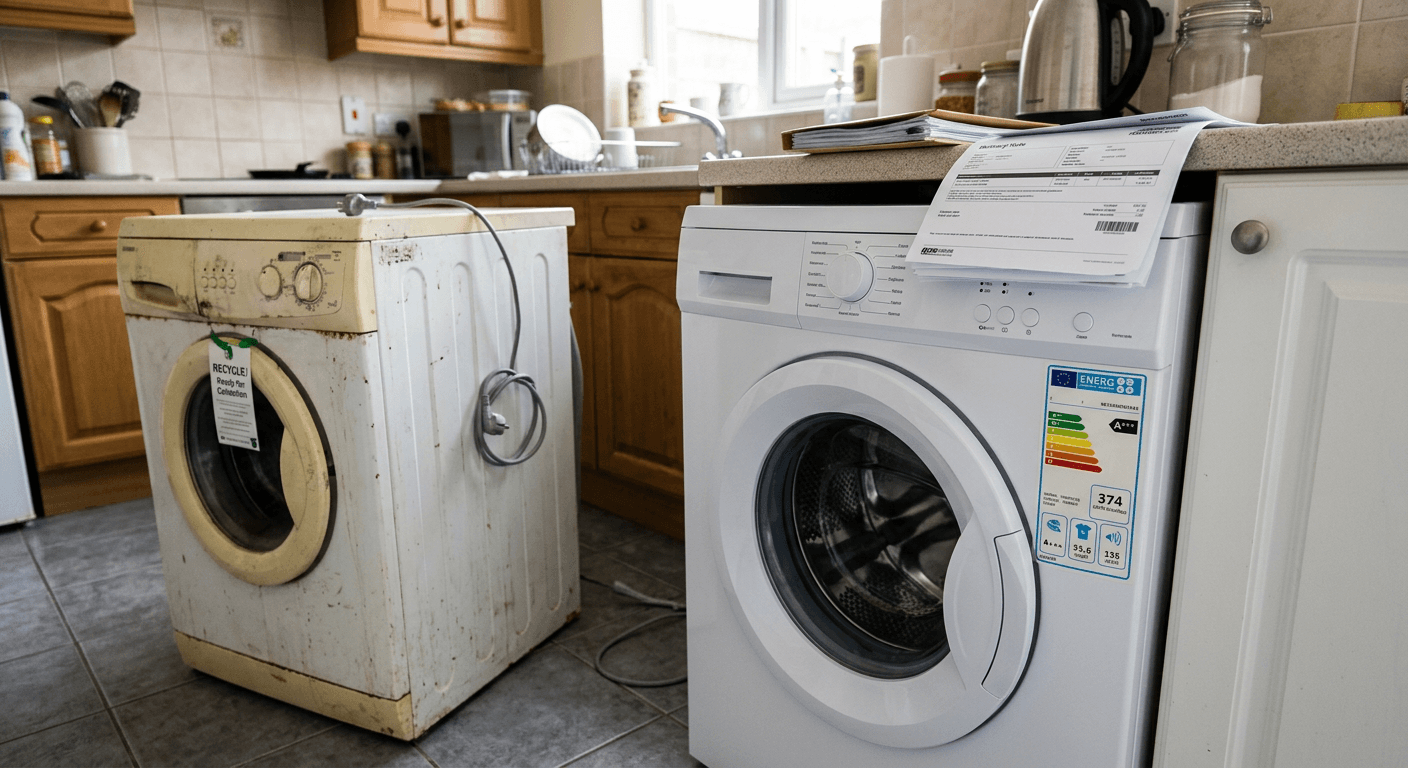
Real life means the kitchen caddy under the sink.


The parent watching a child cycle near a fast junction.


The renter wondering whether mentioning the spaniel makes them less attractive.


The driver near March hitting the same repaired road again.


The family from Ely weighing up whether a Cambridge trip is worth the parking, food and faff.


Let’s get into it.


Cambridge Voted. Now Who Actually Gets Anything Done?

Cambridge City Council now has no overall control after the 7 May elections.


The new make-up is Labour 17 seats, Green Party 12, Liberal Democrats 11, Conservative 1 and Your Party 1. 


For most people, the question is not political theory.


It is much simpler:


Does anything get fixed?


If you live in Arbury, Cherry Hinton, Romsey, King’s Hedges, Queen Edith’s, Trumpington or Newnham, the daily test is not who can win the best argument in the chamber.


It is whether bins are collected properly, whether planning feels joined-up, whether public spaces feel cared for, whether Market Square ever stops being a long-running group project with paving attached, and whether getting across the city still requires emotional preparation.


No overall control can be healthy. It can mean better scrutiny, fewer pet projects and more open debate.


It can also mean delay, compromise-by-committee and that familiar phrase “constructive discussions” appearing just before nothing visible happens for months.


Cambridge already has clever plans.


Cambridge can produce a strategy document before most places have found the kettle.


The public test now is smaller and sharper.


Can this council make ordinary life feel easier?


Cleaner streets. Clearer decisions. Less transport confusion. Better communication before road changes.


Planning that does not feel like a mystery box. City-centre improvements that people can actually see.


Hit reply and tell us what the new council should sort first: Market Square, parking, housing, cycling, bins, planning, city-centre safety, or something else

The Little Silver Caddy Test

Weekly food waste collections have now expanded across Cambridge and South Cambridgeshire, with more than 48,000 homes receiving the service and more than 400 tonnes collected so far.


That sounds promising.


But the real test is not the press release.


It is the caddy.


Will people actually use it? 


If you’re in a house in Sawston, Histon, Cottenham, Great Shelford, Cambourne or Milton, the new routine might be manageable: scraps in the small caddy, caddy emptied, outside bin collected weekly, done.


If you’re in a flat, shared house, terrace with limited storage, or anywhere with an already full kitchen, it gets more awkward.


Where does it go?
Who cleans it?
Do liners work?
Does it smell?


What happens when one person in the house uses it properly and another treats it like a bin-based dare?


The idea is sensible. Food waste in landfill is a real problem.


 Weekly collection should help.


But schemes succeed or fail on how hard it is to get people to implement it.


A household habit only sticks when it becomes easier than ignoring it.


So the little silver caddy is more than a bin. It is a behavioural test with potato peelings.


Before giving up on the caddy, try the boring fixes first: keep it close to the prep area, empty it before it gets grim, use liners if allowed, agree who cleans it, and do not let it become the place where leftovers go to become a personality.


Tell us how it’s going in your house: useful, ignored, confusing, or already mildly horrifying?

 Cambridge South Is Finally Coming. Great News — Unless You’re Still Trying To Park Nearby

Cambridge South station is due to open on Sunday 28 June 2026, around a year later than originally anticipated serving the Biomedical Campus and offering up to nine trains an hour to central Cambridge, plus direct links including London, Brighton and Stansted Airport. 


That is a big deal.


For workers, patients and visitors heading to Addenbrooke’s, Royal Papworth, AstraZeneca, the Biomedical Campus and nearby sites, this could make a real difference.


But this is Cambridge, so every piece of good transport news arrives with a small “yes, but” tucked behind it.


Yes, the station should help.


Yes, direct rail access to the campus is overdue.


Yes, it could reduce some car pressure.


But if you live in Ely, St Neots, Huntingdon, March, Wisbech, Cambourne, Royston edge or a village with awkward bus links, the real question is this:


Can you get to the useful train without turning the journey into a side quest?


A station is only as useful as the route to it.


If the appointment is at 9.10am, the bus does not line up, the fare feels steep, the child drop-off comes first, or the return journey is awkward, people will still drive.


Not because they hate public transport.


Because being late for a hospital appointment is not a lifestyle choice.


The other risk is pressure around Trumpington, Long Road, Addenbrooke’s Road and the campus itself.


 A station can solve one problem while creating smaller ones around drop-offs, taxis, walking routes, cycle access and nearby parking spillover.


So yes, Cambridge South is good news.


But the proper test is whether someone in Ely, Waterbeach, St Ives, Royston edge or Cambourne can say:


“That actually made my day easier.”


So we’re building a Cambridge South Journey Poll. Would the new station change how you get to Addenbrooke’s or the Biomedical Campus train, bus, car, taxi, bike, or no difference?

The New Renting Rules Sound Great. So Why Are Renters Still Nervous?

The new renting protections now in action sound reassuring: stronger rights around pet requests, no bidding wars above the advertised rent, limits around rent upfront, and clearer landlord response duties.

On paper, that feels like progress.


In a viewing queue, it feels more complicated.


A renter in Cambridge, Ely, Huntingdon, St Neots, Cambourne or St Ives does not just need rights.


They need confidence that using those rights will not quietly push them behind another applicant.


That is the nervous bit.


If you have a dog, a right to request a pet does not magically create a landlord who feels relaxed about flooring, noise, gardens or insurance wording.


If you are applying for a two-bed in a busy market, a ban on bidding above the advertised rent does not remove competition. It just changes where the pressure goes.


And if a landlord has one or two properties and is already worried about costs, regulation and mortgage rates, they may become more cautious, not more flexible.


The risk is a rental market that technically becomes fairer but practically becomes tighter.


That matters in places where decent rentals can move quickly.


Cambridge is already expensive.


South Cambridgeshire villages are not always the cheaper escape they used to be.


Ely, Huntingdon and St Neots can all feel a battle when a good family home appears at the right price.


The law can stop some bad behaviour. It cannot create more homes.


If you rent with a pet, reply PET and we’ll send the pet request checklist when it’s ready. If you’re a landlord trying to understand what you can and can’t refuse, Suzanne at Y-US Lettings is offering a free 15-minute Renters’ Rights conversation.


Would you ask for a pet in writing now, or would you still worry it could count against you?

The Hidden Rental Problem: Homes That Leave And Don’t Come Back Quickly

Here is the bit that may catch people out.


Some landlords may be more cautious about selling rented homes because a property that has been rented, then put up for sale, may not be able to return quickly to the rental market for 12 months from the end of the tenancy if it does not sell.


That sounds technical.


In real life, it could affect supply.


Picture a landlord with one rental house in St Ives, Littleport, Huntingdon or March.


Their mortgage has gone up. Repairs are due. The rules feel harder to manage. They decide to sell.


The tenant leaves.


The house goes on the market.


It does not sell at the hoped-for price.


Previously, the landlord might have put it back up for rent.


Now, that may not be simple.


That home could sit outside the rental supply at exactly the moment local renters need more choice, not less.


This is the awkward part of reform. Rules designed to stop bad practice can still create new caution among decent small landlords.


That does not mean protections are wrong.


It means the knock-on effects matter.


The places most likely to feel it are not only central Cambridge. Ely, Huntingdon, St Neots, March, Wisbech and commuter villages can all feel the loss of a few rental homes when families are trying to stay near schools, work, relatives or transport routes.


The real question is not landlords versus renters.


It is this:


How do you protect renters without shrinking the number of homes available to rent?


Because if the answer is “we’ll find out later”, renters may be the ones paying for the experiment.


If you rent or let a home, tell us what has changed already: more paperwork, more caution, fewer viewings, more questions, or no difference yet?


 Can We Teach Kids To Cycle Safely Before The Roads Teach Them The Hard Way?

Cambridgeshire councillors have approved seeking a new Bikeability cycle training contract for children.


That sounds sensible.


But cycle training has to pass the wet Tuesday morning test.


A child can learn road position, signalling, junction awareness and confidence.


Then they still have to deal with parked cars, hurried drivers, narrow roads, awkward crossings, school-run traffic and junctions that appear to have been designed by someone who has only encountered a bicycle in a policy diagram.


For families in Ely, St Neots, Huntingdon, Cambourne, Histon, Milton, Sawston and the edge of Cambridge, cycling can be brilliant.


It can also be nerve-shredding.


The difference is route quality.


A school route with slower roads, decent crossings and fewer pinch points feels like independence.


A route with fast traffic, blind bends and drivers squeezing past feels like a test nobody asked for.


So yes, Bikeability matters. It helps children understand the road before the road teaches them the hard way.


But parents will still make the final call based on one question:


Would I let my child do that route alone at 8.20am in drizzle?


That is the real test.


 Name the crossing, road, junction or school area near you that needs sorting before more children will realistically cycle.


Why Some Fen Roads Feel Like They’ve Been Repaired With Hope And Biscuits

Peat soil-affected roads can cost up to five times more to repair, and a £1.5m trial is testing better repair methods.


If you drive around the Fens, this will not surprise you.


There are roads around March, Wisbech, Chatteris, Whittlesey, Manea, Littleport and the villages between them where the surface seems to develop a personality.


One month it is patched.


The next month it is dipping, cracking or wobbling again.


Your car hits it and your bank account feels a draft.


The issue is not always lazy repairs.


Peat moves. Ground shifts. Water matters.


Heavy vehicles matter. Weather matters.


Repairing a road on difficult soil is not the same as repairing a road on firmer ground.


But that does not make it less irritating when your tyre finds the same crater again.


Drivers around Fenland are not only annoyed by bumpy journeys.


They are worried about tracking, tyres, suspension, detours and the feeling that a “repair” can sometimes mean “see you again in six weeks”.


If a road is expensive to fix, patching it badly is not saving money.

It is paying repeatedly for disappointment.


That is why the trial matters.


The best repair is not the one that looks tidy the day after it is finished.


It is the one that survives winter, lorries, school traffic and whatever the ground underneath decides to do next.


Lets help our fellow locals tell us the road, town or village, what happened, and whether it has been patched before. Then we will give you all heads up on anywhere to avoid if possible.

Cambridge Food & Drink Week Wasn’t Really About One Week - Where To Eat When You Don’t Want To Waste £12.

Cambridge Food & Drink Week ran from 9–17 May, which means by the time you read this, the bunting, trails and special menus may already be fading into the background.


But the bigger question remains:


Which places made people want to come back?


That is the bit that matters.


A food week can get someone through the door once.


 The real win is when they remember the place two Tuesdays later, when they are tired, hungry and about five minutes from buying another limp sandwich out of habit.


That is the challenge for cafés, restaurants, pubs and food stalls now.


Not just “were people out?”


But did they spend enough?


Did they discover somewhere new?


Did they bring a friend?


Did they take a photo?


Did they tell someone else?


Did they think, “Actually, I’d go back there”?


Because for a lot of people, casual lunch has changed. A £10–£12 lunch is no longer an everyday habit.


It is a choice. If the coffee, sandwich, slice, salad, curry, bowl or market lunch does not feel worth it, people notice.


Cambridge has the obvious food clusters: Market Square, Mill Road, the station area, the lanes around the centre, the cafés near King Street and the independents people already swear by.


But this is not only a Cambridge question.


Ely, St Ives, Huntingdon, St Neots, March, Wisbech, Peterborough and the villages all have the same test:


Where still feels worth the money?


So rather than asking who had the nicest poster, we want the reader version.


Where did you eat recently that deserved the spend?


Tell us:


  • place
  • town
  • what you had
  • what it cost
  • whether you’d go back
  •  
  • who it suits: quick lunch, family stop, coffee date, dog walk, proper meal, treat only
  •  

We’ll turn the best replies into a reader guide in future newsletter plus feature the most popular in our Cambridge and Peterborough Taste Trail newsletters.

Cambridge Is 75 As A City. It Still Has The Parking Temper Of A Toddler

Cambridge is marking 75 years since being granted city status in 1951.


That is worth celebrating.


It is also a good moment to admit something.


Cambridge is a world-famous city that can still make a simple visit feel like a tactical operation.


Beautiful colleges. Brilliant research. Lovely river scenes. Global reputation.


Then you try to park, cross town, meet someone near the centre, or explain to a visitor why “just popping in” is not really how Cambridge works.


The city has two personalities.


One is postcard Cambridge: punts, chapels, bikes, bridges, sunshine on stone, people taking photos as if they have discovered buildings.


The other is practical Cambridge: congestion, delivery vans, cycle conflict, expensive parking, bus uncertainty, road changes and someone from out of town circling near Queen Anne Terrace like a confused moth

.

At 75, the city is not short of prestige.


It is short of ease.


And that affects the whole county. People from Ely, St Neots, Huntingdon, Cambourne, Royston edge and surrounding villages still need the city for hospitals, work, shopping, culture, appointments and family visits.


So perhaps the birthday question should be less “how do we celebrate Cambridge?” and more:


How do we make Cambridge easier to use without sanding off what makes it special?


That would be a present worth having.


**Reader action:** take the Cambridge Visit Calculator: travel, parking, food, walking time, stress. What makes a city trip worth it for you now?

Another Road Change You’ll Only Notice When You’re Already Late

Road and cycle changes around places like Maids Causeway, Four Lamps and Oakington Station Road are the kind of thing many people discover at the worst possible moment.


You are already five minutes behind.


You take the route you always take.


Then suddenly there are cones, a changed crossing, a lane that does not behave like it did last week, and several drivers performing the same confused shuffle.


Transport changes are not automatically bad. Some are needed. Better crossings can reduce danger. Shared-use routes can help people walking and cycling.


Junction changes can fix long-standing problems.


But communication is often where trust goes to die.


A plan may have been consulted on. A PDF may exist. A notice may have been posted somewhere technically visible.


That does not mean the people using the road at 8.15am have absorbed what is changing.


The real issue is not always the road layout.


It is surprise.


When residents feel changes are done with them, they are more likely to accept disruption.


When they feel changes are done to them, they assume incompetence even when the idea underneath may be reasonable.


 Tell us the crossing, road change, junction or cycle layout that makes sense on a map and no sense when you are actually there.

By Numbers: The Week In Things You Can Actually Picture

42  seats on Cambridge City Council.


17 Labour seats after the 7 May election.


12  Green Party seats

.

11  Liberal Democrat seats.


48,000+  homes now included in weekly food waste collections across Cambridge and South Cambridgeshire.


400+ tonnes  food waste collected so far.


28 June 2026 planned opening date for Cambridge South station.

Up to 9 trains per hour expected between Cambridge South and central Cambridge.


£1.5m  road repair trial for peat soil-affected roads.

5 times how much more peat-affected roads can cost to repair.


1 small silver caddy now capable of causing household negotiations about tea bags, banana skins and whether anyone is ever going to clean the lid.

The Renters’ Pet Question: “Friendly” Is Not The Same As Trained

The new renting rules should make it easier for tenants to ask for pets.


But a landlord’s worry is often not “do you love your dog?”


It is “what happens to the house?”


This is where renters can help themselves.


If you are asking for a dog in a rented home, do not just say “he’s friendly”.


Friendly is lovely.

Friendly is not evidence.

A stronger pet request might include:


  • age and breed/type

  • * whether the dog is house-trained

  • * how long they are left alone

  • * how you manage barking

  • * whether they are crate-trained or settled indoors

  • * how you prevent garden damage

  • * whether you have insurance

  • * a previous landlord reference, if available
  •  

Raimonda from Smarter Paws puts it simply: a landlord is usually not worried about the idea of a pet. They are worried about risk they cannot measure.


So make the risk easier to understand.


And if your dog barks at every wheelie bin, eats skirting boards or treats recall as a personal choice, sort the training before it becomes a housing problem.


Cambridge Spotlight readers can get free access to Smarter Paws Hub for practical dog training help.


If your dog’s behaviour could affect a rental request barking, recall, chewing, being left alone this is the sort of thing to sort before the viewing, not after the landlord asks.


We’re also building a Renters’ Rights Pet Request Template which we will make available in our Cambridgeshire Local Pet Insider Newsletter very soon.


Would a proper pet CV make you more confident asking?

The £6 Lunch Test

Here is a simple county-wide test.


Where can you still get a satisfying lunch for around £6?


Not a sad triangle sandwich and a packet of crisps that tastes like cardboard regret.


A proper lunch.


Possibilities worth checking:


  •   Cambridge market stalls when you want something quick

  • * Bakery counters in Ely or St Ives

  • * Independent cafés in Huntingdon and St Neots
    * Sandwich shops near business parks
    * Jacket potato vans
    * Pub lunch deals outside peak times
    * Supermarket hot counters when time and money are both tight
  •  

This is not about being cheap for the sake of it.


It is about value.


Because for office workers, carers, tradespeople, students, parents between errands and anyone trying not to spend £11.40 on lunch three times a week, small food costs become monthly money.


£6 twice a week is £48 a month.


£11 twice a week is £88 a month.


That difference pays for a bill, fuel top-up or one of those mysterious school payments that appears with three days’ notice.


Send us your £6 lunch tip: town, place, what you get, cost, and whether it is actually filling.


The School Run Pinch Point Nobody Designs Around

Every town and village in Cambridgeshire has one.


The school-run pinch point where road design, parked cars, buses, scooters, children, parents and one impatient driver all meet in one glorious 20-minute mess.


You see it outside primary schools in villages.


You see it near secondary schools in market towns.


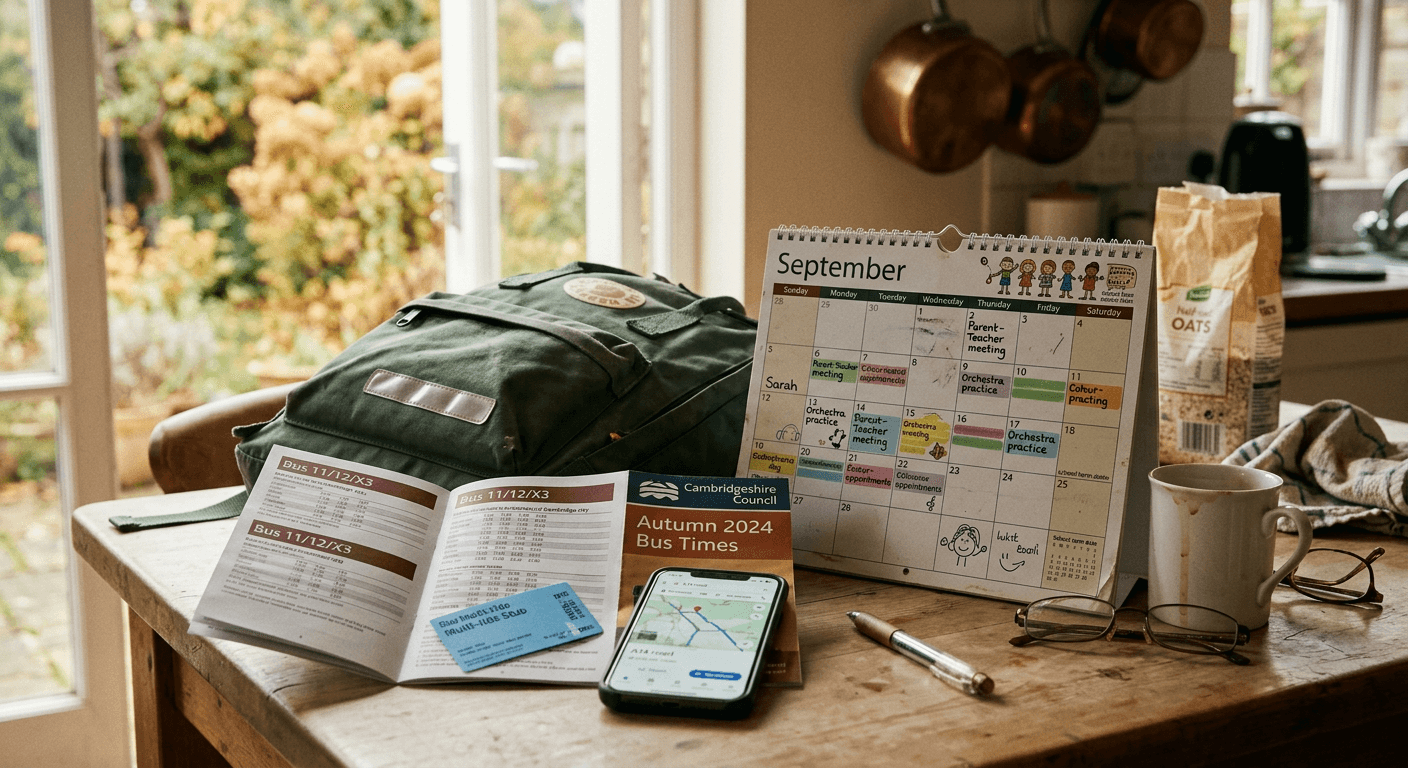
You see it on Cambridge side streets where everyone agrees active travel is important but still needs to get two children, a PE kit and a trumpet somewhere before 8.45am.


The official language is usually “traffic management”.


Parents experience it as:


“Please can nobody reverse into my child today?”


The real problem is that school travel is not one behaviour.


Some families could walk but do not feel safe.


Some would cycle but the route is poor.


Some drive because they go straight to work.


Some live too far away.


Some have younger siblings.


Some have SEND needs.


Some are just late, frazzled and doing their best.


So when councils talk about safer routes, the question should be brutally practical:


What changes the behaviour of real families on a wet February morning?


A painted line may help. A proper crossing helps more. Enforcement might help.


Staggered timing might help. Better bike storage might help. Safer walking groups might help.


Pretending every family has the same options helps nobody.


Tell us about your school-run pinch point: town, village or city, name of school, area, road, time of day and what makes it risky.


Five Times Cambridge Is Worth The Bother — And Five Times It Probably Isn’t

A lot of people from Ely, St Neots, Huntingdon, Cambourne and the villages still like Cambridge.


They just don’t always like getting into Cambridge.


So here is the honest test.


Probably worth it:


  1. A hospital appointment where the new Cambridge South station helps

  2. Especially once the station opens and the train times line up.
  3.  
  4. A proper food trip

  5. Market lunch, Mill Road, coffee, then home. Simple beats heroic.
  6.  
  7. A museum or show with a fixed start time

  8. If you can plan parking or train times around it.
  9.  
  10. A work meeting near the station or Biomedical Campus

  11. If you avoid dragging the car into the centre.
  12.  
  13. A full half-day with two or three things stacked together

  14. Lunch, shopping, walk, appointment. Make the hassle factor earn its keep.
  15.  

Probably not worth it:


  1. “Just popping in” for one small errand

  2. That phrase has ruined many moods.
  3.  
  4. Driving in without checking parking first

  5. Optimism is not a transport plan especially in Cambridge.
  6.  
  7. Taking children in hungry and hoping for the best

  8. This is how £38 disappears in the blink of phone app.
  9.  
  10. Trying to cross the city at the wrong time

  11. You are not stuck in traffic. You are part of the exhibit.
  12.  
  13. Going because you feel you “should”

  14. Ely, St Ives, Huntingdon and St Neots all have easier days out if you want an easier option.
  15.  

Tell us: what still makes Cambridge worth the bother for you?

Quick Poll: What Actually Makes You Try Somewhere New?

Choose one:


A. Cheaper price


B. Easier parking


C. Better opening hours


D. A recommendation from someone you trust


E. A bad experience somewhere else


F. A clear offer


G. The children, dog or partner forcing the issue


This matters because local businesses often think people need more marketing.


Sometimes they do.


But often, people need the basic stuff fixed first: visible opening times, a menu online, clear parking, quick replies, prices that make sense, and a reason to try them now rather than “sometime”.


A café in Ely with clear opening times beats a trendier place nobody knows is open.


A garage in March that explains the bill beats one with a shinier sign.


A venue in St Ives with easy booking beats one that makes people message three times.


Vote A–G and tell us the last place you tried because it made life easier.

The Mortgage Renewal Conversation People Keep Putting Off

If your mortgage renewal is due in the next 6–12 months, waiting until the last minute is the financial version of ignoring a weird noise in the car.


It might be fine.


It might not.


Across Cambridge, Ely, St Neots, Huntingdon, Cambourne, St Ives and the villages around them, plenty of households bought or remortgaged when rates felt very different.


Now the renewal conversation can change monthly budgets by hundreds of pounds.


The uncomfortable bit is that many people do not know what they can afford until they are already emotionally committed to a plan.


That affects movers, upsizers, first-time buyers, landlords and families deciding whether to stay put and renovate.


A helpful mortgage conversation should not start with “what product do you want?”


It should start with:


  •   what payment can you actually live with?

  • * what happens if rates move again?

  • * are you planning to move, fix, overpay or wait?

  • * do childcare costs or debts affect the picture?

  • * how early should you review options?
  •  

We are putting together a simple Mortgage Renewal Shock Checklist for readers who want the plain-English questions before speaking to anyone about their mortgage or remortgage.


 Register interest for the Mortgage Renewal Shock Checklist by replying to this email or dropping us a message on our Facebook page if your deal ends this year or early next year.


Back Pain Season Has Arrived, Disguised As Gardening

May is when sensible adults walk into the garden, lift one bag of compost with far too much confidence, and spend the next three days moving like a haunted wardrobe.


Gardening injuries are not glamorous.


They are common because the job looks harmless.


A bit of weeding.
A few pots.
A trip to the garden centre.
A quick “I’ll just move that” moment.


Then suddenly your lower back is hosting a protest.


The danger is not gardening. It is doing three hours of bending, twisting and lifting after a winter of sitting.


A simple rule: warm up before the garden, not after the pain starts.


Break jobs into chunks. Swap sides when carrying. Keep heavy pots close to your body. Do not twist while lifting. Use a kneeling pad. Stop before your back starts bargaining with you.


And if pain travels down your leg, keeps worsening, or does not settle, do not just blame age and carry on.


Last year what garden or DIY job always seems harmless until the next morning?

The Dental Queue Workaround Nobody Explains Clearly

Dental access remains one of those topics where people are either sorted or completely stuck.


If you have an NHS dentist, you guard that relationship like a family heirloom.


If you do not, the advice can feel useless:


Ring around.
Check websites.
Join lists.
Wait.
Try again.
Maybe go private.
Maybe call 111 if urgent.

Technically true. Emotionally exhausting.


The practical problem is that dental need is not one thing.


A routine check-up is different from pain.


A broken tooth is different from swelling.


A child needing care is different from an adult wanting a scale and polish.


A private emergency appointment is different from registering long-term.


What people need is a clear decision tree.


What should you do today if you are in pain?


What can wait?


What should you ask before paying private fees?


What does an emergency appointment include?


What should parents check for children?


How do you avoid being bounced between websites?


Help us learn where dental treatment is still available on the NHS and where its time to take a personal loan to pay for a viist tell us where are you based, and how hard has it been to find dental care recently?


If A Pothole Wrecks Your Tyre, Don’t Just Mutter And Drive Off

Bad roads are annoying. A damaged tyre, tracking problem or suspension knock is money.


If you hit a pothole or rough stretch around March, Wisbech, Chatteris, Whittlesey, Manea, Littleport or the smaller Fen roads between them, do three things before the day disappears.


  1. Take photos before moving too far

  2. Get the road, the damage, the pothole or dip, and something for scale if it is safe.
  3.  
  4. Note the exact location

  5. “Near March” is not enough. Road name, direction of travel, nearest junction, village sign, bridge or landmark helps.
  6.  
  7. Keep the garage receipt

  8. If the tyre, wheel, tracking or suspension needs checking, keep the paperwork. A vague memory will not help later.
  9.  
  10. Report the road properly

  11. Do not just post it on Facebook and hope someone at County Hall is doom-scrolling. Use the official reporting route too.
  12.  
  13. Ask the garage what likely caused it

  14. A good garage should be able to tell you whether the damage looks like pothole impact, wear and tear, tracking, suspension or bad luck.
  15.  

This is where the “Fenland road tax” becomes real. Not tax as in HMRC.


 Tax as in the extra £80, £140 or £300 you were not planning to spend because the road surface lost another argument with the ground underneath.


Tell us the road: where was it, what happened, and did it cost you money?

 The Energy Bill Interpreter

Energy bills have become one of those household documents people open with the emotional energy of defusing a small device.


Standing charge.


Unit rate.


Direct debit.


Estimated reading.


Credit balance.


Debit balance.


Fixed deal.


Variable tariff.


Smart meter that may or may not be feeling communicative.


The mistake many households make is only looking at the monthly direct debit.


That number matters, but it is not the whole story.


A family in a draughty older terrace in Ely, a newer estate home in Cambourne, a rural cottage near Chatteris or a flat in Cambridge may all have very different bills for reasons that are not obvious at first glance.


Sometimes the issue is usage.


Sometimes it is insulation.


Sometimes it is heating controls.


Sometimes it is a bad estimate.


Sometimes the direct debit has drifted away from reality.


Before spending money on gadgets, heaters or big home improvements, it helps to understand the bill properly.


We are putting together are building an Energy Bill Interpreter Checklist.


Send us the part of your bill that confuses you most: standing charge, usage, direct debit, smart meter, tariff, or something else.

The “Worth It Or Overpriced?” Local List

Every town has places that divide opinion.


The café everyone loves but you think is too expensive.


The takeaway that looks ordinary but never misses.


The farm shop that is wonderful if you remortgage first.


The pub roast that is genuinely worth it.


The attraction that is better for grandparents than toddlers.


The parking charge that makes you reconsider your entire day.


So let’s start a county-wide list:


Worth it or overpriced?


We want useful judgement from Cambridge, Ely, Huntingdon, St Neots, St Ives, Wisbech, March, Cambourne, Whittlesey and the villages.

Not nasty reviews. Not pile-ons. Practical reader notes.


Tell us:


  • place
    * town
    * what you bought or did
    * what it cost
    * whether you would go back
    * who it suits
  •  

Examples:


“Great coffee, but £4.20 is my emotional ceiling.”


“Brilliant roast, worth booking.”


“Lovely shop, but not for a weekly basket.”


“Good for a treat, not a habit.”


“Looks basic, secretly excellent.”


Send in your nomination for the Worth It Or Overpriced we will feature our favourites in future issues.


Weekend Mini-Guide: Five Low-Faff Ideas

Need something to do without turning the weekend into a military operation?


Try one of these:


1. Ely riverside walk


Good for a gentle wander, coffee and a cathedral view without needing a full day plan.


2. Houghton Mill area


A strong choice for a walk, fresh air and “we did something wholesome” points

.

3. St Ives by the river


Good for a mooch, food stop and a less intense alternative to Cambridge.


4. Wicken Fen


Best if you want nature, space and fewer conversations about parking apps.


5. Cambridge market lunch + short museum visit


Works if you keep it simple. Do not try to do everything. That way lies muttering and family arguments.


The trick is not to cram the day.


One walk. One food stop. One easy win.


What is your best low-faff weekend idea under £25?

The Expert Test: Did They Explain The Bit You Were Afraid To Ask?

A helpful local expert does not just sound professional.


They make the confusing bit less embarrassing.


That might be:


  • a garage explaining whether the repair is urgent or can wait
  •  
  • a mortgage adviser showing what the monthly payment really means
  •  
  • a letting expert explaining what the new renting rules actually change
  •  
  • a dog trainer telling you why “friendly” is not the same as trained
  •  
  • a physio explaining why pushing through pain is not always brave
  •  
  • an accountant warning you about the cost you forgot to plan for
  •  
  • a dentist explaining the difference between urgent care, private care and joining a list
  •  

The test is simple:


Did they explain the thing you were slightly scared to ask?


That is the sort of person people remember.


Send us one name: who explained something properly, what did they explain, and where are they based?

 Before You Go: The Paper Test

This week’s issue has a theme, even if it arrived wearing several different hats.


The council result.


The food caddies.


Cambridge South station.


The renting rules.


Bikeability.


Fen road repairs.


Road layout changes.


Cambridge turning 75.


All of them sound sensible in some version of the paperwork.


But the paperwork is not where life happens.


Life happens under the sink with the food caddy.


At the station when your appointment is at an awkward time.


On a Fen road after the third patch fails.


In a rental viewing where you are wondering whether mentioning the dog will cost you the home.


At a school crossing when a driver is too impatient.


In Cambridge when the parking has already ruined your mood before lunch.


So that is our test this week:


If it only works on paper, it does not work yet.


Next week, we want to go even more practical: the local costs people absorb without always noticing them parking, school extras, food, repairs, pets, energy, dental care, commuting and the small “life admin” charges that turn into real money.


Hit reply and tell us the cost, queue, rule, road or local irritation that looks minor until you’re the one paying for it.

Cambridgeshire Spotlight is a free, independent newsletter bringing clarity, context and practical stories from across the county, property, money, local business, families, homes and everyday life.


We work with a small number of trusted local partners each month whose expertise genuinely helps our readers live, work and move more confidently from mortgage specialists and financial advisers to home services, health, family and community experts.


To talk partnerships or share a story:


📧 hello@cambridgeshirespotlight.co.uk


💬 Join us on Facebook → Cambridgeshire Spotlight (local discussion + reader tips)


Now Published every week — designed for people who live and think locally.

Cambridgeshire Spotlight

Cambridgeshire. The Whole County. Every Week.!


© 2026 Cambridgeshire Spotlight .

This week’s Cambridgeshire Spotlight tests the county’s big promises against daily life: Cambridge City Council’s new no-overall-control reality, weekly food waste collections, Cambridge South station, new renting rules, children’s cycling safety, Fen road repairs, Food & Drink Week, Cambridge’s 75th city-status anniversary and the local costs, queues and decisions readers actually feel.

© 2026 Cambridgeshire Spotlight .