Graham Waite
Apr 23, 2026

In The Spotlight This Week |
Here's what I keep coming back to this week.
Cambridge City Council sat down to approve a £92 million redesign of Market Square a place that's had traders on it since the Middle Ages and its own highways team said the scheme was "not safe, not proven and not acceptable from a highway and public safety perspective."
Its own Labour councillor called it "a bit rushed" and said decisions that should have been worked out long ago were being left to planning conditions.
The traders said it could kill a seven-day outdoor market that's almost unique in this country.
And the committee voted to defer the whole thing because there were, in the words of one councillor, "just so many loose ends."
That phrase kept rattling around in my head all week.
Too many loose ends.
Because it's not just a market redesign, is it?
It's the story of how a lot of things seem to be running right now.
Big decisions being made before the groundwork is done.
Money committed before the safety checks are finished. Consultations that feel more like notifications.
You'll see it in the £121 million heat network that won't get a final decision until 2028.
You'll see it in a climbing wall in Peterborough that went from £6 million to £14 million because nobody accounted for the real cost of building things in 2026.
You'll see it in an NHS dental system where Labour is calling their fix "the most significant in 20 years" while dentists on the ground say it'll make things worse.
And then there's the Renters' Rights Act, going live on 1 May, which landlords are already responding to by making it harder for people to rent in the first place.
Suzanne from Y-Us Lettings has a lot to say about that one and if you rent, let, or own property anywhere in this county, you'll want to read her piece carefully.
We've also got the NS&I premium bonds scandal (37,500 bereaved families affected, £476 million in limbo, and a CEO who's been shown the door), the Dutch experiment with banning phones in schools (two years of actual data — and the results are striking), and a vet industry that's about to get a serious shake-up from the competition watchdog.
Plus I went to see the Bootleg Beatles at the Corn Exchange. Before hand I ate a steak at Flat Iron.
Both reviews are honest. One of them might upset people.
It's a full one this week. Settle in.
The Cambridgeshire Question this week: Have you ever tried to get an NHS dentist appointment in this county?
How did that go? Hit reply I want to hear the real stories.
Graham The Editor ... Here we go ready? |
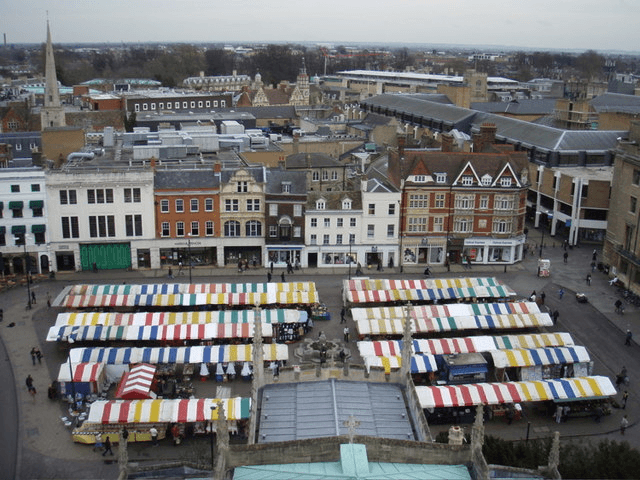 |
What Cambridge Market Square looked like 20 years ago. Could find a photo from the middle ages (lol) but this one is courtesy of Graeme Smith https://www.geograph.org.uk/profile/10185 |
CAMBRIDGE MARKET SQUARE — NOT SAFE, NOT PROVEN, NOT ACCEPTABLE! |
Let's talk about what nearly happened to one of the oldest markets in England.
Cambridge Market Square has had traders on it since the Middle Ages.
Not since the 1990s. Not since the Victorians. Since the Middle Ages.
It's one of the very few places in this country where you can buy fruit, flowers, and a dodgy phone case from roughly the same spot people were selling livestock eight hundred years ago.
So when the council puts forward a multi-million pound plan to completely redesign it as part of a £92 million city centre redevelopment you'd expect the homework to be done.
You'd expect the safety assessments to be finished.
You'd expect the people who actually trade there every day to feel like they'd been heard.
None of that happened.
Here's what did happen.
Cambridge City Council's planning committee sat down to approve a scheme that includes 96 stalls 44 permanent and 52 removable new surfaces to replace the cobbles (which the council says are slippery when wet), and a layout designed to allow space for events and cultural activities alongside daily trading.
On paper, that sounds reasonable.
In practice, the people who know this market best think it could destroy it.
Zoe Hardinge, representing Cambridge market traders, told the committee that the city was "almost unique" in having a seven-day outdoor market.
She wasn't exaggerating. Most market towns in this country run two or three days a week.
Cambridge runs every single day.
That's not an accident — it's the result of a trading culture that's survived plagues, wars, and the arrival of the Grand Arcade.
Zoe's concern was blunt.
The introduction of permanent kiosks would remove the flexibility that allows stalls to be shared throughout the week.
A move to five-year leases would push the market "towards something closer to fixed retail units." And nobody had even trialled the new demountable stalls yet.
"Financially," she told the committee, "these proposals put huge pressure on the future of the market."
And then the highways assessment landed.
I want to read you the exact words, because they matter: "The scheme in its current form is not safe, not proven deliverability and not acceptable from a highway and public safety perspective."
That's not a concerned resident.
That's not a rival councillor scoring political points.
That's the professional highways team whose literal job is to assess whether a public space is safe to use.
Hugh Clough, Green councillor, said he was "truly alarmed." Liberal Democrat leader Tim Bick said "there are just so many loose ends here."
And Labour's own Tim Griffin a member of the planning committee, from the party that runs the council said he was "a bit disappointed by the application."
His full quote is worth reading:
"There are so many important things that are left to conditioning that I feel kind of put upon almost to make decisions that should have been worked out long ago. This seems a little premature, a bit rushed, too many things are left to be resolved and I'm very uncomfortable with that."
Griffin proposed deferring the decision. It passed three votes to two.
Now, let's be fair. The committee did approve two other things at the same meeting.
The Guildhall the Grade II listed building where council meetings are held got the green light for refurbishment, including plans for a public café, new workspaces, and making the building net zero and fully accessible.
And the Corn Exchange, which celebrates gigs and events (and recently turned 150), was approved for energy upgrades including insulation, solar panels, and improved sound systems.
Both of those decisions seem sensible. But the market?
The market is the soul of that square. And if you redesign it without finishing the safety work, without trialling the stalls, without resolving the traders' concerns about leases and costs, you're not modernising a historic asset. You're gambling with it.
Seven hundred years of continuous trading.
With a plan to reshape it that couldn't get past the council's own committee.
Over to you: Do you use Cambridge Market regularly?
What would you change and what should they leave alone?
Reply and tell us. I'll share the best responses next week.
Quick Note: The historic town of Wisbech had its cobbles removed in the 1980's this killed its historical square.
So If you accept Cambridge's medieval history is an essential part of Cambridge's history, surely you don't destroy it by removing its character because it's 'slippy when wet' do you? |
 |
THE RENTERS' RIGHTS ACT IS HERE. SUZANNE FROM Y-US LETTINGS (PETERBOROUGH) EXPLAINS WHAT IT ACTUALLY MEANS. |
If you rent a home, let a property, or own a buy-to-let anywhere in Cambridgeshire, the next six weeks are about to matter more than you think.
The Renters' Rights Act goes live on 1 May 2026. It's the biggest shake-up in tenant-landlord law in a generation, and it's already changing how landlords behave even before the ink is dry.
I asked Suzanne from Y-Us Lettings to walk us through what's actually happening on the ground, because the headlines don't always match the reality.
Y-Us operates with partners across Cambridgeshire, Cambridge, Peterborough, Huntingdon, St Neots, Ely so Suzanne sees the full picture, not just the city centre bubble.
What's changing on 1 May
The headline changes are significant. Section 21 the so-called "no-fault eviction" is being scrapped.
That's the mechanism landlords have used for years to remove tenants without needing to give a reason.
From May, every eviction will need to go through the county court system with valid grounds.
At the same time, landlords and agents will no longer be able to demand rent in advance.
Until now, if a tenant had a thin credit history or a patchy reference, paying three or six months upfront was a common workaround.
That door is closing.
What landlords are actually doing right now
Here's where it gets real. Research from estate agency platform Alto, which surveyed 250 letting agencies nationally, found that a third of agents said more landlords are now requiring tenants to provide a guarantor compared to a year ago.
Eleven percent reported a "big increase" in guarantor requests.
Suzanne says she's seeing exactly the same pattern locally.
"Landlords aren't panicking, but they are recalculating," she told me.
"When you take away advance rent and you take away the fast-track eviction route, the risk equation changes completely.
A guarantor becomes the only safety net left."
The problem?
Not everyone has a guarantor.
If you're a single parent renting in Huntingdon, or a young professional who's just moved to Cambridge for work, or someone rebuilding after a divorce, finding a person willing to underwrite your rent isn't straightforward.
It's not impossible, but it adds a layer of complexity and stress to an already pressurised process.
"We're working with tenants to find solutions," Suzanne says.
"Guarantor services exist, referencing has got more sophisticated, and a good agent can bridge that gap between a nervous landlord and a perfectly good tenant who just doesn't tick every traditional box. But it takes more work from everyone."
The county court bottleneck
The other issue Suzanne flags is one that rarely makes the news but affects everything: the courts.
With Section 21 gone, all evictions now go through the county court system same system that's already stretched thin.
If a tenant stops paying rent, a landlord could be looking at months of legal process before they can regain possession of their own property.
"That's not a theoretical concern," Suzanne says. "That's the thing keeping landlords awake at night. And it's one of the reasons some are exiting the market altogether, which reduces supply, which pushes rents up. It's a cycle."
What this means across Cambridgeshire
The picture varies depending on where you are.
Cambridge city has high demand and relatively low stock, so landlords can afford to be selective.
Peterborough has better affordability but different tenant demographics.
The market towns Huntingdon, St Neots, Ely each have their own dynamics.
Suzanne's advice is the same everywhere:
"Whether you're a landlord or a tenant, the worst thing you can do right now is nothing.
If you're a landlord, talk to your agent about how the new rules affect your specific property and your specific tenants.
If you're a tenant, make sure your references are solid, your paperwork is up to date, and you understand your rights under the new Act".
The bigger picture
Riccardo Iannucci-Dawson, CEO of Alto, put it simply:
"Landlords are nervous, and that's feeding through into stricter tenant requirements. Higher borrowing costs, regulatory reform and longer eviction timelines all change the risk equation."
He's right. But nervous landlords making access harder isn't a solution it's a symptom.
The Act is trying to fix a system that's been broken for years.
Whether it succeeds depends on the detail, the courts, and the people on the ground agents like Suzanne who have to make it work in practice.
If you're renting, letting, or thinking about either, Suzanne and the team at Y-Us Lettings are across all of this.
They work across Cambridgeshire and they know the local market inside out.
If you're a CBS reader and you want a straight conversation about how the new rules affect you, reach out to them.
No jargon, no hard sell just someone who actually understands what's happening.
What's your thoughts?: Are you a landlord thinking about selling up?
A tenant who's been asked for a guarantor for the first time?
Reply and tell me what you're seeing out there. |
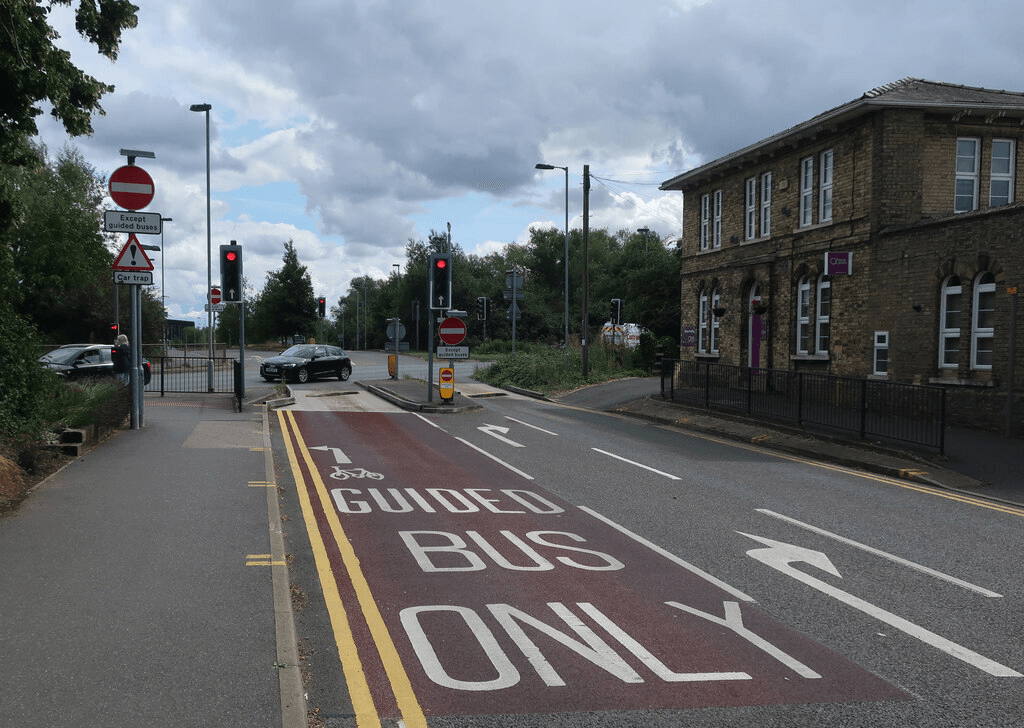 |
© Copyright Hugh Venables |
THE GUIDED BUSWAY CAR TRAPS — 127 VEHICLES AND COUNTING |
Right. I need you to hold something in your head while you read this piece.
One hundred and twenty-seven vehicles have got stuck in the guided busway's car traps since the start of 2020.
One hundred and twenty-seven.
Including and I genuinely wish I was making this up a police car responding to an emergency.
The officer was given a temporary driving ban.
Cambridgeshire's guided busway runs modified buses along a dedicated track between Cambridge, St Ives, and Huntingdon.
Cars aren't allowed.
To enforce this, there are physical barriers, CCTV, road signs, and car traps which are essentially diagonal holes in the road that a bus can straddle but a car drops into like a mechanical elephant trap.
The traps work.
That's not the issue. The issue is that 127 people have driven into them in six years.
The worst spot, by a distance, is Station Road in St Ives.
Seventy-three vehicles have been trapped there since 2020.
Seventy-three. At the same junction. On the same stretch of road.
The council says it has
"taken care to follow the appropriate guidance on signage and traffic lights to ensure the busway access is as visible as possible." After 60 incidents in the first twelve years, they added extra signs in November 2023 to "make the restriction clearer."
In the two years since those extra signs went up, another batch of drivers have gone in anyway.
They've put in red-coloured road surfacing. Additional white lining. Two large "guided bus only" markings painted on Station Road itself.
Multiple no-entry signs on posts around the junction.
And still, people drive into the hole.
The local council's spokesperson said: "We would like to remind drivers to look out for the signage if they are driving around this location."
I read that three times to check it was real.
Their answer to 73 cars falling into a hole at the same junction is to remind people that signs exist.
The next worst location is King's Hedges Drive in Cambridge, with nine incidents.
That's practically a rounding error compared to St Ives, but it's still nine people whose days took an extremely unexpected turn.
Now look. Some of this is clearly down to people not paying attention.
If there are six signs, red paint on the road, and a literal hole, and you still drive into it, at some point personal responsibility applies.
But seventy-three at one junction?
At some point you stop blaming the driver and start asking whether the junction design itself is the problem.
If seventy-three people make the same mistake at the same spot, the spot is the issue.
That's not bad driving that's bad design wearing the disguise of adequate signage.
The council says it "regularly inspects and reviews car traps for maintenance and health and safety purposes." Freedom of Information data provided to the BBC confirmed the figures.
If you drive anywhere near the busway especially in St Ives consider this your personal CBS warning.
The signs are there. The red paint is there. The hole is absolutely, definitely, still there.
Now be honest here : Have you ever had a near-miss with the busway traps?
Or watched someone else go in?
We want to hear the stories.
Reply and tell me anonymity guaranteed if you need it. |
 |
CAMBRIDGESHIRE IS GETTING TWO NEW SEND SCHOOLS. FINALLY. |
If you're a parent of a child with special educational needs in this county, you already know how stretched the system is.
So here's the news: the government has confirmed it will deliver two new special schools in Cambridgeshire. Greensands Academy in Gamlingay, near St Neots, and Lime Academy in March, in the Fens.
Between them, they'll provide 270 new places for children with SEND.
Cambridgeshire County Council had been pushing for this since last year, and in December the Department for Education actually wrote to the council offering an alternative a funding settlement to increase capacity in mainstream schools instead.
The council rejected it. They wanted the schools they'd been promised, and they held the line.
On Tuesday, the council confirmed that Jonathan Duff, the DfE's regional director for the East of England, had accepted the decision.
The schools originally approved under the previous government will go ahead.
The context matters here.
The number of children with an Education Health and Care Plan in Cambridgeshire has risen by 71% since 2020.
That's not a gentle upward trend that's a system under acute pressure, with families waiting months for assessments, fighting for placements, and in some cases watching their children go without the support they're legally entitled to.
Edna Murphy, chair of the children and young people committee, called it "good news for our exceptionally pressurised SEND system, but more importantly good news for children and young people with SEND and their families across our county."
She added that the schools had been "a key part of our plans for a number of years"
to ensure there's enough provision to support children within the county rather than sending them to expensive out-of-county placements, which is what happens when local capacity runs out.
Mark Goldsack, the Conservative group's lead member for children and young people, was less diplomatic:
"After months of procrastination it is about time. They should have been done years ago and unfortunately this is not the end of the road as the problem with SEND is not going away."
He's not wrong. Two hundred and seventy places will help, but against a 71% rise in EHCPs, this isn't the finish line. It's a start.
For families in the Gamlingay and South Cambridgeshire area, Greensands Academy will bring provision closer to home.
For families in March and the wider Fens, Lime Academy addresses a gap that's been felt for years. Both communities have been underserved, and both have been vocal about it.
What are your feelings on SEND schools: If you're a SEND parent in Cambridgeshire, how has the last year been?
Are things getting better, worse, or just different?
Your experiences matter — reply and tell us. |
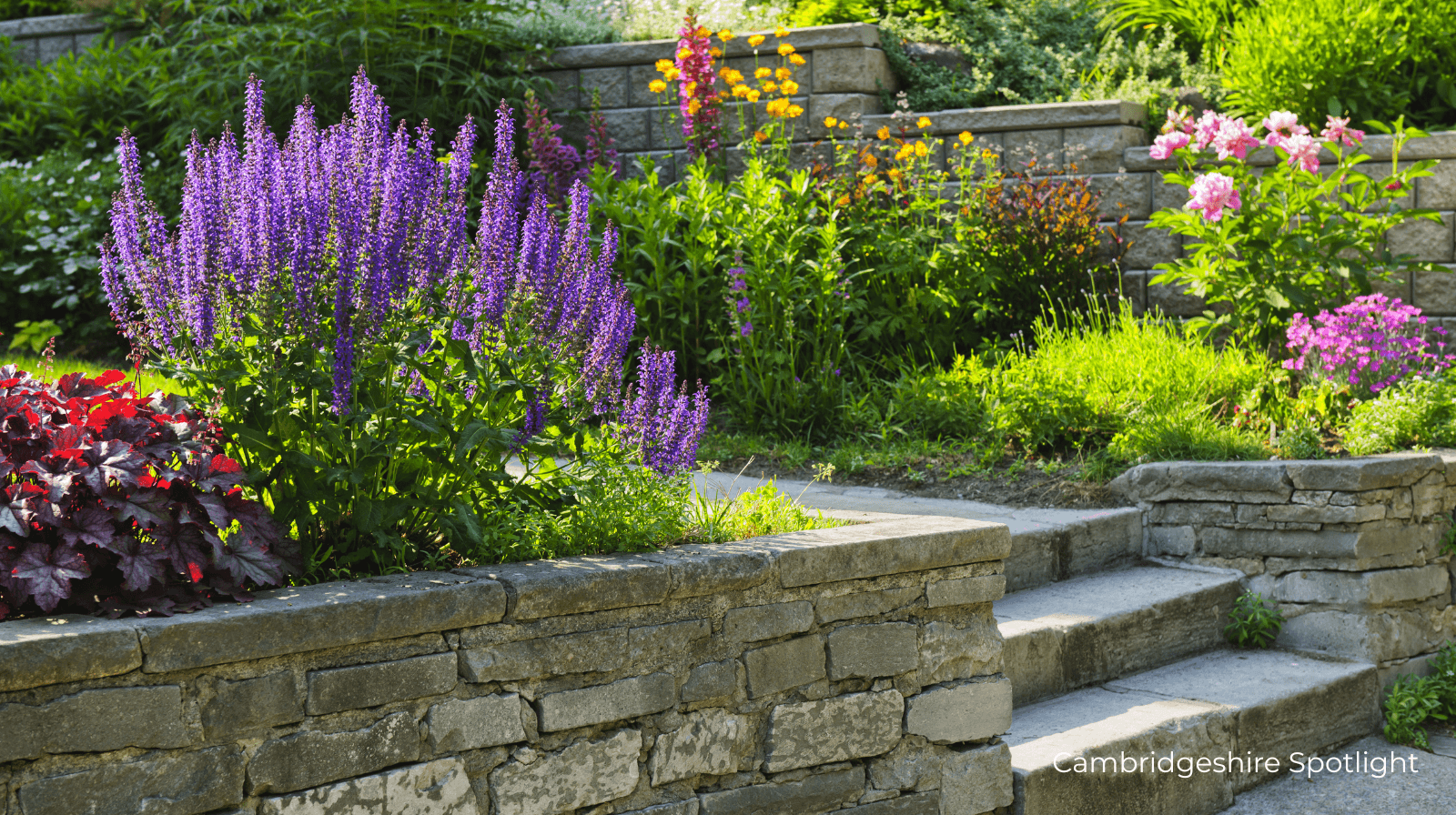 |
YOUR GARDEN THIS WEEK |
April's doing that thing where it can't decide if it's spring or still February, so here's the rule of thumb: if the soil feels warm to the touch when you push your finger in up to the knuckle, you're good to plant out.
If it's cold, hold off another week.
Right now is perfect for getting bedding plants started in pots hardening them off outside during the day and bringing them in at night.
Sweet peas should be going in if they haven't already.
And if you've got a lawn that looks like it survived a minor war over winter, now is the time to scarify, overseed, and feed.
Don't cut it too short on the first mow set the blades high and take off the top third only.
If you've got raised beds, this is the week to direct-sow radishes, rocket, and spring onions.
They're fast, forgiving, and satisfying in a way that waiting until June for tomatoes never quite is.
One more thing: slugs are back.
They never actually left, but they're moving now.
Beer traps work. Copper tape is a myth.
Nematodes are the serious option if you're losing the war.
What's looking good in your garden right now?
Send us a photo — best ones get featured soon. |
 |
THE BOOTLEG BEATLES AT THE CORN EXCHANGE — HONEST REVIEW |
 |
PROPERTY SNAPSHOT: WHAT YOUR MONEY BUYS THIS SPRING |
Spring is when the property market traditionally wakes up, and this year is no exception though "waking up" might be generous.
It's more like rolling over and checking its phone before deciding whether to get out of bed.
Across Cambridgeshire, the picture is uneven, and where you're looking matters enormously.
In Cambridge city, anything under £400,000 moves fast especially two-bed terraces in Romsey, Coleridge, and off Mill Road.
Three-bed semis in the CB1 and CB4 postcodes are sitting around the £500,000–£600,000 mark, and if it's a good street with a decent garden, it won't hang around.
The challenge is stock. There's not enough of it, and when something comes on at the right price, the first two weeks are decisive.
Peterborough remains the value story for Cambridgeshire buyers.
A three-bed semi in Werrington, Bretton, or the Ortons can still be found for £250,000–£300,000, which is roughly half what the same property would cost in Cambridge.
For families who need space and can commute, it's worth the conversation.
The PE postcodes have their own market dynamics they move differently to Cambridge but the fundamentals are solid.
The market towns are where things get interesting this spring.
Huntingdon and St Neots have both seen steady demand, partly because of the A428 improvements making the Cambridge commute more realistic, and partly because first-time buyers and second-steppers who've been priced out of Cambridge are looking west.
A three-bed in St Neots for £300,000–£350,000 is a different life to a two-bed flat in Cambridge for the same money.
Ely sits in its own bracket it's got the cathedral, the schools, the lifestyle appeal, and the direct train to London.
Prices reflect that.
Expect to pay a premium over Huntingdon or St Neots, but you're still well under Cambridge levels.
A few things to watch this spring. Cash buyers and chain-free purchasers continue to have a significant advantage if you're in that position, make sure your agent is leading with it.
Mortgage rates have stabilised but haven't dropped as much as some people hoped (more on that in the mortgage piece later in this issue).
And the stamp duty threshold changes from April have added another calculation for anyone buying above £250,000.
The honest truth?
This is a market that rewards preparation.
Get your mortgage agreement in principle sorted before you start viewing.
Know your actual budget, not your optimistic one. And if you see something that's right, move. The good ones don't wait.
Thinking about buying, selling, or just want to know what your home is worth in today's market?
Our expert this week works across Cambridgeshire and can give you a straight, no-obligation view. Drop me a reply and we can connect you.
Over to you: What's your experience of the property market this spring?
Trying to buy?
Struggling to sell?
Watching and waiting?
Reply and tell us where you are and what you're seeing. |
 |
NS&I PREMIUM BONDS — 37,500 BEREAVED FAMILIES LEFT WAITING FOR THEIR OWN MONEY |
This one made me genuinely angry, and I think it'll do the same to you.
National Savings and Investments NS&I is the government-backed bank that holds premium bonds for more than 22 million people.
It was set up in 1861 as the Post Office Savings Bank.
The whole point of it is security.
Your savings are guaranteed by the government. It's supposed to be the safest place in the country to put your money.
And for the past several years, it has been failing bereaved families on a scale that is hard to comprehend.
Here's what happened.
When someone dies, their executor contacts NS&I to claim any premium bonds or savings products held by the deceased.
NS&I runs a search of its systems to find those products and release the funds.
Except the search process was broken.
It failed to identify all of the products a person held.
Which means thousands of bereaved families were told their loved one's holdings had been dealt with, when in fact there was still money sitting there, unclaimed and unmentioned.
After reviewing over 34 million customer cases, the government has identified around 37,500 customers affected, with a total value of up to £476 million.
Four hundred and seventy-six million pounds belonging to dead people's estates, sitting in a system that told their families everything was sorted.
We have been told of examples where people like Tracy took six years to claim £2,000 in premium bonds her late father had left in his will.
Six years. She's 61. She's a former care home manager. She described the experience as "the most awful, awful experience" and said she "cannot describe how upsetting and frustrating" it was.
She had to send original documents at her own expense, multiple times. When she complained, NS&I sent her £150.
Pensions Minister Torsten Bell told MPs that NS&I chief executive Dax Harkins had resigned and been replaced by former HMRC boss Sir Jim Harra.
Compensation "where appropriate" will be paid.
NS&I has been told to publish a plan in May setting out how it will fix this.
Bell stressed that "no funds have been misplaced and everybody will be entitled to every penny of their savings."
The onus, he said, would be on NS&I to act — not on customers.
That's the right thing to say. But the damage is done, and not just financially.
If you've dealt with a bereavement, you know what it's like.
The paperwork alone is exhausting probate, bank accounts, utilities, pensions, all of it landing on you while you're grieving.
The last thing you need is a government-backed institution telling you everything's been handled when it hasn't.
What you should do right now. If you've dealt with a deceased relative's estate in the past few years and they held premium bonds or any NS&I products, it is worth checking whether everything was properly identified and released.
Don't wait for NS&I to contact you go to their website or call them directly.
And if you haven't already, have the conversation with your own family about where your finances are held.
Make sure your executor whoever that is knows about every account, every bond, every pension.
Write it down. Keep it updated.
As savings expert Anna Bowes put it:
"Make sure you have an up-to-date will and if you can, have a chat with your chosen executor so that they know where all of your finances can be located."
It shouldn't take a scandal to remind us of that, but here we are.
Tell us your story ...
Have you had trouble claiming a deceased relative's premium bonds or NS&I savings?
We want to hear about it. Reply and tell us your story — don't worry we will keep it anonymous if you prefer. |
 |
NHS DENTISTRY — THE SYSTEM IS BROKEN AND THE FIX MIGHT MAKE IT WORSE |
Let tells you about Jean Ann Green, who's 66, lives in Beccles in Suffolk, and has spent the last four years phoning every dentist in the county trying to get an NHS appointment.
Cancer treatment and osteoporosis damaged her teeth. She's got six lost fillings and toothache.
She had a great NHS dentist where she used to live in Hertfordshire. Then she moved, and the door closed.
"Not a single one is taking on new NHS patients," she says.
"You hope and pray your nerve dies so the pain goes away, which cannot be right."
Her only option is private, which could cost thousands for the amount of work she needs.
When asked if she can afford it, she laughs.
Jean's story isn't unusual. It's the norm in huge parts of this country and Cambridgeshire is no exception.
Try calling NHS dentists in Ely, Huntingdon, or Peterborough and asking if they're taking new patients.We will wait. You'll be waiting longer.
The numbers tell the story.
Private dental spending made up 14% of the market in 1990.
By 2024, it was 69%.
The number of NHS root canals in England has dropped by 49% in ten years.
Healthwatch England says dentistry generates more complaints than any other subject.
At the heart of it is a contract system that almost everyone agrees is broken.
Under the system introduced in 2006, dentists aren't paid per procedure or per hour.
They're paid in "Units of Dental Activity" points awarded based on a broad treatment band.
Someone needing two crowns, root canal work, and three fillings generates the same number of points as someone needing a single crown.
"The whole system is just absurd and unfit for purpose," says Dr Shiv Pabary, a dentist from Newcastle who chairs the British Dental Association's general practice committee.
"The government wants us to take on more high-risk patients, but if we do that then we lose money."
Labour's response goes live next month.
The plan includes tweaking the UDA system with new payments for complex treatments and preventative work, hiring more overseas dentists, boosting dental school places by 50 a year, and this is the headline change forcing every practice to ring-fence 8% of its NHS contract for emergency care.
The idea is that someone with severe toothache can call 111 and get a quick referral rather than ringing round private practices for quotes.
Health Minister Stephen Kinnock is calling it "the first step towards a new era of NHS dentistry."
The dentists I've read aren't convinced.
Dr Gauri Pradhan, principal dentist at St Pauls dental surgery in Bristol the practice where hundreds queued for hours just to register in 2024 called it "another piecemeal fix that won't improve anything".
Her practice coordinator, Shivani Bhandari, worries that ring-fencing emergency slots will just cannibalise routine appointments:
"The government might look at the numbers and see they've gone up, but we'll only see the consequences in two or three years."
What they'd like is a simpler system, like Scotland and Northern Ireland, where dentists get paid for each item of care they provide.
Wales is scrapping UDAs entirely from April, moving to a model where patients pay 50% of treatment costs and dentists are paid £150 an hour.
And then there's the private market, which is booming but not without problems.
The UK competition watchdog launched a review this month after research showed private prices had jumped 30% in two years.
We spoke to dentists who said patients were "lied to" about NHS availability to push them towards private treatment, and others who felt pressure to "hard sell" private work and make NHS care look substandard.
The honest question nobody in government wants to answer is this: is NHS dentistry still a universal service, or has it already become a safety net for emergencies and children?
Because the gap between what it promises and what it delivers is now so wide that millions of people have simply given up trying.
For Cambridgeshire readers specifically: if you know of NHS dentists currently accepting new patients anywhere in the county Cambridge, Peterborough, Huntingdon, Ely, St Neots, March, anywhere reply and tell us.
I'll compile a list and share it.
That would be more useful than anything the government's doing right now. |
 |
MIDWEEK ONE-TRAY CHICKEN |
This is the dinner recipe one of our readers sent in Fiona makes when she's got forty minutes, one tray, and no interest in washing up.
Take a pack of chicken thighs bone in, skin on, they're cheaper and better and lay them in a roasting tin.
Tuck chunks of sweet potato, red onion, and red pepper (or any colour you can get hold off the red are slightly sweeter) around them.
Drizzle everything generously with olive oil.
Season with salt, pepper, smoked paprika, and a squeeze of honey if you've got it.
Toss the veg so it's all coated.
Into the oven at 200°C for 35-40 minutes.
The chicken skin goes crispy. The sweet potato goes soft and caramelised.
The onions go sweet.
The peppers collapse into something that tastes like you tried much harder than you did.
Eat it straight from the tray with some crusty bread and a green salad if you're feeling virtuous, or just the bread if you're not.
Feeds a family of four. Costs about £6.
Uses one tray and one knife. That's the whole recipe.
If you've got a midweek go-to that's this simple or simpler, reply and share it.
Best ones go in later issue and might also feature in our foodie newsletters Taste Trail. |
 |
FLAT IRON STEAK - GOOD ENOUGH TO MAKE YOU RETHINK YOUR CHOICES WHEN OUT IN CAMBRIDGE! |
Flat Iron's premise is simple and they don't pretend otherwise: one cut of steak, cooked well, at a price that doesn't make you wince.
There are other options on the menu, all equally affordable, but the steak is the point.
Every location does the same thing.
We were at Flat Iron Cambridge, which is nestled close to the market in Market Square.
As the name suggests, its speciality is the flat iron steak a cut from the shoulder that used to be considered a butcher's offcut served with an optional side salad and a cleaver stuck in a wooden block on your table.
We arrived on a Tuesday early evening and it was just about full, so if you're planning to go at a busier time I'd suggest calling and booking in advance.
The crowd was a mix typical of restaurants in university cities students treating themselves, couples on dates, and groups of friends who'd clearly been before.
But let's start at the beginning.
When you arrive you're enthusiastically greeted by happy, cheerful staff and shown to a table depending on the size of your group.
The first thing you'll notice is that the décor is simple and the menu is even simpler.
It's a steak house, so expect a few steak options, home-style beef dripping chips, and a couple of straightforward salad choices.
I nearly forgot to mention when you sit down they bring you what seems to be a bottomless supply of popcorn, which is never going to fill you up but is a welcome little touch while you settle in.
The steak arrived fast.
It was cooked exactly as ordered medium rare, good sear, pink through the middle, rested properly.
The house green salad that comes with it is fine.
It's a salad. It does what salad does.
But with a couple of sprigs of mint it turned out to be quite the palate cleanser and was extremely tasty.
The sides are where Flat Iron earns its keep.
The dripping fries are excellent crispy, properly seasoned, served in a little metal cup.
The creamed spinach is rich and good.
The roasted aubergine with miso is the sleeper hit — I'd go back just for that.
You get a little cone of soft-serve ice cream with your meal, which is a nice touch and costs nothing extra. You get a sweet little mini cleaver so if you are feeling full you can pop back and exchange your mini cleaver for a ice cream (great idea for encouraging loyalty and makes a great discussion point).
The wine list is short and honest. A glass of Malbec for under £8 is fair.
Here's the thing about Flat Iron: it's not trying to be a destination restaurant.
It's not going to win awards for culinary innovation. What it does is execute a simple idea consistently well, at a price point about £20–25 a head with a side and a drink that makes eating out feel normal rather than aspirational.
In Cambridge, where a mid-range dinner for two can easily top £80–100, that matters.
Especially if you're someone who wants a good meal out on a Tuesday without doing mental arithmetic at the table.
Is it the best steak in Cambridge?
No. There are places doing fancier cuts with fancier provenance for fancier prices.
But for what it is a reliable, well-priced, no-nonsense steak dinner in the middle of town it's hard to argue with.
We'd go back. Probably will go back soon. The aubergine alone is worth the trip.
Have you been to Flat Iron Cambridge?
Or is there somewhere else in the city you think does better value?
Reply and tell us — we are always looking for the next real recommendation.
If you know of any restaurants you think should feature in our new foodie newsletters Cambridge Taste Trail just drop us a message on our Spotlight Facebook page.
If you want to get the latest Cambridge Taste Trail please sign up by clicking the images below. |
 |
 |
WHY YOUR DOG'S TRAINING ISN'T STICKING (AND WHAT TO DO ABOUT IT). WITH RAIMONDA FROM SMARTER PAWS. |
Here's a scenario that might sound familiar.
You take your dog to training classes. They're brilliant. They sit, they stay, they come when called.
You feel like you've finally cracked it.
Then you get home, open the front door, and it's like the last six weeks never happened.
They're pulling on the lead, ignoring recall, stealing food off the counter, and looking at you with an expression that says
"I have absolutely no idea what 'leave it' means."
I spoke to Raimonda from Smarter Paws Dog Training about why this happens, because it's one of the most common frustrations she hears from dog owners across Cambridgeshire — and the answer isn't what most people expect.
"The dog hasn't forgotten," Raimonda says.
"The dog learned the behaviour in one context — a training class, with a trainer present, in a controlled environment. That doesn't automatically transfer to your kitchen, your garden, or the park. You have to teach the behaviour again in every new environment. That's not a failure. That's just how dogs learn."
This is the thing that catches most people out. We assume that if a dog can do something once, in one place, they can do it everywhere.
But dogs are incredibly context-specific learners. A "sit" in a village hall with treats and a clicker is a completely different ask to a "sit" at the front door when the postman's arrived and the cat from next door is on the wall.
"Consistency is the word I use more than any other," Raimonda says.
"Not just in what commands you use, but where you practise, how you reward, and whether everyone in the household is doing the same thing. If one person rewards the dog for jumping up and another person tells them off, you haven't got a training problem — you've got a communication problem."
Raimonda runs Smarter Paws Dog Training, which works with dog owners across the county. She also has for those further afield who can't come to her the Smarter Paws Digital Dog Training Hub.
What makes her approach different and why we wanted her as our regular dog training expert is that she focuses on the owner as much as the dog.
"I can train any dog in an hour," she says, and she's not being arrogant — she's making a point.
"But if the owner goes home and doesn't carry it through, we're back to square one in a week. My job isn't to train dogs. My job is to train people to train their dogs."
She's particularly passionate about the early months. Puppies between 8 and 16 weeks are in what behaviourists call the "socialisation window" a critical period where their brain is primed to accept new experiences.
What happens in that window shapes everything that comes later.
"If your puppy meets other dogs, other people, hears traffic, walks on different surfaces, encounters pushchairs and wheelchairs and cyclists during that period, they're building a mental library that says 'the world is safe.' Miss that window and you spend the next ten years trying to retrofit confidence."
Her practical advice for anyone struggling right now is straightforward.
First, go back to basics even if your dog is an adult. Practise recall, lead walking, and impulse control in the house before you try them in the park.
Second, keep sessions short.
Five minutes of focused training is worth more than thirty minutes of frustration.
Third, reward what you want, ignore what you don't.
Dogs repeat behaviours that work for them.
If jumping up gets attention even negative attention it'll keep happening.
If you've got a puppy that needs early groundwork or an older dog whose training has gone sideways, this is a genuine opportunity to get expert eyes on what's going wrong.
If you want 1-1 training you can reach out to Smarter Paws directly and mention CBS.
Over to you: What's the one thing your dog does that drives you up the wall, no matter how much training you've tried?
Reply and tell me. I'll put the best ones to Raimonda for next issue.
If you own a dog, cat or other pet you might want to sign up for our Local Pet Insider Newsletter where you'll find lots of great advice, tips, offers and so much more. Just click the image below to get the latest issue and sign up for your free subscription. |
 |
 |
VET FEES ARE ABOUT TO CHANGE — HERE'S WHAT'S HAPPENING AND WHEN |
If you've got a pet, you've probably felt this already: vet bills have got expensive.
Really expensive. And not always in ways that feel transparent.
The Competition and Markets Authority the CMA, the national regulator that investigates whether markets are working fairly has just announced a series of legally binding measures for every vet practice in the UK.
This follows a thorough investigation that found pet owners were being left "in the dark about prices" and "paying much more for medicines than they need to."
Here's what they found, and it's worth reading carefully.
Six large corporate groups now control around 60% of all vet practices across the UK.
But less than half of pet owners using one of these groups knew their local vet was part of a chain.
Your friendly independent-looking practice on the high street may well be owned by a private equity-backed corporation.
You just weren't told.
Prescription fees the charge for getting a written prescription, not the medicine itself were found to be routinely £30 or above per prescription.
And more than 70% of pet owners could save £200 or more each year on long-term medication if they bought it online rather than directly from their vet.
The reforms are rolling out in stages over the next two years, and they're significant.
By December 2026, vet practices will need to publish price lists on their websites for standard services including consultations, common procedures, and prescriptions.
They'll need to clearly explain the real value of "pet care plans" those monthly subscription-style packages including the total charge, the price of individual components, and any advertised savings.
And they'll need to display their ownership information who actually owns the practice online and in the building itself.
By March 2027, prescription fees will be capped at £21 for the first medicine and £12.50 for any additional medicines prescribed in the same consultation, including VAT.
That's a meaningful reduction for anyone whose pet is on ongoing medication.
By June 2027, practices will need to provide itemised bills for all treatments.
If treatment is expected to cost £500 or more, they'll need to give you a written estimate upfront including aftercare costs.
They'll need to tell you that you can get a written prescription and buy medicines online, where they may be "significantly cheaper."
New price comparison services will launch, allowing you to compare pricing and ownership of practices in your area before you choose where to take your pet.
There's also a complaints overhaul.
The current system was described as "ineffective" with no mandatory process.
By September 2027, all practices will need a transparent, accessible complaints procedure and must engage in mediation when disputes can't be resolved.
Smaller independent practices those with fewer than 15 locations get roughly three extra months to implement each change, which seems reasonable.
This is a big deal.
If you've ever sat in a vet's waiting room wondering why a ten-minute consultation cost £65, or why the flea treatment was three times the price you later found it online, or why nobody mentioned you could get a prescription and shop around these reforms are aimed squarely at those experiences.
Practical tip:
Start keeping every vet receipt now.
When price lists go live in December, you'll be able to compare what you've been paying with what the published prices should be.
If your pet is on long-term medication, get a written prescription and check online pharmacy prices today.
You don't need to wait for the regulations.
What's the most eye-watering vet bill you've received?
And did you feel like you understood what you were paying for?
Reply and tell me. |
 |
PETERBOROUGH'S CLIMBING WALL — FROM OLYMPIC AMBITIONS TO ECONOMIC REALITY |
There was a moment, back in 2021, when Peterborough was going to get an Olympic-sized climbing wall.
Nene Park Trust had the planning permission. They had the vision a 34-metre tall indoor activity centre at Ferry Meadows, on the old Lakeside car park, with the potential to become a National Centre of Excellence for climbing and para-climbing.
It was expected to cost £14 million and be open by this summer.
It attracted hundreds of objections, including from Chris Packham and Peterborough Civic Society, who were concerned about the scale and its impact on the park.
But the trust pressed ahead, and permission was granted.
Then the real world intervened.
"Since the permission was granted, the construction costs have risen astronomically and the business case does not work for a building of the scale and expense originally planned,"
a trust spokesperson said.
"Unfortunately, in the current economic climate, funding for this sort of project has been difficult to raise."
The budget has been cut from £14 million to £6 million.The Olympic-sized wall is gone.
The new plan is for "a simpler, lower building" with a revised application going to the city council in April.
The project will now be built in two phases, with the first scheduled for completion in autumn 2027 more than two years after the original target.
Matthew Bradbury, the trust's chief executive, is framing it positively:
"We've listened very carefully to all feedback provided on our original plans, and we feel that a smaller, more affordable, less intrusive building will satisfy many of our regular visitors while still delivering a huge amount of impact and fun."
And to be fair, there's something to that. Climbing especially bouldering is genuinely growing as a sport.
It's in the Olympics now.
A good facility at Ferry Meadows, even a smaller one, would still be an asset for Peterborough.
The trust says it will increase visitor numbers by 10% and deliver an estimated £1 million annual boost to the local economy.
But the gap between the dream and the reality tells a bigger story.
A 34-metre national centre of excellence becomes a "simpler, lower building."
A £14 million budget becomes £6 million.
A summer 2026 opening becomes autumn 2027 at the earliest.
That's not just a scaling back that's a completely different project wearing the old one's clothes.
If you wanted to see the revised plans, there's was a public meeting on 13 April at the Lakeside Hub in Ferry Meadows. (sorry we missed this one but the information should be available soon)
Worth going if you use the park this will change how that corner of it looks and feels.
Over to you: Would you use a climbing facility at Ferry Meadows?
Or should the trust have left the car park alone?
Reply and let me know. |
 |
SHOULD WE BAN PHONES IN SCHOOLS? THE DUTCH DID. HERE'S WHAT HAPPENED. |
Two years ago, the Netherlands banned smartphones from schools.
Not just classrooms corridors, canteens, break times, everything.
Phones go in lockers when you arrive and stay there until you leave.
It wasn't a law. It was a national agreement between the government, schools, parents, and teachers designed to get buy-in and move fast without a legislative battle.
Every school in the country now has signs at the gates: "From this point on, your phone must be in your locker."
So what happened?
A government-commissioned study of 317 secondary schools found that about three-quarters reported better concentration since the ban.
Almost two-thirds said the social climate had improved.
Around a third saw better academic performance.
Other surveys found less bullying.
Teachers noticed the difference immediately. Ida Peters, who teaches at Cygnus Gymnasium in Amsterdam, says: "As a teacher you're always trying to get kids' attention.Now their phones are less present, that certainly helps."
She described the hallways as "more relaxed, a calmer atmosphere"
and said pupils weren't worrying about being photographed and put on social media at break time.
The students themselves are more nuanced, which is exactly what you'd expect.
Fifteen-year-old Felix admits he spends two to five hours a day on social media and initially thought about switching schools when the ban was announced.
Two years later?
"I haven't really felt a downside of it. People are talking more, going to the shops instead of just sitting in the cafeteria on their phones. Social connections have improved."
His classmate Hanna's take is probably the most honest:
"I think it's annoying but not like it's violating our rights or something like that. Maybe now we are a little bit more in the moment."
The Netherlands is now pushing further — calling for an EU-wide minimum age of 15 for social media apps like Instagram, TikTok, and Snapchat.
A Unicef survey of more than 1,000 Dutch children found that 69% actually favoured a social media ban for under-18s.
Among 16-to-28-year-olds, 60% back an age limit, up from 44% a year ago.
That challenges the assumption that young people are uniformly opposed to these kinds of restrictions.
A lot of them seem to know it's a problem they just can't stop on their own.
Now here's the comparison that should bother us.
In the UK, smartphones aren't supposed to be out in classrooms either.
But there are no national rules on where they should be during the rest of the school day.
Schools and teachers are left to improvise.
Some have strict locker policies.
Some have phone pouches.
Some have a rule that's technically on the books but nobody enforces because they're exhausted from fighting about it.
The Dutch teacher Ida Peters described the national agreement as "liberating" for staff because the onus was off individual teachers.
That's the key difference.
When it's a national expectation, it's not a battle you fight classroom by classroom.
It's just how things work.
The Dutch Research Council is now examining whether being without a phone all day increases screen time before and after school a fair question, and one that needs data.
But the initial evidence is striking.
Better concentration.
Better social climate.
Less bullying.
More talking.
More being present.
If you're a parent and especially if you're a parent of a child between 10 and 16 this is worth thinking about.
Not as a culture war.
Not as a technology-is-evil panic.
Just as a practical question: what would change if your child's school adopted the Dutch model?
Have your say: Should Cambridgeshire schools adopt a full phone ban?
Or does it go too far?
This one's going to divide opinion — reply and tell us where you land. |
 |
CAMBRIDGE'S £121 MILLION HEAT NETWORK — GENUINE CLIMATE INFRASTRUCTURE OR ANOTHER CONSULTATION? |
Here's the pitch.
A network of air source and river source heat pumps, supported by a transition from gas boilers to electric ones, linking up council and university buildings across Cambridge.
A 93% reduction in carbon emissions over the project's 40-year lifetime.
The council leads, the university and colleges join, and the city gets a piece of genuine green infrastructure.
The price tag: £121 million.
The partners: Cambridge University, 16 of its colleges, Anglia Ruskin University, and the city council.
They've signed a memorandum of understanding non-legally binding, but it's there.
The timeline: a final decision on whether to go ahead won't come until March 2028.
City council papers show the project has been worked on with experts since 2023.
The joint venture would mean the council shares "construction, delivery and reputational risk with established academic partners."
It would save the council £1 million in capital costs versus trying to decarbonise the Guildhall, Corn Exchange, Parkside swimming pool, and Kelsey Kerridge sports centre individually.
Labour councillor Rosy Moore, cabinet member for climate and environment, says:
"This project has the potential to significantly reduce carbon emissions and improve air quality for everyone in the city, and can be expanded across the city over time."
James Rolfe, ARU's chief operating officer, says the university has already invested £2.4 million in renewable energy since 2019 and the heat network "could offer a cost effective way to further decarbonise" its buildings on East Road.
A Cambridge University spokesperson said the institution "looks forward to the continued exploration of the proposals."
You can read all about it here
"Continued exploration." There's a phrase that keeps the door open without committing to walking through it.
We are genuinely torn on this one.
The concept is sound.
Heat networks work well in other cities in Scandinavia, they're standard infrastructure.
Cambridge has the density, the institutional buildings, and the partners to make this viable.
If it works, it would be one of the most significant green infrastructure projects in the region.
But £121 million with a decision date two years away?
That's a lot of time for enthusiasm to cool, costs to rise, and partners to quietly step back.
Cambridge has form on ambitious projects that spend years in consultation before arriving at something much smaller than originally planned or not arriving at all.
The council's officers have recommended that the final decision happens by March 2028.
That's the right call for due diligence, but it also means we're talking about a project that's been in development since 2023 and won't get a green light until 2028 at the earliest.
Five years of "exploring" before a spade goes in the ground.
We want this to work.
Cambridge needs it to work.
We just want to see a timeline with milestones, not just a memorandum of understanding and some warm words about continued exploration.
Is This Real or Pie In The Sky?
Do you think Cambridge will actually build this heat network?
Or is this another plan that'll quietly disappear with no real impetus?
Reply and tell us what your gut says. |
 |
MORTGAGES THIS SPRING: WHERE RATES SIT AND WHAT TO DO ABOUT IT |
If you've been waiting for mortgage rates to drop back to where they were in 2021, I've got news you don't want to hear: that's not happening this year, and probably not next year either.
The Bank of England base rate sits at 4.5% as of spring 2026.
Markets are pricing in modest cuts over the coming year, but modest means modest we're talking quarter-point moves, not the dramatic drops some borrowers have been hoping for.
For a typical two-year fixed rate on a residential mortgage, you're currently looking at somewhere around 4.5-5%, depending on your loan-to-value ratio and the lender.
Five-year fixes are slightly lower in many cases, which is unusual and reflects the market's expectation that rates will come down eventually just not fast.
What does this mean in practice for Cambridgeshire buyers?
In Cambridge, where the average property price pushes north of £500,000, the monthly repayment difference between a 4% mortgage and a 5% mortgage on a £400,000 loan over 25 years is roughly £230 a month.
That's significant.
Over a five-year fixed term, it's nearly £14,000 in additional interest.
In Peterborough, where you might be borrowing £200,000–£250,000, the numbers are smaller in absolute terms but the principle is the same.
Every fraction of a percent matters, and the difference between the best and worst deals on the market right now can be half a percent or more.
If you're coming to the end of a fixed rate in the next six months, the single most important thing you can do is start the process now.
Most lenders allow you to lock in a rate up to six months before your current deal expires.
If rates drop before completion, you can usually switch to the lower rate.
If they don't, you've protected yourself against increases.
There's almost no downside to starting early.
If you're a first-time buyer, the stress test the affordability calculation lenders use remains the main hurdle.
Lenders typically stress-test your ability to pay at 6-7%, regardless of the actual rate you're being offered.
That means your maximum borrowing might be lower than you expect, even if you can comfortably afford the monthly payments at today's rates.
A good mortgage adviser and I mean a genuinely independent one who searches the whole market, not a bank adviser who can only offer their own products can make a material difference.
They see deals that aren't always visible on comparison sites, and they know which lenders are being flexible on criteria.
Our mortgage expert this week works across Cambridgeshire and deals with everything from first-time buyers to remortgages to buy-to-let.
If you want a straight conversation about where you stand, reply to this email and we can connect you. No obligation, no pressure.
Whats Happening Are you coming off a fixed rate this year?
What's your experience been of the mortgage market so far?
Reply and tell us. |
 |
HOW THE MIDDLE EAST CONFLICT IS GOING TO HIT YOUR HOLIDAY FLIGHTS — AND YOUR WALLET |
If this section feels like it doesn't belong in a Cambridgeshire newsletter, bear with us.
Because if you fly from Stansted, Luton, or Heathrow and most of us do — this story is about to land in your lap.
The conflict in the Middle East has done something to global aviation that the industry hasn't seen since Covid.
The three major Gulf airports Dubai, Abu Dhabi, and Doha normally handle more than 3,000 flights every day.
Emirates, Etihad, and Qatar Airways account for 9.5% of global capacity.
More than 92 million passengers went through Dubai alone last year, making it the busiest airport in the world for international travellers.
That system has been severely disrupted.
After US-Israeli strikes on Iran in late February, airspace across the region closed.
Planes were grounded.
Some that had already taken off were forced to turn back.
Tens of thousands of passengers were stranded, many of them people who were only in the Gulf to change planes.
More than 30,000 flights to the Middle East have been cancelled since the start of the conflict.
Why does this matter to someone booking a holiday from Cambridge or Peterborough?
Because the Gulf model is what made long-haul flights affordable.
Those three airlines, operating from those three hubs, created a system where you could fly from almost any city in Europe to almost any city in Asia or Australasia with a single stop and a competitive fare.
Boston to Bali. Amsterdam to Antananarivo. Stansted to Sydney via Dubai.
"Competition drove down prices, and the Gulf carriers were a competitive game changer," says Andrew Charlton of Aviation Advocacy.
"Take Gulf carriers out of the equation, air fares are going to go up, as sure as eggs are eggs."
They already are.
Jet fuel supplies from
Gulf refineries have been choked off after Iran effectively blocked the Strait of Hormuz.
Fuel prices have doubled since the start of the conflict.
Some carriers have begun cutting flights in response.
British Airways has added extra services to Bangkok and Singapore.
Lufthansa and Air France have done the same.
But Willie Walsh, Director General of IATA, was blunt:
"There is no way the capacity provided by carriers in the Gulf can be replaced by European carriers."
For you, practically, this means several things.
If you've booked a flight via Dubai, Doha, or Abu Dhabi in the coming months, check with your airline regularly schedules are changing frequently.
If you're planning to book long-haul travel for later this year, expect higher prices, especially to destinations in Southeast Asia, India, and Australasia.
And if you have the flexibility, routes via Singapore, Bangkok, Hong Kong, or Tokyo are emerging as the main alternatives to Gulf connections.
Travel insurance has never been more important.
Read the conflict and disruption clauses before you buy, not after.
If you're offered a significantly cheaper fare via a Gulf hub, understand that you're taking on a degree of uncertainty that didn't exist eighteen months ago.
The aviation industry has survived SARS, Covid, and countless geopolitical crises.
It will survive this.
But the cheap Dubai-connection flight that made the world feel smaller?
That might take a while to come back.
Has This Affected You Yet?
Have your travel plans been affected by the Middle East situation?
Changed a booking?
Paid more than expected?
Reply and tell us. |
 |
ANGLIAN WATER — STILL THE CONVERSATION THAT WON'T GO AWAY |
We thought twice about including this piece this week because there's no single breaking story.
But then we thought about what CBS readers actually talk about when they reply to the newsletter, and Anglian Water comes up more than almost anything else.
So here's where things stand.
Across Cambridgeshire, Anglian Water bills have risen again this year.
The company was allowed to increase charges as part of the regulatory settlement agreed with Ofwat, the water regulator, and most households are now paying noticeably more than they were two years ago for the same supply.
At the same time, the infrastructure problems haven't gone away.
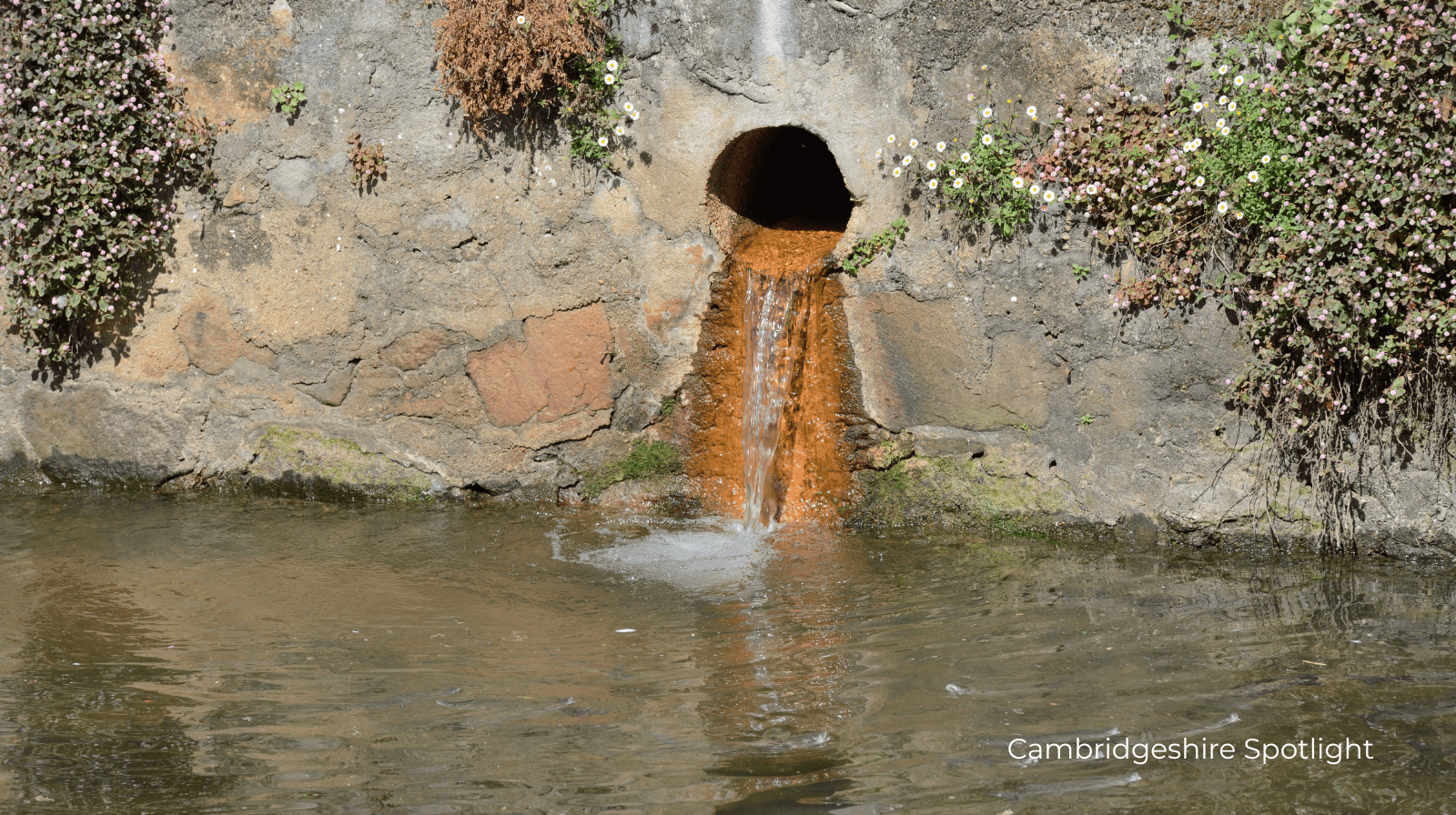
Storm overflows continue to discharge sewage into rivers across the region legally, in most cases, because the system is designed to overflow during heavy rainfall rather than back up into homes, but that technicality doesn't make the rivers any cleaner.
The environmental data is public, and the numbers are not flattering.
The company says it's investing billions in upgrades.
Ofwat says the investment plans are the largest in the sector's history.
Environmental groups say the pace is too slow and the fines too small to change behaviour.
What we hear from readers is simpler than any of that.
People feel like they're paying more and getting the same problems.
The bills go up. The river quality doesn't improve. The customer service is hit and miss.
Nobody feels like they have any real choice, because you can't switch water companies the way you can switch your energy supplier or your broadband.
That's the fundamental issue. Water is a monopoly. You get whoever serves your area.
So when a monopoly raises prices while the service doesn't visibly improve, trust erodes not gradually, but steadily and irreversibly.
We don't have a solution to offer here.
I'm not pretending to.
But I think it's worth saying plainly: this is a subject that matters to the people who read this newsletter, and we'll keep coming back to it as things develop.
Love Them Or Hate Them Most Of Us Are Stuck With Them: What's your experience with Anglian Water been like recently?
Bills, service, communication — any of it.
Reply and let us hear your thoughts. |
 |
 |
THE THING ABOUT CHARITY SHOPS IN CAMBRIDGESHIRE THAT NOBODY TALKS ABOUT |
I want to say something about charity shops, because I think they've become one of the most underrated things happening on our high streets right now.
Not in a sad, "isn't it a shame the real shops are closing" way. In a genuine, "these are actually interesting places to go" way.
I was in Burwell last week not a place you'd necessarily think of as a shopping destination and I walked into a charity shop that had a hardback first edition of a book I'd been looking for online for months.
It was £2.50.Two pounds fifty.
I nearly hugged the volunteer behind the counter.
And it got me thinking about how much the charity shop landscape has changed, especially in the market towns.
Walk through Ely, Huntingdon, or St Neots infact pretty much anywhere and you'll notice that the charity shops are no longer the musty, disorganised places they were ten years ago.
Some of them are properly curated.
They've got window displays that rival the high street retailers next door.
The pricing is smarter. The stock turns over fast.
The volunteers and this is the part that doesn't get said enough are often the most knowledgeable people on the high street.
They know what they've got. They know what it's worth. And they're doing it for nothing.
The British Heart Foundation shop in St Ives has a furniture section out the back that's genuinely worth a trip.
The Oxfam bookshop in Cambridge is legendary and has been for years.
And there's a Sue Ryder near Ely that one of our readers described as "the best-kept secret in East Cambridgeshire," which obviously it won't be if I keep telling people about it.
Here's the practical bit. If you're furnishing a house, kitting out a student flat, looking for books, kitchenware, or clothes that aren't from a fast fashion chain the charity shops in this county are absurdly good value and the money goes somewhere useful.
It's not glamorous. It's not Instagram-friendly.
But it's one of those quiet, decent things that makes a place feel like a community rather than just a postcode.
Your hidden gem: Is there a charity shop in Cambridgeshire you think everyone should know about?
One with unexpectedly brilliant stock, or a volunteer who's become a local legend?
Reply and tell us. I want to build a proper Cambridgeshire Spotlight charity shop guide and the only way to do it is from the people who actually use them. |
 |
COUNCIL TAX — YOUR BILL JUST LANDED. HERE'S WHAT YOU'RE ACTUALLY PAYING FOR. |
If you've opened your council tax bill this month and felt that familiar lurch, you're not alone.
Across Cambridgeshire, council tax has gone up again.
The county council, the district councils, and the police and fire precepts have all taken their share.
The exact increase depends on where you live and which band your property falls into, but most households are looking at a rise of somewhere between 4% and 5% which, on a Band D property, adds roughly £80-100 to the annual bill.
For a lot of families, that's not nothing.
Especially when it lands alongside energy bills, water bills, food costs, and everything else that's gone up in the past two years.
So what are you actually paying for?
Council tax funds local services social care (which takes the biggest single chunk, and is under enormous pressure), waste collection, road maintenance, libraries, planning, children's services, and the police and fire services via their precepts.
The uncomfortable truth is that the cost of adult social care alone is rising faster than councils can fund it through tax increases.
An ageing population, increasing demand, and squeezed budgets mean that even with a 5% council tax rise, most councils are still cutting services or dipping into reserves somewhere.
The money goes in and the visible services bin collections, road surfaces, streetlights don't obviously improve.
Cambridge City Council, Peterborough City Council, South Cambridgeshire, East Cambridgeshire, Huntingdonshire, and Fenland each set their own portion, and the county council tops it up.
If you want to see exactly where your money goes, every council publishes a breakdown but you usually have to go looking for it on their website.
It's not sent with the bill.
Here's my suggestion: actually look it up.
Fifteen minutes on your council's website will show you the percentage split between services.
It won't make the bill smaller, but it might make the conversation less abstract.
Do you feel like you get value from your council tax?
Genuinely — what would you change if you could?
Reply and imagine you could run the council budget where would you spend the money? |
 |
THE A428 AND EAST WEST RAIL — THE INFRASTRUCTURE THAT'S RESHAPING WEST CAMBRIDGESHIRE |
If you live in St Neots, Cambourne, or anywhere along the A428 corridor, the next few years are going to look and feel very different.
The A428 Black Cat to Caxton Gibbet improvement the road scheme that's been in various stages of planning and construction for what feels like forever.
This is National Highways' project to dual the single carriageway section between the Black Cat roundabout near St Neots and the Caxton Gibbet roundabout near Cambourne.
When finished, it creates a continuous dual carriageway from the M1 to the A1, and from the A1 into Cambridge.
For anyone who's ever sat in the queue at the Black Cat on a Monday morning, the appeal is obvious.
But the disruption during construction is significant diversions, lane closures, and construction traffic have been a fact of life for communities along the route for months.
Then there's East West Rail the railway line that would eventually connect Cambridge to Milton Keynes and Oxford.
The project has been through multiple iterations, several pauses, and an amount of public consultation that would make most planning processes look casual.
The current proposal runs through north Cambridgeshire, and communities along the potential route have strong views some welcome the connectivity, others are concerned about the impact on villages and countryside.
The housing development planned for the corridor including the expansion of Cambourne and new communities around the route ties directly into both projects.
The logic is straightforward: better road and rail links make the area more accessible, which supports housing growth, which supports the economic case for the transport investment.
Whether the infrastructure arrives before the houses or after them is the question that keeps local residents up at night.
For Cambridgeshire, this corridor matters because it's where a lot of the county's growth is going to happen over the next 15-20 years.
If the transport infrastructure works, it takes pressure off Cambridge and creates a viable alternative for families and businesses.
If it doesn't if the roads stay congested and the railway stays theoretical then you've just built thousands of houses in a place people can't easily get out of.
Worth watching.
We'll keep tracking both projects as they develop.
Over to you: If you live along the A428 corridor, how's the construction affecting your daily life?
Do you believe East West Rail will actually happen?n
Drop us a message with your thoughts and where you see the future of the area? |
 |
YOUR ENERGY BILLS — THE CAP DROPPED BUT THE BILLS DIDN'T FEEL LIKE IT |
The energy price cap dropped in January. Did you notice?
Genuinely did your bills feel any different?
For a lot of people, the answer is no, and there's a reason for that.
The cap dropped from £1,717 to £1,738 wait, actually, it went up slightly in January before a further adjustment.
The point is that these quarterly cap changes have become so incremental, and so disconnected from what people actually pay, that they've almost lost meaning.
Here's what matters for Cambridgeshire households right now.
If you're on a standard variable tariff which you will be if you haven't actively switched or fixed you're paying whatever the cap dictates, which is still significantly higher than pre-2022 levels.
Energy bills have roughly doubled compared to three years ago, and they haven't come back down.
If you're in a position to fix, there are deals available that beat the current cap some by a meaningful margin.
The comparison sites are worth checking, genuinely, even if you checked six months ago.
The market is moving and suppliers are competing.
Draught-proofing, insulation, and simply turning your thermostat down by one degree remain the highest-impact things you can do.
A one-degree reduction in your heating temperature typically saves around 10% on your heating bill. That's not trivial.
If you're eligible for the Warm Home Discount or any other energy support, make sure you've applied.
Take-up rates on these schemes are lower than they should be because people either don't know they exist or assume they won't qualify.
And if you're on a prepayment meter which a disproportionate number of lower-income households are you're still paying more per unit than direct debit customers.
That's been true for years and it's still an injustice, even if the gap has narrowed slightly.
Energy isn't exciting to write about.
But it's the bill that hits hardest, and it's the one where small actions can make the biggest difference.
Spill The Beans Have you found a good fixed deal recently?
Or switched to a new supplier and regretted it?
Reply and share your experience might help someone else. |
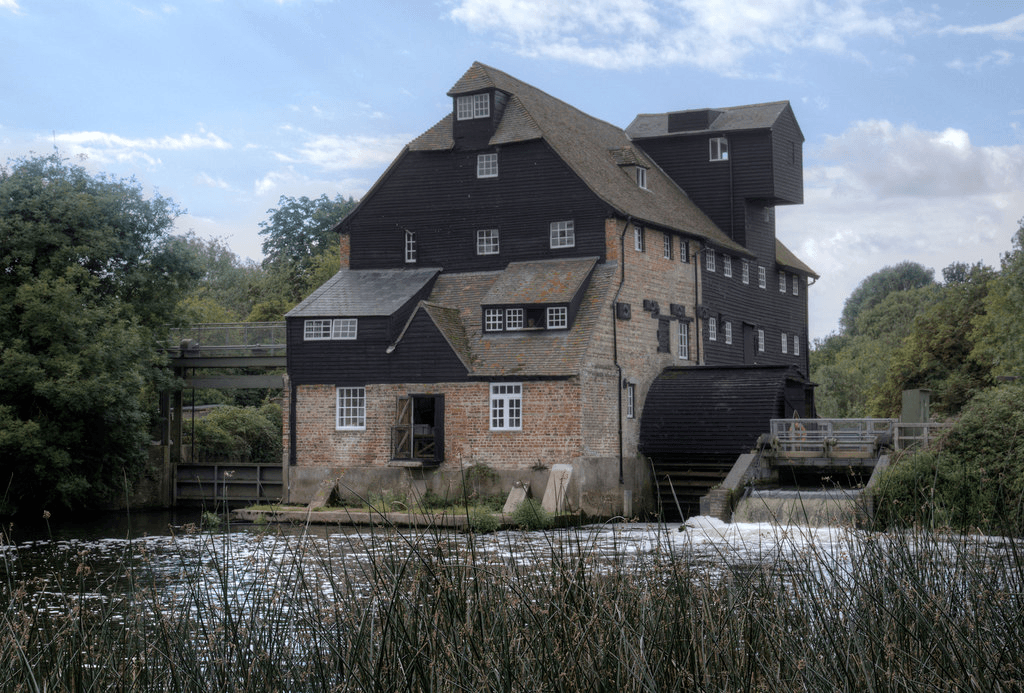 |
Houghton Mill - River Great Ouse © Copyright David P Howard |
THE WALK YOU SHOULD DO THIS WEEKEND (AND THE PUB AT THE END OF IT) |
Spring has finally decided to show up, and if you've got a free hour and a half this weekend, here's the walk I'd do as suggested by one of our readers Rebbeca from Huntingdon.
Start at Houghton Mill the last working watermill on the Great Ouse, owned by the National Trust — and follow the river path through the meadows towards St Ives.
It's flat. It's easy. It's beautiful in that quiet, undramatic Cambridgeshire way where nothing spectacular happens but everything looks exactly right.
The river does what rivers do. The cows do what cows do. The sky is enormous.
You'll pass through Hemingford Grey, which regularly turns up on those "prettiest villages in England" lists and, for once, actually deserves it.
The thatched cottages along the riverbank look like someone built them specifically for the cover of a jigsaw puzzle box.
The whole thing is about three miles each way, almost entirely flat, and suitable for kids, dogs, and anyone who's spent too long sitting at a desk this week.
Here's the important bit.
At the St Ives end, you're a two-minute walk from the town centre, where you can reward yourself properly.
The river views from the quayside are lovely, and if you time it right you'll catch the afternoon light on the medieval bridge chapel one of only four surviving bridge chapels in England, and most people in Cambridgeshire have never set foot in it.
If you want a proper sit-down, there are several good spots in town.
We're not naming favourites this week instead, we want yours.
Over to you: What's your go-to pub or café at the end of a walk in Cambridgeshire?
The one where you arrive slightly muddy, slightly smug, and entirely ready for a drink.
Reply and tell us all. Best recommendations go in next week's issue. |
THAT'S YOUR LOT FOR THIS WEEK |
Right. If you've made it this far, you've earned a cup of tea and possibly a lie down.
This was a big issue. Market Square, the Renters' Rights Act, NHS dentistry, guided busway car traps, SEND schools, Premium Bonds, vet fees, school phone bans, a heat network, a climbing wall, a very good steak, and a charity shop in Burwell that I'm still quietly thrilled about.
If there's a thread running through all of it, it's this: the things that affect your daily life — your home, your money, your kids' school, your dentist, your dog, your council tax bill — rarely make national headlines.
But they're the things that actually matter when you're living in a place, not just reading about it.
That's what Cambridgeshire Spotlight (CBS) is for.
Every reply I get makes this newsletter better. Not in a vague, flattering way literally better.
Your stories, your experiences, your tips and corrections go straight into future issues.
Several pieces in today's edition started as a reader reply.
So if something in here made you nod, made you angry, made you think, or reminded you of something you've been meaning to tell someone hit reply. I read every single one.
If you know someone who'd get something out of CBS a neighbour, a colleague, a family member who lives somewhere in this county forward it to them.
The more people reading, the more useful this becomes for everyone.
Next week: we've got more on the Renters' Rights Act as the 1 May deadline arrives, an update on the Market Square decision, and a piece I've been working on about what's actually happening with GP access across the county.
Plus a few things I haven't finished yet that might surprise you.
Until then enjoy the weekend. Go for that walk. Try the chicken recipe.
And if you drive anywhere near St Ives, for the love of God, watch out for the hole.
Graham Editor
|
Cambridgeshire Spotlight is a free, independent newsletter bringing clarity, context and practical stories from across the county, property, money, local business, families, homes and everyday life.
We work with a small number of trusted local partners each month whose expertise genuinely helps our readers live, work and move more confidently from mortgage specialists and financial advisers to home services, health, family and community experts.
To talk partnerships or share a story:
Now Published every week — designed for people who live and think locally. |