Graham Waite
Apr 12, 2026

Cambridge took control early — not through power, but precision.
Watch how the rhythm builds through the middle stretch and where the race is actually decided.
Most people focus on the finish. The winning move happens much earlier.
Sound familiar? |
This Week In The Spotlight |
Hi Cambs,
This week isn't one story. It's a pile-up.
Parking costs training people to stay away from town.
Nights out killed by transport that clocks off before the city does.
Buyers losing homes in hours to cash they can't compete with.
Landlords already operating under rules half of them haven't read yet.
None of this is abstract policy chat.
This is real people making real calculations every single day:
"Shall we bother going in?"
That's not confidence.
That's a county slowly adjusting its expectations downward and nobody in charge seems to notice or care.
We've broken it all down. Real examples. No fluff. No spin. No protecting anyone's feelings.
Let's go. |
 |
Who Actually Gets a Say Locally — And Does It Still Feel Fair? |
Local elections are coming.
Most of you won't notice until a leaflet hits the mat and goes straight in the bin.
But underneath the noise, there's a question that surfaces every cycle and never gets a straight answer:
Who actually gets a say in how your area is run?
Because the rules aren't what most people assume.
Who can vote right now
For local council elections in England, you can vote if you're a British citizen, an Irish citizen, a qualifying Commonwealth citizen living in the UK, or a citizen of certain countries with reciprocal agreements.
You must be registered and living at an address in the area.
Here's what catches people off guard: you don't need to own property. You don't need to pay council tax directly. If you live there and meet the criteria, you vote.
Where the tension kicks in
This is where it gets uncomfortable.
A homeowner in St Neots told us straight:
"If you're funding the council through tax, surely you should have more say than someone who isn't?"
A renter in Cambridge fired back:
"I live here. I use the services. Why wouldn't I get a vote?"
Neither view is rare.
Neither is going away.
And nobody with any authority is willing to touch the debate honestly.
The council tax problem
Council tax is one of the biggest household hits in the county.
For many, it feels like a direct line to roads, waste collection, and local services.
So the argument surfaces: if you pay more in, should your voice carry more weight?
But the system wasn't built that way. Local democracy runs on residency, not contribution.
Changing that would blow the entire electoral model apart.
Nobody's proposing it seriously. But the resentment is real.
The reality nobody wants to admit
Here's the actual scandal. Turnout for local elections regularly sits between 30% and 40%.
That means the majority of people who can vote simply don't bother.
So while everyone argues about who should be allowed to vote, the bigger question is staring us all in the face: why do so many people not use the vote they already have?
Maybe because they've worked out it doesn't change anything. And maybe they're not wrong.
The Combined Authority mess
This gets worse when you factor in the Cambridgeshire and Peterborough Combined Authority and its elected mayor.
Decisions made at that level affect transport funding, infrastructure projects, and housing growth.
Big stuff. Life-changing stuff.
And yet most residents have no idea what the mayor controls, what local councils control, or who's actually accountable when things go wrong.
A business owner in Huntingdon nailed it:
"I get three different bits of post from three different authorities. I don't know who does what anymore."
That's not voter apathy. That's institutional confusion designed to keep you out of the loop.
Where this is heading
More power is shifting toward combined authorities and regional mayors. Decisions are being made at larger scale. But people still feel the impact locally.
That gap between where decisions are made and where they land is where frustration breeds. And it's growing.
The expert view nobody wants to hear
A local legal professional who works around governance and planning gave us the blunt version:
"The system works on representation, not contribution. The challenge isn't who can vote — it's whether people feel their vote changes anything."
That feeling is what's killing engagement. Not the rules. The results.
The real issue
This isn't about eligibility. It's about trust.
Do people feel heard? Represented? Able to change outcomes?
When the answer is no and for most people across this county, it is no turnout drops and frustration rises.
And the people making decisions keep getting away with it because nobody's watching.
Your call:
Who should have the strongest say in local elections?
A) Anyone living in the area
|
 |
The 7am Property Drop Most Buyers Miss |
Most people still search for homes the same way. Evening scroll. Rightmove. Filter. Save. Repeat.
You're already too late.
A couple in St Neots told us they kept losing out on properties they didn't even know existed.
"We'd book viewings and get told it was already gone. Felt like we were always behind."
Because they were.
Then they changed one thing. They registered directly with three local estate agents.
Within a week, they started getting emails between 7am and 9am properties not yet live online.
One of those became their home.
Here's how the game actually works:
Agents line up buyers before listings go public.
The best properties get early viewings, soft offers, and sometimes they're agreed before Rightmove even knows they exist.
A local mortgage adviser didn't sugarcoat it:
"By the time it hits the portals, you're competing. Before that, you're negotiating."
Two completely different positions. One costs you money. The other saves it.
What to do — takes 20 minutes:
Register with 3 to 5 agents in your target areas.
Ask specifically for "pre-market" or "off-market" alerts.
Have your Decision in Principle ready.
A DIP is a lender confirming what you can borrow — it proves you're serious, not browsing.
A buyer Dylan from Huntingdon summed it up:
"It wasn't about offering more. It was about seeing it first."
Stop playing catch-up. Get ahead of the list.
Have you ever missed a property you wanted?
A) Yes — more than once |
 |
Free Parking Was Promised — So Why Are High Streets Still Empty? |
When parking costs more than what you came to buy, people stop coming. That's not theory. That's already happening.
During the mayoral push, Paul Bristow made a clear promise: free parking for Peterborough. It landed because it matched what everyone already knew.
"Parking is killing the city centre."
Fast forward. Nothing meaningful has changed on the ground.
Shocking. Nobody saw that coming.
Businesses aren't just feeling it they're drowning in it.
Near Queensgate, one retailer told us:
"People don't browse anymore. They come in with a plan or not at all."
On Bridge Street:
"£6 to £8 just to park? That's someone's lunch gone before they sit down."
That's not an exaggeration.
Short-stay parking in central Peterborough now sits in that range, based on current council tariffs. To park.
To spend your own money in your own city.
People aren't comparing Peterborough to Cambridge or London.
They're comparing it to the retail park down the road. Free parking. Easy access. No friction. No hassle.
So the decision becomes brutally simple. Pay to visit, or don't.
The shift is already baked in.
Traders across the county are reporting fewer casual visits, shorter stays, and more "in and out" behaviour. A café owner put it bluntly:
"People don't linger anymore."
Lingering is where money gets spent. Browsing. Second coffees. Impulse buys. That's gone.
Parking generates revenue, yes. And that revenue funds services.
But the trade-off is becoming impossible to ignore.
Higher charges reduce footfall.
Reduced footfall kills high streets.
Dead high streets generate nothing.
Other towns are already experimenting.
Free parking after 3pm.
Short-stay free periods.
Weekend incentives.
They've worked out something basic: footfall matters more than fees.
Locals aren't asking for everything free. They're asking for something that doesn't punish them for showing up.
"Give us an hour free."
If nothing changes, the direction is set in stone.
More empty units.
Fewer independents.
Habits that shift permanently.
Once people stop coming, they don't come back.
This isn't a pricing debate anymore.
It's about whether town centres are designed for people or priced to slowly train them to stay away.
Is parking revenue worth more than a busy high street? |
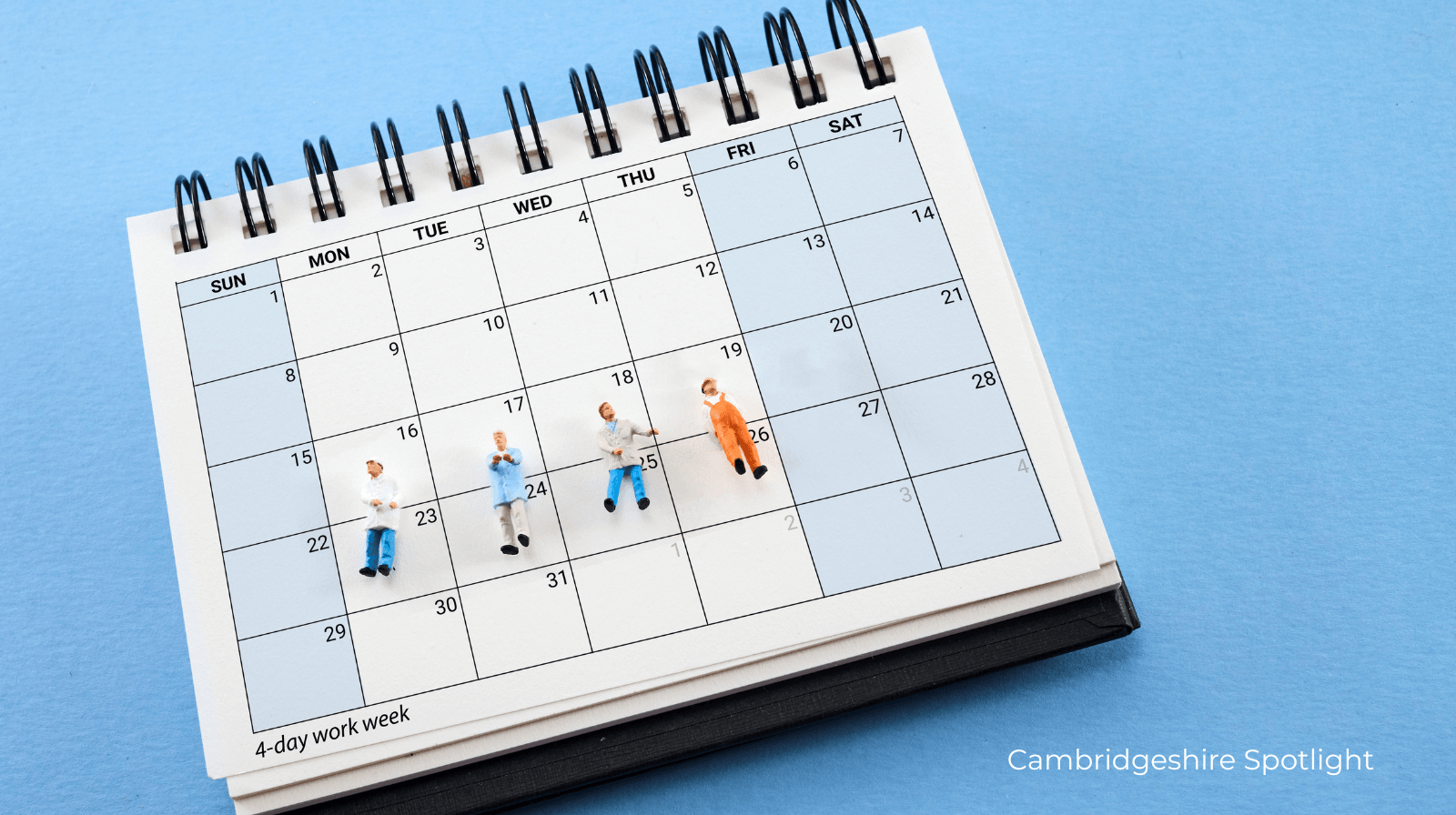 |
Why Trades Are Now Booking 4–6 Weeks Out (And What That Means For Your Wallet) |
Tried to get anything done at home recently?
You've hit the same wall as everyone else.
"Earliest we can do is next month."
That's not bad luck. That's the new normal. And it's not going back.
Karin, a homeowner in St Neots, tried to book a plumber for a leaking radiator. Three calls. Same answer every time: two to four weeks.
For a leaking radiator. Not a renovation. A leak.
What's actually happening
Local trades across the county are stacked solid.
Not because demand has exploded. Because the system has tightened from every angle.
Fewer qualified tradespeople coming through.
Older ones retiring.
More homeowners fixing instead of moving because they can't afford to. Every job that used to take a day now has a queue behind it.
A heating engineer put it straight:
"We're not quieter in winter anymore. It's flat out all year."
The knock-on that's costing people hundreds
Delays don't just cost time. They cost serious money.
Small leaks turning into major repairs. Quick fixes becoming full replacements.
Emergency call-outs at double the rate because you couldn't get a standard booking.
A landlord in Huntingdon learned this the hard way:
"£90 fix became £600 because I waited two weeks."
That's not a one-off. That's the pattern now.
What people are doing differently
Booking trades before problems get urgent.
Keeping trusted contacts saved like they're family. Using the same people repeatedly — trust over price every time.
The shift is clear. People are starting to treat trades like something you plan, not something you call when things break.
What to do right now
If something looks like it might fail act. Don't wait for it to get worse.
Book before it becomes urgent. Ask for the next available slot, not an emergency one.
Because "urgent" now means expensive, delayed, and limited choice.
That's the reality.
The gap between "I'll deal with it later" and "this just got expensive" is now razor thin.
Timing matters more than price. Act accordingly.
How easy is it to get a reliable tradesperson right now?
A) Easy |
Cash Buyers Are Still Winning — But Not For The Reason Most People Think |
 |
 |
One Move That Stops You Losing a Property Before You Even Offer |
Most buyers think they lose homes at the offer stage.
Wrong.
A lot of deals are lost before they even get that far.
Estate Agents prioritise buyers who look ready to proceed.
Not "interested." Not "thinking about it."
Ready
A local agent told us they regularly get multiple enquiries within the first 48 hours.
The first viewings aren't always what matters. The first credible buyer is.
That credibility comes down to three things: a Decision in Principle already in place, a solicitor instructed not "someone you'll find later" — and proof of deposit ready to show.
Small details. Massive difference in how seriously your offer is treated.
One buyer in St Neots missed out twice before working this out.
Third time, they sent their DIP and solicitor details with the offer.
Accepted the same day. Wasn't even the highest.
The difference wasn't budget. It was readiness.
Sort yours out before you view another property. |
 |
We Earn Decent Money — So Why Does It Still Feel Like We're Sinking? |
This question keeps coming up. And not from people on the edge.
From households doing what most would call "fine."
Two incomes. Stable jobs. No major debt.
And yet the same pattern, over and over. Money comes in. Disappears faster than expected.
Nobody can pin point to a single cause.
A parent in St Ives nailed it:
"We're not overspending. We're just constantly catching up."
Where it's actually going
It isn't one big hit. It's five or six smaller ones stacking simultaneously and nobody warned you they'd all land at once.
Energy bills resetting higher after fixed deals end. Council tax increases hitting in April. Food shops creeping up week by week. Childcare costs holding firm or climbing. Insurance renewals jumping without warning.
None of these feel dramatic alone.
Together, they fundamentally change how a household operates month to month.
A couple in Huntingdon only realised the shift when they looked back six months.
Their outgoings had increased by just over £420 a month.
Not lifestyle changes. Just baseline costs moving underneath them.
The invisible trap almost everyone falls into
A local financial adviser told us what comes up in almost every review. People adjust spending. They don't adjust structure.
Instead of stepping back and resetting how money flows, they trim at the edges.
Fewer meals out. Delaying purchases. Cutting subscriptions.
It helps. But it doesn't fix the problem.
Because the underlying system hasn't changed.
You're bailing water without plugging the hole.
The reset that actually works
The households getting back in control aren't doing anything complicated. They're doing three things differently.
First, separating fixed costs from flexible spending.
Most people keep everything in one account, which makes it impossible to see what's actually happening.
Splitting bills, spending, and savings immediately makes the pressure visible.
Second, resetting based on current costs not old ones.
A lot of budgets are still built around 2023 pricing.
That world is dead.
If your plan hasn't been updated, you'll always feel behind because you are behind.
Third, creating a buffer before anything else.
Even a small one. One parent told us they started putting £75 aside at the start of each month before bills went out.
"It's not much, but it stopped that end-of-month panic."
Where proper advice actually earns its money
A well-informed local financial adviser doesn't sell you products.
They restructure how your money is organised.
We heard from one who said most households they see could free up £200 to £400 a month without earning more.
Not by cutting everything back by refinancing expensive borrowing, reviewing insurance properly, restructuring savings and tax allowances, and fixing mortgage terms before further rate changes hit.
That last point matters right now.
A mortgage stress test is what lenders use to check if you could still afford repayments if rates rise significantly often tested around seven percent.
If your current deal ends soon, that future number matters more than your current one. Get ahead of it.
The truth nobody says out loud
People aren't reckless with money.
They're reacting to a system that moved fast and told nobody.
Costs changed. Rules changed. And households are expected to figure it out on their own.
A teacher in Ely put it better than any spreadsheet:
"It's not that we're bad with money. It's that the rules changed and nobody told us."
Quick Reset — start here:
Separate bills and spending accounts.
Rebuild your budget using today's actual costs.
Check when your mortgage or rent resets.
Review insurance before auto-renewal.
Create even a small monthly buffer.
None of this is complicated. But ignoring it is expensive.
What's putting the most pressure on your budget right now?
A) Energy and utilities |
 |
The £7 Habit Quietly Bleeding You of £2,000 a Year |
Nobody budgets for it. Nobody tracks it.
But it shows up in almost every household we speak to.
Convenience spending.
Not big nights out. Not major purchases. Just small, repeated decisions that feel harmless and add up to a disaster.
Coffee on the way to work. A £6 to £8 lunch because there's "nothing in." A last-minute delivery because the day ran long.
One couple in St Neots ran the numbers after feeling permanently stretched.
£7 coffee and snack four times a week. £10 to £12 lunch three times a week. That came out at just over £95 a week.
Across a year: just under £5,000.
They didn't cut it all. They just controlled it. Two packed lunches a week.
Coffee at home three mornings instead of five.
That alone clawed back nearly £2,000 a year.
No dramatic lifestyle overhaul. Just paying attention.
Quick check — do this now:
Look at the last 7 days of spending. Highlight anything under £15. Add it up.
That number is almost always the one people underestimate the most. And it's the easiest one to fix. |
 |
Why Does a Night Out in Cambridge Still End at Half Eleven? |
Cambridge is busy. Restaurants full. Bars packed. Late bookings everywhere.
But step outside after 11:30pm and something changes.
People start checking phones. Not for messages. For how they're getting home.
A group outside Parker's Piece last Saturday said it all:
"We'd have stayed for another drink. But if we miss the last bus, it's a £25 Uber."
So they left. Not because the night was over. Because transport decided it was.
The cut-off nobody talks about
Cambridge isn't short on places to go out.
Around Regent Street and Market Square, weekends are heaving. But transport doesn't match.
Most Park and Ride services stop around midnight. Some earlier.
After that, options narrow fast. Taxis surge. Rides get harder to find.
Walking isn't realistic for most.
So people leave early. Not by choice. By force.
A couple from Histon plan every night out backwards now:
"If the last bus is 11:40, we're leaving at 11:15. Every time."
Another group from St Ives stopped coming in altogether:
"Dinner, maybe. But not drinks after. Getting home kills it."
A taxi to surrounding towns regularly hits £20 to £40 depending on demand.
That's not a minor inconvenience. That's a deal-breaker.
The business side nobody can ignore
Bar and restaurant owners across the city are seeing the same pattern. Tables turning earlier. Fewer late orders. The second half of the night quietly dying.
One operator near Jesus Green was blunt:
"People still come out. They just don't stay."
Late spend is where margins live.
Drinks after 10pm. Desserts. Impulse orders.
Lose that window and revenue drops even when footfall looks fine on paper.
Why nothing changes
A local transport planner spelled out the deadlock:
"You need volume to justify late services. But without late services, you don't build the volume."
That's the loop. And nobody's breaking it.
Other UK towns have tested solutions: extended Park and Ride on weekends, flat-rate late buses after midnight, partnerships between venues and transport providers.
Not perfect. But enough to keep people out spending.
Cambridge?
Nothing. A city that wants to play grown-up nightlife without providing grown-up infrastructure.
What happens if nothing changes
It won't kill nights out. But it'll cap them.
Earlier dinners instead of late ones.
Fewer spontaneous nights. More house gatherings.
Less money staying in the local economy.
Not because people don't want to stay out.
Because the system makes leaving easier than staying.
What actually ends your night out?
A) Transport home
|
Where Are People Actually Going for Steak Across Cambridgeshire (And Why)? |
This isn't a "best steakhouse" listicle. It's where people are actually going back.
Where they've paid once and decided it was worth doing again.
We asked around. Looked at consistent feedback. Ignored the hype.
XOXO Grill House
Comes up constantly from the Peterborough side. Not positioned as a steakhouse first, but people keep ordering steak anyway. Big flavours, generous portions, consistent cooking. One regular: "You don't leave hungry, and you don't feel short-changed." Peterborough folk love it.
Rocker's Steak House - CambridgeMore of a destination. American-style, bold, unapologetic. "It's not subtle, but that's exactly why we go." If you want refined, look elsewhere. If you want a proper steak night out, this lands perfectly.
River Bar Steakhouse & Grill
Not loud. Not overhyped. Just consistently good. Reliable quality, good portions, no nasty surprises. Gavin and Katie from Madingley: "It's our default when we don't want to risk it." Strong position to hold.
Johnson's of Old Hurst
Different league. Farm-based. Meat-led. You can see where it comes from. "You trust it before it even arrives." Feels closer to source than anything else on this list. Bonus: there's a zoo you can walk around during opening hours.
Mina Steakhouse Cambridge
Modern feel. Strong on presentation and flavour. Draws a slightly younger crowd alongside regulars. "It feels like a proper night out, not just a meal."
The Cambridge Chop House
Still one of the few central Cambridge spots holding its standard. Simple approach — let the meat do the work. "They haven't tried to reinvent it, and that's why it still works."
Middletons Peterborough
Specifically the Black Rock Grill. Hot stone cooking at the table. You finish it how you want it. Interactive, which makes it popular for groups. Route 47 American Steakhouse & Grill - Thorney Toll Nr Wisbech
Bold American-style. Large portions. No restraint. Amanda from Leverington: "It's not delicate, but it delivers."
The Blackrock Grill and Smokehouse
Smoked meats alongside steak. Different flavour profile. Depth and slow cooking that stands out if you're bored of standard steakhouse menus.
The pattern across all of them: People don't mind spending.
They mind wasting money. If the meal feels worth it, they come back. If it doesn't, no second chance. Ever.
And a heads-up for owners: if a customer complains, take it seriously. If the food's good, they might tell a few friends.
If it's bad, they'll make sure everyone they know hears about it. That's the game now. |
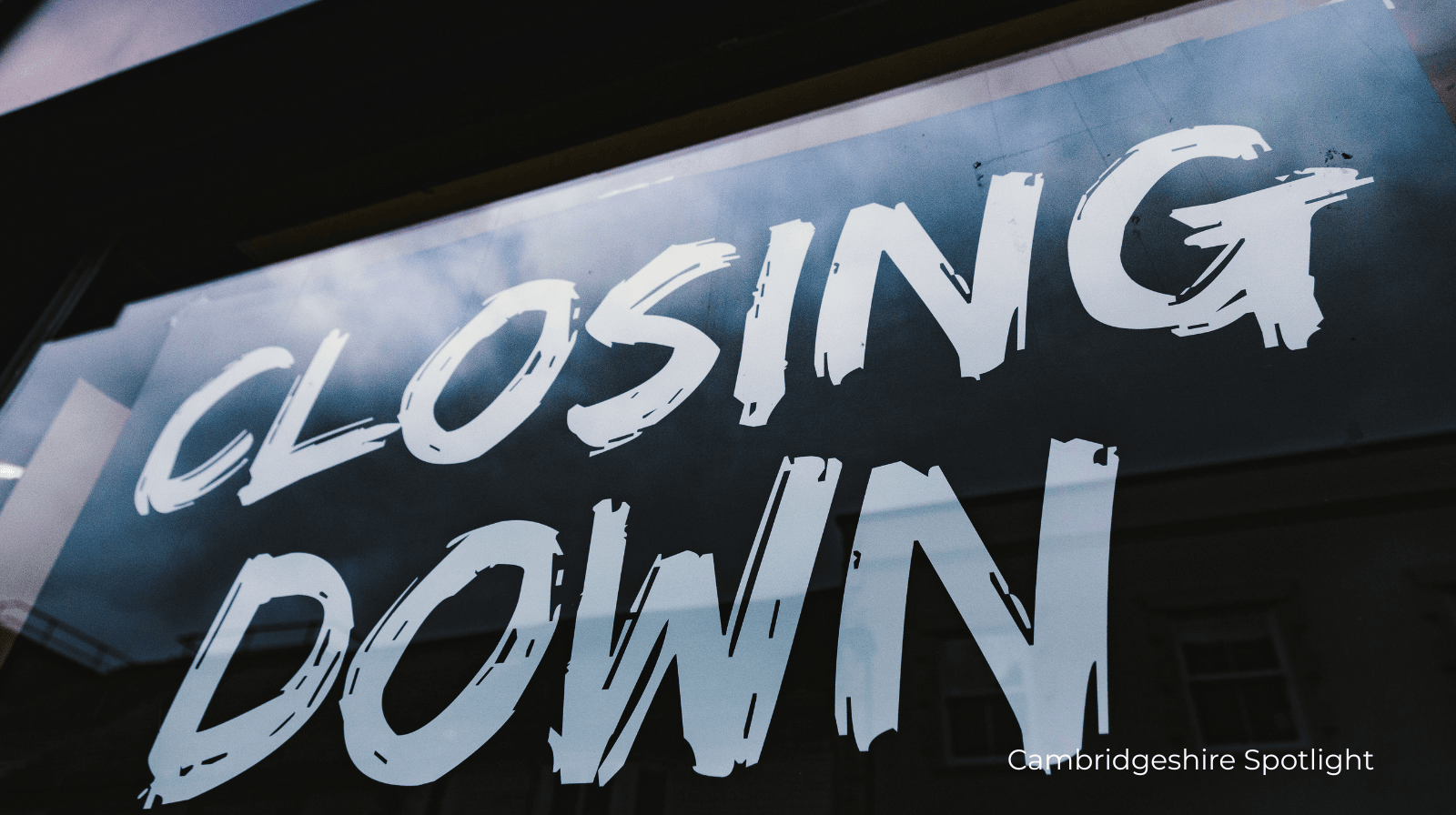 |
Why Are Shops Closing When Town Centres Still Look Busy? |
Walk through Cambridge, Huntingdon, or Peterborough and the contradiction hits you immediately.
Cafés are full. Pavements are active. Weekends still feel busy.
And between those pockets of activity empty retail units that haven't turned over in months. Some with dust on the windows.
This isn't a footfall collapse. It's something more specific and harder to fix.
A retailer near Grand Arcade told us their weekly footfall has barely shifted in two years.
What's changed is what people do when they arrive.
"People still walk past in the same numbers. They're just more selective. They come in with a plan, or not at all."
That distinction is everything.
The cost pressure isn't where you think
The assumption is that shops close because revenue collapses. That's lazy thinking.
What we're hearing across the county is more precise. Turnover is holding in many cases. Margin is not.
A local accountant who works with independent retailers laid it out:
business rates have remained high relative to turnover, energy costs are still elevated compared to pre-2022 levels, staffing costs have risen steadily, and stock pricing has become unpredictable.
Individually, manageable. Together, they compress profitability until a business can be visibly busy and still not viable.
One owner in Huntingdon didn't hold back:
"We're taking money, but we're keeping less of it every month."
That's not a business failing. That's a business being squeezed to death by the system around it.
Customer behaviour has shifted more than anyone admits
Browsing has collapsed. Visits are shorter. Decisions are made before someone enters the shop.
Customers come in, check sizing or quality, then buy online after comparing prices.
That behaviour was once occasional. Now it's standard operating procedure.
A shop owner near Fitzroy Street sees it daily:
"We've effectively become the showroom. The transaction doesn't always happen here anymore."
You're paying rent, rates, energy, and staff so someone can try things on before buying from Amazon at home. That's the reality of high street retail in 2026.
Parking still shapes decisions whether councils admit it or not
When retail parks and supermarkets offer free parking and the town centre charges you before you've spent a penny, the comparison is instant and devastating.
A café owner in Peterborough: "If someone's thinking about popping in but it costs £5 to park, they start asking whether it's worth it." At scale, that hesitation empties streets.
Landlords are keeping units dead longer
Commercial rents aren't adjusting to reality. Landlords are reluctant to reduce rents because it affects valuations across their portfolios.
The result is a stand-off. Businesses can't make the numbers work. Units sit empty. Everyone loses.
A commercial property adviser described it as a pricing gap, not a demand gap:
"There are tenants. Just not at those numbers."
So units rot while landlords wait for a market that isn't coming back.
What the survivors are doing
The businesses still standing aren't relying on footfall alone.
They're combining physical with online, using in-store experiences to create reasons to visit, and cutting their footprint to stay flexible.
Events, workshops, community activity it's becoming the model, not the add-on.
The direction is already set
High streets aren't disappearing. They're narrowing. Hospitality, services, experience-led businesses are replacing traditional retail.
The risk isn't that town centres vanish — it's that they become so thin on variety that there's no reason to visit at all.
If people are still coming but spending differently, the challenge isn't attraction.
It's giving them a reason to stay and a reason to spend once they arrive. And right now, most town centres are failing at both. |
 |
Doctor Strikes Aren’t At Your GP — So Why Are Appointments Still Harder To Get? |
On paper, resident doctor strikes affect hospitals. Not GP surgeries.
So why is getting an appointment across Cambridgeshire still a battle?
Because the system doesn't exist in neat little boxes, no matter how much politicians pretend it does.
When hospital doctors strike, pressure doesn't disappear. It migrates. Hospitals reduce non-urgent work. Appointments, follow-ups, and procedures get postponed.
Those patients get redirected back to their GP for interim support. A&E and 111 push people toward GP routes.
Admin test results, referrals, discharge summaries — slows down or stacks up, creating more work inside practices.
A patient in Huntingdon:
"I couldn't get through to the hospital team, so they told me to contact my GP instead. They were already full."
A local healthcare professional explained it simply:
"It's not that GPs are part of the strike — it's that they absorb the impact."
Pressure flows downhill.
GPs are at the bottom of that hill.
And nobody's building them a wall.
What to do this week: Call as early as possible demand peaks fast.
Use NHS 111 for triage if unsure.
Go directly to a pharmacy for minor conditions they can now treat more than people realise.
GP access isn't changing because they're closed.
It's changing because everything around them is under pressure and the overflow lands on their desk. |
 |
Why Independent Coffee Shops in St Neots Are Still Packed |
With costs rising everywhere, you'd expect small cafés to be struggling. In St Neots, several independents are doing the opposite.
The difference isn't the coffee. It's habit.
A regular: "I don't go because it's cheaper. I go because I know exactly what I'm getting."
The cafés holding steady are nailing three things: consistency same quality every visit; familiarity staff remember faces, not just orders; and low-friction visits quick service, easy in and out.
One owner told us mornings are now their strongest window, not weekends.
"People build us into their routine. That's what keeps it stable."
This isn't about competing with chains on price.
It's about becoming part of someone's week.
And right now, that's proving more bulletproof than anyone expected. |
 |
Three Local Signals You Might Have Missed This Week |
St Ives — Marley Road / Compass Point expansion back on the table
Fresh planning conversation picking up again around edge-of-town development.
Nothing final, but residents are already raising the usual concerns: increased traffic onto Houghton Road and Harrison Way, pressure on primary school places, GP capacity already stretched.
Others are pushing back hard: there simply aren't enough homes, especially for first-time buyers.
Clive, a local resident, put it bluntly:
"Everyone says we need housing — until it's near them."
Most of us are closet NIMBYs. Same argument. Same deadlock. Just back on the table again.
Huntingdon — A141 / Brampton Road delays becoming the new normal
Roadworks and traffic pressure stacking around A141 routes into Huntingdon.
Nothing officially "major disruption",
But journeys that used to take 20 minutes are regularly pushing past 30 during peak times.
"It's not one big hold-up. It's just slower everywhere."
That kind of delay doesn't make headlines. But it changes behaviour earlier departures, route changes through villages, congestion spreading outward.
That's how small delays become daily misery.
Market Towns St Ives and St Neots markets seeing steady return Weekend markets showing a noticeable, steady lift.
Not a surge. Not packed. But consistent.
Traders are noticing different customer behaviour: fewer impulse buys, more deliberate spending, repeat visits building again.
"People aren't spending loads, but they're coming back."
That matters more than one busy Saturday. It signals habit rebuilding — not curiosity.
What these signals point to: Housing vs infrastructure deadlock.
Small delays compounding into routine frustration.
Cautious spending but not withdrawal.
Nothing dramatic.
But definitely change you should be watching. |
 |
The School Run Is Getting More Complicated Not Easier |
For most families, the school run used to be predictable. Now it's a logistics operation.
A parent in St Ives:
"It's not just drop-off anymore. It's breakfast clubs, after-school clubs, and figuring out who's picking up."
Three pressures stacking: wraparound care availability varies wildly, costs for clubs have crept up, and work schedules are less flexible than families need.
"You're constantly patching the week together."
Some are sharing pickups with other parents.
Others are reducing after-school activities altogether. Some are quietly adjusting working hours just to make it function.
This isn't a crisis. But it's a shift and it's restructuring how families operate week to week with zero support from anyone in charge. |
 |
Why Most Dog Training Fails at Home (And What Actually Works Instead) |
Most people think their dog needs more training. Wrong. It's consistency.
A local dog trainer sees the same pattern every week:
"The dog knows what to do. The routine just isn't sticking at home."
That's where everything falls apart. Not in the session. In the gaps between them.
One person allows something, another doesn't. Commands change "down" versus "off."
Rules slip when people are tired. From the dog's perspective, it's chaos.
So they default to what works for them. Jumping up. Ignoring recall.
Pulling on the lead. Not because they haven't learned. Because the rules keep moving.
The owners getting results aren't doing more. They're doing less the same way, every single time. Same words. Same response. Same boundaries.
One owner in St Neots stopped trying new techniques and stuck to one approach for two weeks:
"That's when it clicked. Not for the dog — for us."
Simple reset this week: Pick one behaviour to fix — not five.
Agree the exact command everyone uses.
Stick to it for seven days, no exceptions. It sounds basic because it is. That's where progress actually happens.
For people wanting structure without weekly sessions, the Smarter Paws training hub offers step-by-step routines you can follow at home we've agreed a free starter membership for all Spotlight readers. Click to register.
Most behaviour issues aren't training problems.
They're consistency problems. Fix that, and things move faster than you expect. |
 |
Indoor Cats Are Costing Owners More Than They Expect |
More people keeping cats indoors. Vets seeing a quiet trend: weight gain, lower activity, related health issues.
A vet nurse from March:
"They're safer indoors but they're moving less, and it shows."
Owners adapting with feeding puzzles instead of bowls, rotating toys regularly, and creating vertical spaces like shelves and climbing areas.
Small changes, but they make a measurable difference over time. Ignore it and the vet bills will remind you. |
 |
Why People Are Going to the Salon Less — But Expecting More When They Do |
People aren't cutting back on hair and beauty. They're spacing appointments out and spending properly when they do go.
A stylist in St Ives:
"Clients are coming in less often, but doing more when they're here."
Full colour instead of top-ups. Proper treatments instead of quick fixes. Longer appointments booked further in advance.
A client from Huntingdon explained the shift:
"If I'm going, I want to leave feeling like it was worth it. Not just 'that'll do.'"
That mindset is showing up everywhere. People aren't saying no.
They're saying "make it worth it."
Salons are seeing low cancellations, earlier rebooking, and clients asking more questions before committing.
Less impulse. More intention.
If you've got something coming up, plan ahead. Last-minute slots are harder to find.
The better stylists are booked out further than most expect.
How much do you spend on hair and beauty each month?
A) £10–20 B) £21–40 C) £41–70 D) £71–120 E) £120 plus |
 |
The £10 Lunch Has Become the New Normal - Deal With It |
A quick lunch used to be £5 to £6. Those days are dead.
Now across most towns it's landing at £9 to £12. People haven't stopped buying.
They've changed how often. A worker in Cambridge:
"I still go out — just not every day."
Fewer spontaneous lunches. More planned ones. Higher expectations when money does get spent.
Not a drop in demand. A change in behaviour.
And here's the problem changed behaviour tends to become permanent.
That's when businesses start to struggle, especially if they're not at the top of their game every single time. |
 |
Local Facebook Groups Are Now Driving Real Decisions |
More than people admit.
From trade's recommendations to school advice to local warnings Facebook groups and WhatsApp chats are shaping daily behaviour.
"I trust local groups more than Google now."
That's powerful. Reputation spreads faster. Bad experiences travel further.
Good businesses grow through word-of-mouth again.
Digital but hyper-local.
And if you own a trade business, remember this: when you consistently appear in your ideal customer's mind online or in their inbox you're more likely to get the work than the people relying on Google searches or paid ads.
Visibility beats advertising. Every time. |
 |
Why School Places Are Becoming a Bigger Worry — Earlier Than Expected |
Some parts of Cambridgeshire are fine.
Others are already tight. And in a few cases, parents are saying it's approaching "no spaces left."
That's the situation across parts of St Neots, Huntingdon, and surrounding villages right now.
What's changed isn't just availability. It's timing. Parents are thinking about school places earlier than they used to.
Not panicking. Planning sooner.
Because once preferred schools fill, choices narrow fast and often in ways that don't work for daily life.
Sophie, a parent in Huntingdon:
"It's not just getting a place. It's getting one you can actually manage day to day."
That means within reasonable distance, manageable drop-offs alongside work, siblings at the same or nearby schools.
When those don't align, it creates knock-on havoc longer commutes, complicated childcare, more pressure on already overloaded routines.
Local authority data shows that while overall places exist across the county, they're not always where families need them.
That's where the frustration boils: not "no places at all" but not enough in the right places.
Parents are checking catchment areas earlier, speaking to schools before application windows, and factoring school options into house moves.
One parent in St Neots:
"We're thinking about schools before we even think about the house now."
This isn't something most people consider until they have to.
But when it hits, it becomes urgent overnight.
Unlike most decisions, you don't get many second chances.
Leave it late and you're not choosing you're taking whatever's left. |
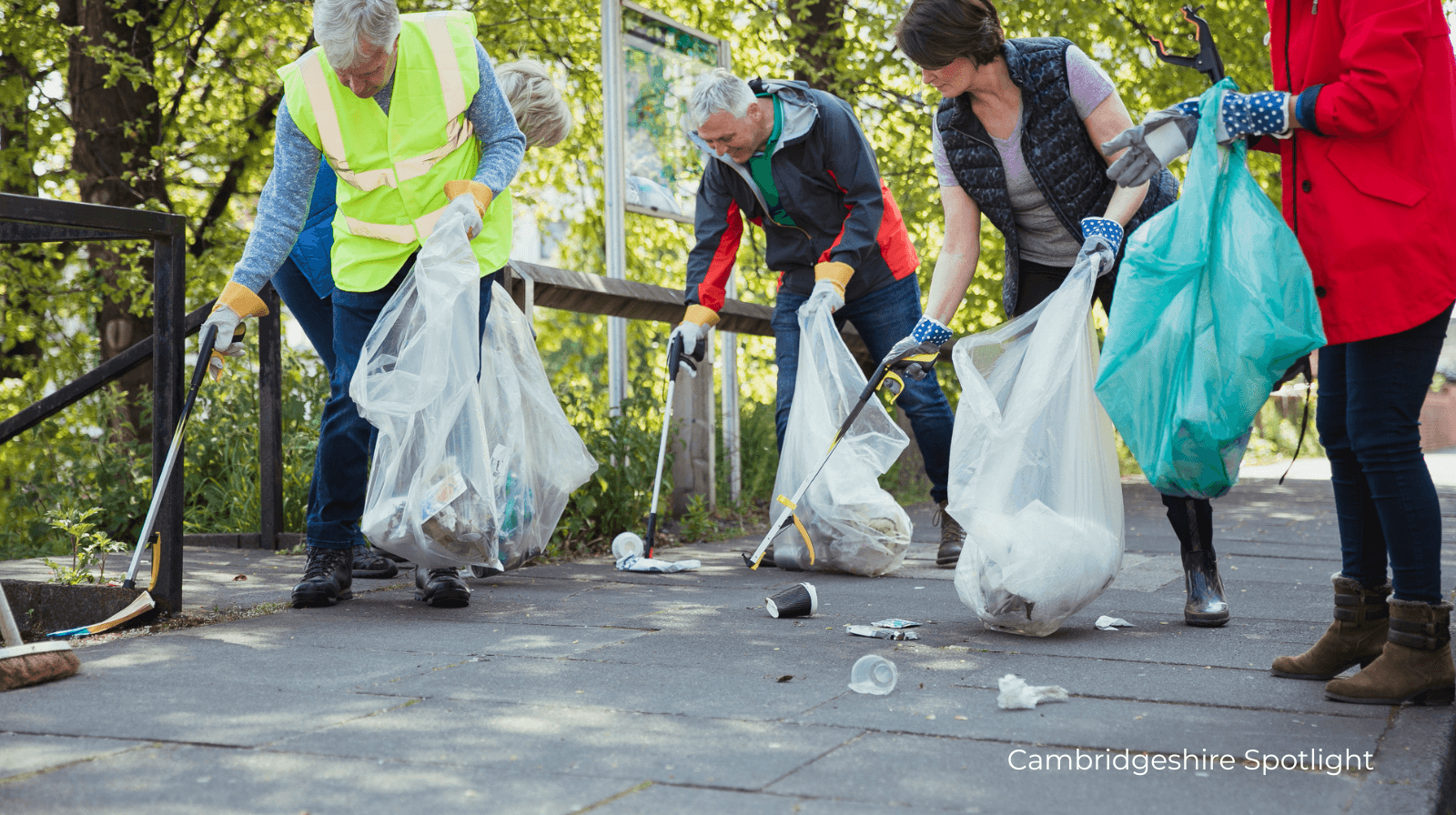 |
The Rise of Local Volunteer Groups |
Not headline news. But it's noticeable and it matters.
Across several towns, smaller volunteer-led initiatives are picking up again: litter groups from schools and parents and youth organisations, community cafés, local support networks.
A volunteer in Ely: "People want to feel part of something again."
Not massive. But consistent. And that's usually how real things grow quietly, from the ground up, while everyone in charge is looking the other way. |
 |
That's a wrap. No spin. No favours. Just the truth they'd rather you didn't hear. |
Next week? We go harder.
We're ripping the lid off the stories your local press won't touch — and answering the questions they don't have the guts to ask.
RENTS
They'll tell you the market's opening up. More choice. More protection. Reforms working.
Rubbish.
Some properties are gone in 48 hours.
Others are rotting on listings for weeks. Same streets. Same prices.
Something doesn't add up.
Does the Renters Act actually protect you or is it quietly strangling your options while landlords cash out?
We've got the numbers. We'll name the pattern. You decide who's lying.
TOWN CENTRES
Busy on a Saturday? Don't be fooled.
Footfall means nothing when spend-per-head is collapsing. Business rates are up.
Energy costs are brutal.
The minimum wage hike and NI increases aren't just hurting they're killing shifts, cutting staff, and hollowing out businesses from the inside.
Some traders told us they're already counting down the months.
That "thriving high street" story? It's a corpse with makeup on.
SCHOOL PLACES
The postcode lottery is rigged and getting worse.
The best schools?
Oversubscribed. The rest? Sliding.
And nobody in charge wants to say it out loud.
Parents are gaming the system months in advance relocating, adjusting addresses, doing whatever it takes.
Because if you leave it late, you don't get a choice.
You get what's left.
We'll show you which schools are sinking and why nobody's talking about it.
AND THEN THERE'S THE STUFF WE CAN'T SAY YET.
Backroom deals. Public money. Familiar names. Uncomfortable questions.
Let's just say some people in this county should be very nervous about what lands in your inbox next week.
They won't print it. We will.
Stay sharp. Stay subscribed. Stay angry.
This is Cambridgeshire Spotlight. The News Unfiltered. |