Graham Waite
Jun 4, 2026

Espresso Briefing: Same County, Different Cracks |
Cambridgeshire has no shortage of ambition.
New towns. Bigger transport schemes. Cambridge growth stories.
Housing plans. “Sustainable communities.” Family attractions. Summer events. Better routes. Better homes. Better services. Better everything, apparently.
The harder question is whether the basics are keeping up.
Can the roads cope when one thing closes?
This issue is not asking whether Cambridgeshire should grow.
It is asking whether the county is fixing the things that make growth liveable.
Because ambition only counts if the roads, schools, dentists, water, homes, family budgets and local services do not get left behind.
|
 |
Waterbeach: When A New Town Starts Looking Bigger Than Existing Cities |
Waterbeach is not just “a few more houses near Cambridge.”
South Cambridgeshire’s spatial framework describes Waterbeach New Town as approximately 8,000 to 9,000 dwellings on the former barracks and land to the east and north.
Greater Cambridge Planning also notes outline permission for up to 6,500 homes on the western parcel, with employment space, schools, community facilities and infrastructure.
That is not an estate.
That is a new place big enough to change how the county works.
The question is not just whether Cambridgeshire needs homes. Of course it does.
The question is whether a development at this scale gets the things that stop it becoming a long-term pressure point:
We asked a few local for their thoughts these were some of their comments
The official language is “new town.” Residents will judge it by something simpler:
Does it work once people move in?
Add your view to the Facebook thread here:
Image: © Copyright Hugh Venables
|
 |
St Ives, Earith And The Road Network That Fails When One Thing Goes Wrong |
This is the sort of local issue that never sounds dramatic until you are the one stuck in the diversion.
St Ives, Earith and the surrounding villages already know what happens when a key route floods, closes or clogs up.
One weak point goes, and suddenly a normal journey feels like you have been entered into a county-wide treasure hunt without consent.
A public notice for Harrison Way A1096, St Ives listed a temporary prohibition of through traffic between Low Road and Parsons Green, with the alternative route via A1096, A1123, A141, A1307 and A1096.
That is not a quick nip round the corner.
And Earith is not some theoretical concern.
Local roadworks notices and the existence of dedicated Earith Bridge road/river-level information show how important that route becomes when water and closures are in play.
That is why housing growth becomes a road story.
New homes do not arrive alone.
They bring school runs, GP trips, delivery vans, supermarket journeys, visitors, tradespeople and people trying to get to work before the diversion eats their morning.
You cannot keep adding homes to a road network that behaves like one closure is a personal crisis.
This one needs local examples: which road, bridge, junction or flood route causes the biggest knock-on chaos where you live?
Add your example to the Facebook thread here
https://m.me/CambridgeshireSpotlight
|
 |
Cambridge Gets The Growth Story. Does The Rest Of The County Get The Strain? |
Cambridge is the name everyone knows.
The university. The science parks. The global companies. The cycling image. The research. The money. The clever-city headlines.
But Cambridgeshire is not just Cambridge.
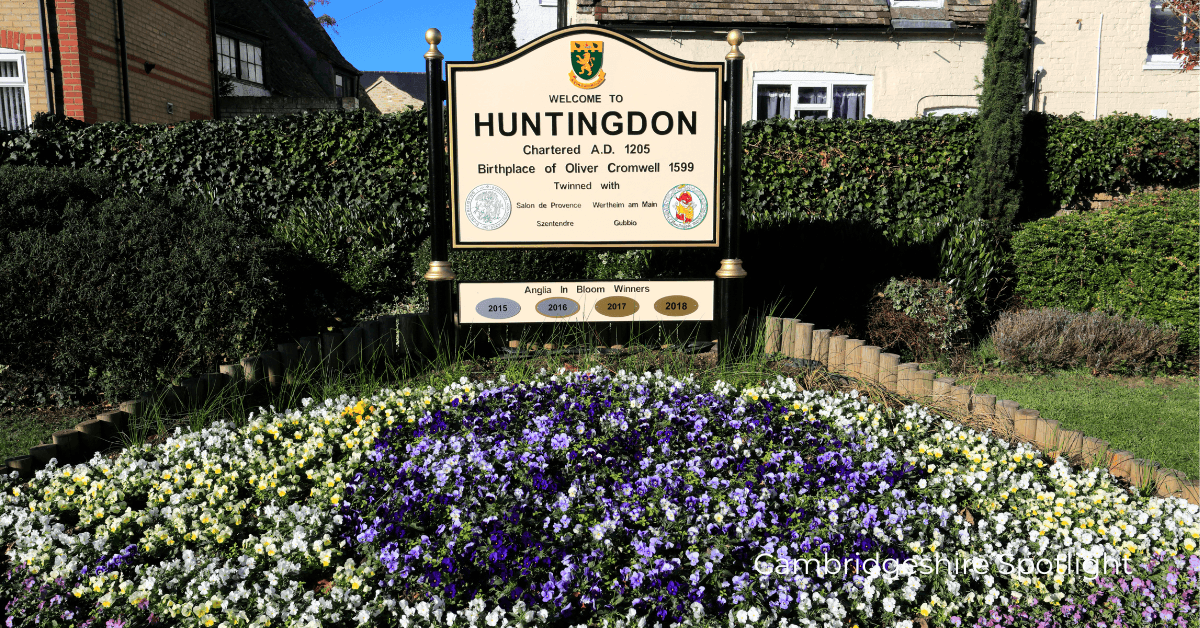
It is also St Ives, March, Wisbech, Ely, Huntingdon, St Neots, Whittlesey, Soham, Littleport, Chatteris, villages on fragile roads and communities where one bad junction or missing bus route changes daily life.
The local government reorganisation consultation for Cambridgeshire and Peterborough included several options for replacing the current structure with new unitary authorities.
The official proposals include different two and three-unitary models, which means residents are right to ask how power, services, debt, identity and investment would shift.
This should not become a lazy “Cambridge gets everything” moan.
The better question is:
If the county is being reshaped around growth, what should places outside Cambridge demand in return?
Better buses?
Because growth is easier to sell from a conference stage than from a queue on a road that already cannot cope.
Tell us your practical version:
What should places outside Cambridge should the residents demand in return. Reply To This Message
|
 |
The £16Om Busway Row: Greener Transport Or Countryside Trade-Off? |
Everyone says they want better public transport.
Then the route goes through somewhere people love.
That is why the Cambourne-to-Cambridge busway row has become such a useful Cambridgeshire argument.
Guardian reporting said the proposed £160m busway faced criticism over the route through Coton Orchard, with more than 24,000 people signing a petition opposing it; supporters argue the scheme is needed for sustainable transport and growth, including serving major housing development.
This is not a simple “cars bad, buses good” story.
It is harder than that.
Cambridgeshire needs better transport. But residents also ask whether “sustainable” still counts if the route damages valued green space, old trees or countryside people think should have been protected.
The awkward local test is this:
Can we build better transport without treating the countryside as the easiest thing to sacrifice?
This feels like one for a proper county-wide debate: where should Cambridgeshire draw the line between better transport and protecting green space?
Message privately here: https://m.me/CambridgeshireSpotlight
|
 |
Should Children Automatically See An NHS Dentist Every Year? |
This sounds like it should be simple.
Children get free NHS dental care.
The answer is: usually, yes but not in the automatic “the NHS will definitely call you in every year” way many parents might assume.
NHS guidance says your dentist recommends when you should come back after a check-up.
That interval can be as short as 3 months or as long as 2 years, but for under-18s it is up to 1 year. NHS guidance also says children should be taken to the dentist when their first milk teeth appear, or before they are 12 months old; NHS dental care for children is free.
So the principle is clear enough:
Children should not be drifting for years without a dental check.
The real problem is access.
A free child NHS check-up only helps if parents can actually get the child seen before pain, swelling or a broken tooth turns it into an urgent problem.
Before assuming everything is fine, parents can ask:
A child’s dental check should not feel like winning a local lottery.
Useful resources: NHS dental check-up guidance and NHS children’s teeth guidance.
This is one for parents and grandparents: can children in your family get routine NHS dental checks locally, or does it feel like help only appears once there is pain?
Add your experience here: Comment On Facebook
|
 |
Mortgage Debt Consolidation: Lifeline Or Expensive Delay? |
Debt consolidation sounds calming.
One payment. Lower monthly pressure. Everything tidied up.
And sometimes, it can help.
But if you roll credit cards, loans or overdrafts into a mortgage, the question is not just:
“Is the monthly payment lower?”
It is:
“What will this cost over the full term and what risk have I moved onto my home?”
Say someone has £10,000 of credit card debt at a high APR. Moving that into a mortgage can look sensible because the mortgage rate may be much lower.
But the repayment period changes the whole story.
If the debt stays on a credit card, the rate may be painful, but the debt is usually unsecured and can be cleared faster if attacked properly.
If it moves to a personal loan, the rate may be lower than the card for some borrowers, and there is often a fixed end date over 3–5 years.
If it is added to the mortgage, the monthly payment may look much smaller but the debt could be spread over 20 or 25 years.
That is the trap.
A lower rate over a much longer time can still leave you paying more than expected.
MoneyHelper explains the difference between secured and unsecured borrowing, and warns that secured borrowing is usually secured against an asset such as your home; if you miss repayments on homeowner-style loans, you could lose your home.
It also notes secured loans are usually repaid over longer periods, so can cost more in interest overall.
Debt consolidation is not automatically wrong.
But it should never be treated like a tidy admin trick.
Before doing it, compare:
A lower monthly payment can still be a more expensive mistake.
Save this one before panic takes over: would you know the difference between debt consolidation that genuinely helps and debt consolidation that just stretches the problem? |
 |
Who Has Cambridgeshire’s Best Pub Garden? |
Hot weather turns pub gardens into serious local infrastructure.
Not officially, obviously. Nobody is putting “excellent parasol coverage” into a county strategy document.
But readers know.
A proper pub garden needs more than outside tables and hope.
It needs shade. Decent seating.
Toilets that do not ruin the mood.
Food that does not feel like an afterthought.
Somewhere dogs are not treated like suspicious luggage.
Somewhere children can exist without everyone pretending they have just seen a raccoon in the bar.
For Cambridgeshire Spotlight, this should become a reader-built shortlist rather than us pretending one place can win the whole county.
Categories we want:
Tell us the pub name, town/village, what makes the garden good, and whether it is best for families, dogs, food, drinks, shade or views.
|
 |
Forest City: Big Housing Solution Or Cambridge Growth Fantasy? |
If Waterbeach sounds big, Forest City makes it look like a warm-up act.
The proposed Forest City plan has been reported as a possible new settlement east of Cambridge for around 1 million people, with about 400,000 homes.
The plan’s own material describes a greenfield site east of Cambridge that would eventually house nearly 1 million people in 400,000 homes.
Recent reporting has described it as audacious and highly controversial and it is a proposal, not an approved scheme.
That distinction matters.
This is not a planning application with diggers ready to move in.
But even the fact it is being seriously discussed tells us something about the scale of Cambridge’s housing problem.
The supporters will say Britain needs bold answers, not tiny extensions to already stretched towns.
The sceptics will ask:
So the question is not only whether Forest City happens.
It is whether Cambridgeshire has reached the point where normal housing arguments no longer feel big enough.
This one deserves a proper debate: is a million-person city near Cambridge a serious answer to the housing crisis, or proof that growth talk has entered science fiction territory?
Add your view here: Post On Spotlight Facebook
|
 |
In This Heat, Should New Builds Have Air Conditioning? |
The UK has just had a May that did not feel like May.
Recent coverage reported the UK May and spring temperature record being provisionally broken, with 35.1°C recorded at Kew Gardens on 26 May 2026.
That makes summer comfort a housing question, not just a weather moan.
For years, the big housing focus has been warmth and energy bills. Fair enough.
But hotter summers raise a different question:
Are homes being built to cope with heat as well as cold?
A modern home can be energy efficient on paper and still feel unbearable upstairs at 10pm.
Typical costs vary, but Checkatrade’s 2026 guide says a 12,000 BTU wall-mounted unit averages around £750, plus about £1,150 for installation.
It also says air-conditioning engineers typically charge around £500–£720 per day.
Running costs matter too. A 1kW portable unit running for 6 hours at an electricity unit rate of about 26.11p per kWh would cost roughly £1.57 per night.
Over 30 hot nights, that is about £47 just for one unit.
That does not mean every home should simply have air-con bolted on. Better design should also consider:
A home that is cheap to heat but unbearable to sleep in is not finished properly.
This feels like a proper summer housing test: is your newer home comfortable in hot weather, or do upstairs rooms become unusable?
|
 |
March Open-Space Row: Why “Just Two Homes” Can Still Make People Angry |
Sometimes a planning row is not really about the number of homes. It is about trust.
Fenland Council’s plan for two homes on Brewin Avenue open space in March was withdrawn minutes before committee after public backlash and an officer recommendation for refusal.
The planning committee record also notes the application was withdrawn.
Two homes does not sound like a county-shaking development. But that is exactly why it matters.
If residents believe an open patch, play space or informal green area is part of the neighbourhood, losing it can feel like another tiny piece being chipped away.
The official description may say land. Residents may say:
“That is where children play.”
Those two versions can collide very quickly.
This is the planning lesson: small schemes can trigger big anger when residents feel nobody understood what the space meant.
Tell us the local version: which small green space, informal play area or open patch would your area fight to protect?
Message privately here: https://m.me/CambridgeshireSpotlight |
 |
Will The Summer VAT Cut Save Families Enough To Notice? |
The government’s temporary VAT cut reduces VAT from 20% to 5% for qualifying children’s meals, children’s admission tickets and certain family attractions from 25 June to 1 September 2026.
But families need the maths, not just the headline.
A VAT cut from 20% to 5% does not mean 15% off the final price. If a ticket is £120 including 20% VAT, the pre-VAT price is £100. Add 5% VAT instead, and the price becomes £105.
So the visible saving, if fully passed on, is £15 or 12.5% of the original final price.
Useful? Yes.
A summer transformed? Maybe not.
For a Cambridgeshire family, the real cost of a day out might include:
The business side matters too.
Attractions, venues and cafés may need to update ticketing systems, tills, menus, websites and VAT coding for a short summer window.
So the real question is:
Will families see the saving clearly enough to change where they go?
If venues pass the saving on, where would you actually visit this summer?
Private reply: https://m.me/CambridgeshireSpotlight |
 |
Summer Car Check: The Boring Stuff That Saves The Day Out |
Summer car problems are boring until they ruin the day.
Coolant light. Flat tyre. Dead air con. Empty screen wash. Wipers smearing dust into paste. Warning light ignored since February. Child seat loose. Boot packed like a skip.
In Cambridgeshire, this matters because a “quick trip” can still mean the A14, A10, A141, A1307, country lanes, a diversion, children in the back and someone saying “we should have checked this before we left.”
Before the next family day out, check:
Nothing says family day out like arguing beside a hot road because the coolant light came on.
Save this checklist before the first proper summer drive.
Got a small car problem that ruined a day out?
|
 |
Five Places To Cycle For Lunch In Cambridgeshire |
A cycle-and-lunch route sounds wholesome.
It is only wholesome if the route does not involve arguing with traffic, getting lost, discovering there is nowhere to lock the bike, then eating a sad packet of crisps outside a closed café.
Cambridgeshire has good candidates, but the details matter.
St Ives to Cambridge via the guided busway path
Cambridge to Grantchester
Ely riverside
Grafham Water
Wicken Fen
St Neots / Ouse Valley
Before you go, check:
This one needs nominations: where can people cycle for lunch without the route turning into a stress test?
Tell us your route and food stop here: |
 |
Lidos, Lakes, Rivers And Cold-Water Risk |
Hot weather makes water look friendly.
It is not always friendly.
Cambridgeshire has plenty of tempting water: the River Cam, the Great Ouse, lakes, lidos, country parks, drains and open-water spots people may be drawn to when the temperature jumps.
The safer route is supervised swimming.
Jesus Green Lido in Cambridge is one obvious county landmark.
Peterborough Lido has listed water-safety sessions in June and is also relevant for readers at the northern end of the county.
The risk is when hot weather pushes people towards unsupervised water without thinking.
Watch for:
This is not about killing summer fun.
It is about choosing the version of summer fun that does not become a headline.
Save this if your family swims, paddles or heads near rivers/lakes in hot weather.
Tell us where you have seen people swimming where you think it high risk |
 |
First-Time Buyer Deposit: Three Cambridgeshire Routes |
First-time buyers are often talked about as one group.
They are not.
A Cambridge renter trying to save while paying high rent is not in the same position as a graduate working near the science parks, or an NHS/key worker looking beyond Cambridge toward Ely, St Neots, Huntingdon, March or villages.
Three routes:
The Cambridge renter
The graduate / science park worker
The NHS or key worker
Ask early:
The hardest part is not wanting to buy.
It is saving while life keeps charging admission.
Save this checklist if you or someone in your family is trying to buy in the next 12–24 months. |
 |
Conveyancing: Online Cheap Deal Or Local Person? |
Cheap conveyancing can be fine. Until it is not.
Online conveyancing may suit a simple freehold purchase, no chain, low complexity and a confident buyer who is happy doing most communication by email or portal.
A local conveyancer may matter more when the property involves:
The real question is not “online or local?”
It is:
What happens when the file gets messy?
If everything is simple, the cheapest route may work.
If it is complicated, cheap can become slow, stressful or oddly expensive.
Cheap conveyancing is only cheap if nothing goes wrong.
Save this if you are buying or selling soon.
Message us here: https://m.me/CambridgeshireSpotlight
|
 |
Surveyor Question: When Should You Walk Away? |
A survey is not there to ruin the dream.
It is there to stop the dream becoming damp, cracked and financially ridiculous.
In Cambridgeshire, the mix can be tricky: older village homes, newer estates, rural boundaries, flood-prone areas, listed quirks, drainage issues, flat roofs, extensions, outbuildings and fast-moving buyers trying not to lose a deal.
Pause, renegotiate or walk away if the survey flags:
Not every warning means run.
Some mean renegotiate.
If the survey makes your stomach drop, do not let the nice kitchen talk you back into danger.
Save this one before booking viewings. |
 |
Are We Still Building As If Heavy Rain Is Somebody Else’s Problem? |
Heavy rain is not a side issue in Cambridgeshire.
It is a planning issue, a road issue, a home insurance issue, a garden issue, a school-run issue and, in some places, a “can I actually get out?” issue.
Fenland planning material from April 2026 recorded concerns about existing properties being affected by flooding from water run-off and soakaway issues, with heavier storms making the problem worse.
Cambridgeshire County Council’s flood and water material also sets out the different bodies involved in managing local flood risk, including surface water, groundwater and ordinary watercourses.
That is where residents get frustrated.
Because “surface water management” sounds neat in a report.
A flooded garden, closed road or new estate sending water somewhere it never used to go feels much less of a simple situation.
If Cambridgeshire is building thousands more homes, flooding and drainage cannot be treated as an afterthought.
The real-life test is simple:
Does the water go somewhere sensible when the rain gets ugly?
Tell us the local version: which road, garden, estate or village floods faster than it should?
Message privately here: https://m.me/CambridgeshireSpotlight
|
 |
Summer Events Coming Soon: What Is Worth The Diary Space? |
A summer event is only good if people want to stay after the first twenty minutes.
Not just “there is an event.”
Here are some proper Cambridgeshire dates to check.
Cambridge 75th celebration — Jesus Green, 12 July
St Ives Carnival and Music Festival — 11–12 July
Cambridge Folk Festival wider programme
Ely events
Before putting anything in the diary, check:
Which Cambridgeshire summer event is actually worth putting in the diary?
Private message: https://m.me/CambridgeshireSpotlight
|
 |
When “Housed” Still Means No Bed, No Sofa And No Table |
Getting accommodation is one thing.
Making it liveable is another.
Across Cambridgeshire, some families and individuals may get the keys to council, housing association or private rental accommodation but still be missing the basics: beds, mattresses, a table, curtains, kitchen items, children’s furniture, a sofa, storage, lamps, bedding, or the things most households only notice when they are not there.
At the same time, perfectly usable furniture gets thrown away, skipped, left in garages or put on Facebook Marketplace for “collection only by 4pm today or it’s going to the tip.”
That is where the real fix might be local.
We are looking for Cambridgeshire groups helping people turn accommodation into an actual home furniture reuse projects, community charities, churches, local support groups and organisations collecting good-quality items that would otherwise be wasted.
This is not the Mary’s Child slot that is Peterborough-focused.
For Cambridgeshire, we want the right county-wide or local equivalent. Know a group doing this work in Cambridge, Ely, Huntingdonshire, Fenland, East Cambs, St Neots or nearby villages?
Send us the name and area here: https://m.me/CambridgeshireSpotlight |
 |
Cambridgeshire Businesses Are Not Asking For Slogans |
Most local businesses are not asking for a slogan.
They are asking for fewer obstacles.
Ask a small business owner what would help and the answer may be less glamorous than a growth strategy document.
It might be:
Cambridgeshire’s business story cannot just be the glossy tech version. It is also the café in Ely, the garage near St Ives, the shop in March, the pub outside Huntingdon, the tradesperson covering three villages, the family venue hoping the weather holds and the local service business trying to become known without burning cash on ads that nobody remembers.
Businesses do not need another slogan.
They need fewer things in the way.
Business owners: what one obstacle would you remove if you could?
Reply privately here: https://m.me/CambridgeshireSpotlight |
 |
Cambridgeshire Expert Radar: Who Explains Things Properly? |
Google gives you names.
It does not tell you who explains things without making you feel daft. So we’re building the Cambridgeshire Expert Radar.
We want reader recommendations for people and businesses who are genuinely good at explaining stressful things clearly.
We’re especially looking for:
Not “who has the loudest advert?”
Who would you send a friend to?
Who is calm under pressure?
Or send privately: https://m.me/CambridgeshireSpotlight |
 |
Local Business Owner? Take The Spotlight Fit Quiz |
We’re building the next round of Spotlight features, expert slots, reader-led tests and local recommendations.
If your business helps Cambridgeshire residents with homes, health, food, family life, cars, pets, money, events or local services, take the quick Spotlight Business Fit Quiz.
It will help sort whether your business is better suited to:
This is not about buying a banner ad.
Spotlight works best when a business can help readers understand, choose, visit, avoid mistakes, save money or find something genuinely worth knowing.
|
 |
What Should We Test Next? |
The next few issues should be more reader-led.
So what should we test?
Pick one:
The best Spotlight pieces usually start with a simple question people are already asking at home, in the car, at work or in a Facebook comment thread.
|
 |
Final Word: Growth Only Counts If The Basics Keep Up |
Cambridgeshire does not need smaller ambition.
It needs ambition that remembers roads, water, schools, health services, family budgets and the people already living next to the next big idea.
Waterbeach may become a new town.
The test is not whether Cambridgeshire can produce big plans.
It is whether those plans make daily life easier, fairer and more workable.
If something is meant to fix the county, residents should be able to see it, use it, feel it and say so.
|