
Graham Waite
Feb 27, 2026

 |
Eddington Isn’t Just Expanding — It Might Be Changing How Cambridgeshire Lives |
When we first wrote about Eddington in December 2024, it sounded ambitious.
Now it feels inevitable.
The University of Cambridge’s expansion could ultimately see around 5,650 homes delivered, including a significant number of professionally managed, purpose-built rental houses part of a build-to-rent model still relatively rare at this scale in the UK.
That’s not just another housing development.
That’s a structural shift.
So here’s the uncomfortable question:
Is this the future of housing in Cambridgeshire — or the moment buying quietly stopped being the default ambition? What Makes This Different?
These aren’t traditional buy-to-let homes.
They are:
Green spaces. Schools. Work hubs. Amenities.
On paper, it’s modern.
But the real test won’t be architecture.
It will be affordability. . Money Moves Crossover — Renting as Strategy?
For years, renting has been framed as “temporary.”
Now it may be becoming strategic.
Local mortgage advisers say more first-time buyers are weighing flexibility against long-term equity especially where deposit timelines are stretching beyond five years.
Financial planners often point out that renting isn’t wasted money if it gives breathing room to build savings but only if households are actively planning, not drifting.
That’s the dividing line.
Local Market Insight
• Buyers are hesitating before committing to long chains.
Some wealth planners say the real risk isn’t renting or buying it’s drifting without a plan.
If renting allows structured saving, it can be strategic rather than a setback.
🏫 The Family Ripple
Add 5,000+ homes and the knock-on effects are obvious:
Growth doesn’t just change skylines.
It changes school WhatsApp groups and waiting lists.
Work & Business Impact
Cambridge’s economy depends on attracting talent.
Tech, biotech, spin-outs, university research.
A professionally managed rental ecosystem close to employment hubs could:
That part rarely makes headlines but it matters. The Bigger Disruption
If Eddington works — really works...
It could quietly normalise a model where:
You rent well.
That’s culturally different.
Cambridgeshire has long equated “success” with ownership.
What happens if that equation changes?
Local Voice
“Renting used to feel like a pause,” said Ben from Histon.
That sentiment is becoming more common. The Question
Is Eddington:
A) A smart evolution of modern housing
Poll: |
 |
Quick Win: The 20-Minute Rule |
If you’re walking the dog just to “get it done,” try this tip from Raimonda at Smarter Paws:
Add 5 minutes of interval pace and 5 minutes of phone-free time.
Local trainers say consistency beats intensity — and owners who treat dog walks as movement time rather than obligation feel the difference fast.
Small shifts. Big compounding effect.
If you'd like to get pet tips and updates and much more just click the image above this article for your weekly fix of everything pets in the Cambridgeshire Local Pet Insider |
 |
🔧 Energy Reality Check |
Before winter creeps back into conversation, check one thing:
Are your radiators actually balanced?
Energy specialists say uneven heating can increase bills without you noticing and most households never adjust flow after installation.
It’s a 30-minute tweak. Not a £3,000 solution. |
And that brings us to another decision many local families are wrestling with. |
 |
Is University Still Worth It — Or Are We Avoiding The Real Conversation? |
Student loans are back in the headlines.
Political debate around repayment thresholds and long-term debt has reignited a question many families quietly wrestle with:
Is university still the smart default — or just the assumed one?
Let’s separate noise from reality.
The Facts (Because They Matter)
Under the current system in England:
That’s not traditional “debt” in the credit-card sense.
It functions more like a long-term graduate contribution through the tax system.
But perception doesn’t always match structure.
The Emotional Reality
Parents hear “£50,000+ debt” and understandably pause.
Prospective students hear “you’ll be paying this until you’re 60” and wonder what that means for:
A parent in St Ives told us:
A Year 12 student in Huntingdon said:
That shift in mindset feels new.
What Often Gets Missed
Repayments are income-contingent.
If earnings stay below the threshold, nothing is repaid.
If earnings rise, contributions rise gradually.
Many graduates will never repay the full balance before it’s written off.
That’s not an argument for or against university.
It’s an argument for understanding the mechanics.
💷 Money Moves Crossover — Planning vs Assuming
Financial advisers often say the bigger risk isn’t student loans themselves — it’s lack of clarity.
University can still be transformative.
But blind defaulting to it may no longer be.
The Bigger Question
Cambridgeshire sits in a county shaped by education.
World-class research.
But even here, families are weighing value differently.
Is higher education:
A) Still the clearest route to opportunity
Poll
If you have teenagers at home or remember the decision yourself:
Do you believe university still offers strong value for money?
We’ll share results next week. |
 |
Are We Raising Kids — Or Is Social Media Doing It For Us? |
It starts earlier than most parents expect.
Group chats in Year 6.
And suddenly the question isn’t “Should they have a phone?”
It’s “Can they function socially without one?”
That’s not a moral panic.
It’s a cultural shift. The Cultural Shift
Childhood used to happen mostly in physical spaces.
Now it overlaps with digital ones.
Social media isn’t just entertainment — it’s:
For teenagers especially, visibility equals relevance.
Opting out doesn’t feel neutral.
It feels isolating.
That’s new.
The Global Response — And The UK Question
This isn’t just a local conversation.
Australia recently passed legislation to restrict social media access for under-16s, placing responsibility on platforms to enforce age limits.
In the UK, MPs have increasingly raised concerns about smartphone use, online harm and age verification, with further parliamentary scrutiny expected around digital safety laws.
But here’s where it gets complicated.
Blanket bans sound decisive.
In practice, enforcement is messy.
Age verification systems raise privacy concerns.
So the debate isn’t simply “ban or don’t ban.”
It’s:
What actually builds digital resilience?
The Parental Tension
Parents aren’t naïve.
They worry about:
But many also admit something quietly:
Total restriction often backfires.
A parent in Ely told us:
A Year 10 student in St Neots said:
That’s the friction point.
Control vs connection. What Actually Helps?
Local educators often say the most effective approach isn’t zero access It’s structured boundaries.
Examples:
It’s less about deleting apps.
More about building resilience. The Bigger Question
Cambridgeshire prides itself on education.
But are we preparing children to navigate digital pressure or just hoping they’ll figure it out?
Is social media:
A) A tool they need to learn to manage
Poll
How old was your child when they got their first smartphone?
We’ll share results next week. |
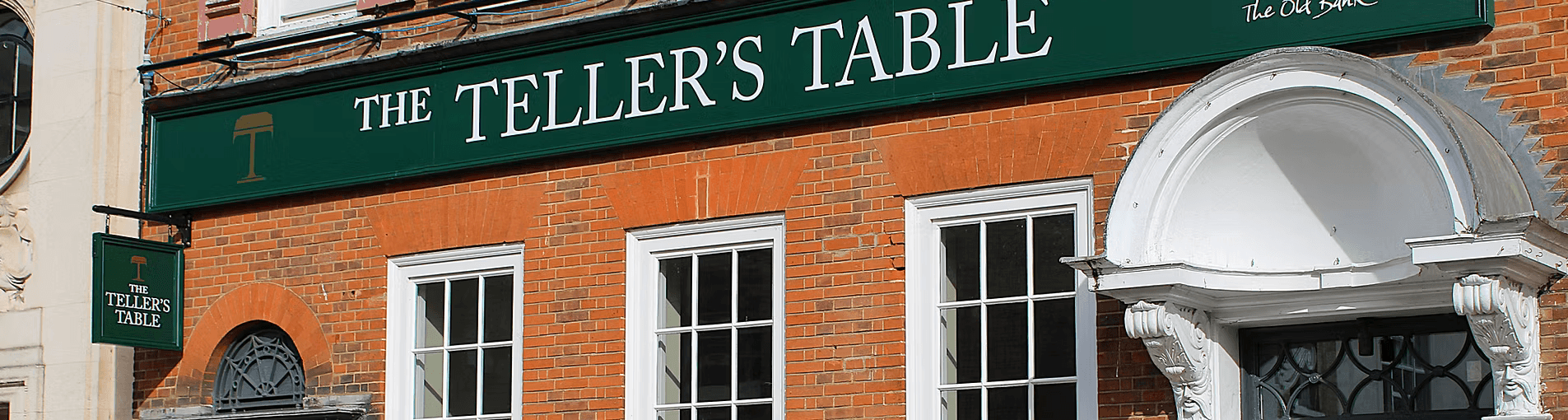 |
From Di Rita’s to The Teller’s Table — A Second Act for a Familiar Corner of St Ives |
When Di Rita’s closed at The Old Bank on The Pavement in St Ives, it left more than an empty dining room.
It left a gap.
For years, it had been one of those places people recommended without thinking twice. Birthdays. Date nights. Sunday meals. It had history.
Now that same spot has reopened as The Teller’s Table, soft-launching at the end of February and already talking Sunday lunches from 1st March.
Same building.
Very different direction. What’s Actually Different?
The Teller’s Table isn’t trying to replicate what was there before.
It’s leaning into modern British food with Mediterranean touches — brunch through dinner, flatbreads, small plates, and a format that works whether you’re popping in casually or booking properly.
It feels more flexible.
More now.
Not better or worse.
Just different. Why This Matters
Opening a new restaurant in a space that recently closed takes nerve.
Margins are tight.
Customers are selective.
So stepping into that building isn’t random optimism.
It’s belief that St Ives still turns up.
And if you’ve walked past on a Friday evening lately, you’ll know — people are still out. A Wider Picture
The Teller’s Table also sits close to Broadway Cellars a spot many locals already use for wine and relaxed catch-ups.
That proximity makes this stretch of The Pavement feel lively again.
Not reinvented.
Just re-energised. Quick Question
Are you more likely to revisit a familiar location under new ownership — or do you stick with places you already trust? |
 |
Fly-Tipping in Cambridgeshire — Why the Victims Often Foot the Bill |
It happens overnight.
A van pulls up.
Across Cambridgeshire, fly-tipping continues to hit rural roads, farm tracks and private land. But here’s the part many residents don’t realise: If waste is dumped on your land, you are usually responsible for clearing it. Not the council.
The Scale of the Problem
According to national figures (latest public data):
We asked a local landowner in Cambridgeshire what it feels like:
That sentiment mirrors what police-recorded incidents and council reports quietly show: this isn’t rare. It’s recurring.
The Law — And The Hidden Logic
Here’s where it gets tricky.
UK law says:
That means:
🟡 Paying someone cheap to remove rubbish?
🟡 Waste dumped on your field?
🟡 Someone leaves junk at your gate?
Councils can pursue the fly-tipper but only if they can be identified.
Fines & Penalties — Not Just Numbers
If you are identified as the waste producer and it’s illegal:
But here’s the nuance locals don’t always see:
Enforcement depends on traceability and evidence.
Without clear proof of who dumped the waste, the council’s options are limited.
How People Are Getting Caught Out
Common scenarios:
✔ Paying an unregistered operator to clear rubbish
In all cases, the owner of the waste remains legally responsible, even if someone else physically dumped it.
How You Can Protect Yourself (Practical Checklist)
Before anyone takes away your waste:
This isn’t just common sense it’s legal hygiene.
The Local Debate
The conversations we’re hearing across social forums and community posts run in two directions:
Side A: “Councils should absorb more clean-up costs.”
Supporters argue:
Side B: “Penalties must hit offenders harder.”
Supporters argue:
Both sides raise valid points.
Why This Matters Locally
Fly-tipping isn’t just a nuisance.
It’s:
And unless awareness spreads, the same patterns repeat.
Poll
Do you think:
🔹 Landowners should never be financially responsible for fly-tipped waste?
We’ll share results next week. |
 |
Confidence Signals — Who’s Still Investing Publicly? |
While some sectors remain cautious, others are stepping forward.
Across Cambridgeshire and neighbouring counties, professional events are regaining momentum including large-scale networking gatherings in prominent venues.
That matters.
Business confidence doesn’t just show up in spreadsheets.
It shows up in:
• Event bookings
When businesses gather publicly, it signals belief in visibility.
Uncertain environments shrink exposure.
Confident ones expand it.
And that shift is quietly noticeable. |
 |
Vitamin D — The Winter Gap Most People Don’t Notice |
From October to March in the UK, the sun simply isn’t strong enough for most of us to make enough Vitamin D naturally.
That’s not a trend.
It’s physics/biology.
Which means every winter, levels drop — especially for people who work indoors, cover up outside, or don’t get much daylight.
Why it matters:
• Supports your immune system
The NHS recommends adults and children over one year old consider a 10 microgram (400 IU) supplement daily during autumn and winter.
Nothing dramatic.
Just maintenance.
Quick Checkin
Have you added Vitamin D this winter — or assumed you’re getting enough? |
 |
Local Pulse — What Cambridge Is Talking About |
City Centre Trees & Regeneration
Plans involving the removal of a number of trees as part of city centre redevelopment are drawing mixed reaction.
Some residents argue renewal is overdue and the area needs modernisation.
Others question whether mature trees should be sacrificed in the process particularly in a city that already struggles with congestion and heat pockets.
Growth always sounds good in principle.
In practice, it comes with trade-offs.
Service Charges & Flat Frustration
A Cambridge Reddit thread this week gained traction after a buyer shared a £4,000+ annual service charge on a flat.
The debate quickly widened:
Are headline property prices masking long-term cost pressure?
We’re digging into this properly next week including what buyers should check before committing.
Infrastructure Pressure
With thousands of homes in development across the county, familiar questions are resurfacing:
School places. Housing numbers are visible.
Delivery capacity is the real test. |
 |
What’s On — Cambridgeshire (Beyond Cambridge) |
St Ives Corn Exchange — Jumble Sale & Live BandSat 28 Feb – St Ives Corn Exchange
|
Great Fen Signs of Spring – Guided Walk |
Wed 11 Mar – Woodwalton Fen, Ramsey Heights |
Cheltenham From Afar Raceday |
Wed 11 Mar – Huntingdon Racecourse |
St Ives Live Wrestling |
Sat 28 Mar – St Ives Corn Exchange |
March Poppy Appeal Concert |
21 Mar – March (Town centre) |
Adult Cycle Training |
30 Mar – March |
Why These Are Worth Your Time |
|
Final Word |
Cambridgeshire doesn’t stand still.
New housing models.
Some of it feels exciting.
Next week, we’re taking a closer look at something that sparked serious local debate online:
Service charges on Cambridge flats — and what buyers need to check before signing anything.
Because the headline price is rarely the real number.
Until then:
Ask sharper questions.
See you next week.
The Cambridgeshire Spotlight Team |
Cambridgeshire Spotlight is a free, independent newsletter bringing clarity, context and practical stories from across the county, property, money, local business, families, homes and everyday life.
We work with a small number of trusted local partners each month whose expertise genuinely helps our readers live, work and move more confidently from mortgage specialists and financial advisers to home services, health, family and community experts.
To talk partnerships or share a story:
Now Published every week — designed for people who live and think locally. |