
Graham Waite
Jan 13, 2026

Let’s be honest: January doesn’t need fixing — it just needs navigating |
January hits differently to any other month of the year.
The routines are back. The light still hasn’t improved. And most people are getting on with it whether they feel ready or not.
That’s where Cambridgeshire Spotlight fits.
Not shouting for attention.
Not trying to sell you something every five minutes.
Just pointing out the bits of everyday life that actually matter around here.
This issue isn’t about fresh starts or grand plans.
It’s about the practical stuff:
Quick note before we continue:
We meant to send this a little earlier, but a few personal things got in the way. So if some of this content seems a little past tense then please forgive us.
Rather than rush it or drop it altogether, we kept it as planned grounded, local, and focused on what’s relevant right now.
Thanks for bearing with us.
Right — let’s get into it. |
 |
When you don’t want plans, you want 20 minutes of normal |
This week isn’t for days out.
It’s not for big plans.
And it’s definitely not for anywhere involving queues, crowds, or forced cheer.
What people actually want right now is 20 minutes of normal.
Not an experience. Not a reset. Just somewhere familiar where nothing is expected of you.
Over the past few days, locals across Cambridgeshire have been mentioning the same kinds of places not the ones you’d put on a list, but the ones you use when your head’s full.
The no-pressure coffee stop
Not the flashy one.
Just somewhere warm where no one rushes you and sitting alone doesn’t feel odd.
One reader told us:
“I don’t even go for the coffee. I go because no one expects anything from me there.”
The short, forgiving walk Not a hike. Not a challenge. Just ten or twenty minutes somewhere flat, familiar, and easy to turn back from.
As one local put it:
“It’s not exercise. It’s just clearing my head without having to explain myself.”
The quiet corner routine Libraries. Garden centres. Even supermarkets at very specific times.
Not exciting but grounding.
One message summed it up perfectly:
“I do my food shop at 7pm just to feel normal again.”
That probably makes sense to more people than they’d admit.
This side of Cambridgeshire doesn’t get talked about much the everyday places people rely on, not for fun, but for balance.
And honestly, that’s part of why people stay. What’s your go-to place when you don’t want company, plans, or small talk? |
 |
The appointment doom loop (and why it’s wearing people down) |
If you’ve tried to book a GP or hospital appointment recently, this will feel familiar.
You start hopeful. You finish drained.
It usually goes like this:
Back to the start.
One reader, Helen in Ely, told us:
“By the time I got through, I couldn’t even remember what I was originally calling about.”
Another, Mark in St Neots, said:
“I wasn’t chasing an appointment anymore — I just wanted someone to tell me what the system expected me to do.”
That’s the real frustration.
It’s not just the waiting. It’s the repetition. The second-guessing. The sense that missing one step might mean starting again.
Most people aren’t angry. They’re worn out.
And this is starting to change how some locals think not about politics or abandoning the NHS, but about whether they need a backup option for peace of mind when something genuinely matters.
As one reader put it:
“I never thought I’d even look into other options but after this year, I understand why people do".
Quick question for you
What part of the appointment process broke your patience the queues, the transfers, or being sent back to the start? |
 |
That strange week where nothing quite runs normally |
There’s something very specific about Cambridgeshire between Christmas and New Year.
It’s the week where: • village cafés are either unexpectedly open or mysteriously shut • towns feel quiet right up until they suddenly aren’t • and everyone seems to be out in a coat they definitely didn’t plan to wear
School’s off — or not fully back. Work is half-on, enthusiasm still very much off. And half the county is running on leftover timings and guesswork.
A reader from Huntingdon told us:
“I went out for milk and ended up in a café for an hour because it felt rude not to.”
Another, near Ely, said:
“Everything’s open… but only if you guess the right hour.”
It’s disorganised. A bit confusing. And somehow one of the nicer weeks of the year.
Not because anything special is happening but because expectations are low and no one’s in a rush. |
 |
The unspoken truth: pets are carrying this week |
Why pets are doing the heavy lifting this week
Let’s be honest for a lot of people in Cambridgeshire this week, pets are doing the emotional heavy lifting.
They don’t care what day it is.
They don’t care that Christmas is over.
And they definitely don’t care about your New Year resolutions.
They just want:
Which, frankly, helps.
We’ve had messages from readers saying things like:
“If it wasn’t for the dog needing a walk, I’d barely leave the house this week.”
“The cat is the only thing keeping any routine going.”
Pets don’t rush you.
They don’t expect productivity.
They just give the day some shape especially in that odd stretch between Christmas and New Year. But in reality most of the winter months,
And that’s exactly why we’re doing something new.
🐾 Coming in January: Local Pet Insider (Cambridgeshire Edition)
In January, we’re launching Local Pet Insider a weekly local pet newsletter for people who actually live here.
No gimmicks. No generic advice.
Just:
If you’d like early access before it launches, you can join the pre-release list now.
👉 Pre-release sign-up link
(We’ll feature local pet voices too if you have some great stories)
Which pet currently runs your household — dog, cat, both, or something more unusual? |
 |
The winter costs that don’t feel big (at least until they add up) |
This isn’t about big bills.
It’s about the small winter costs that stack up the ones most people don’t really notice until they look back in February.
We’ve had readers mention the same things cropping up again and again:
Nothing dramatic. Just constant.
One reader from near St Ives said:
“I didn’t change anything but my bills still felt heavier this winter.”
Another in South Cambridgeshire told us:
“It’s not one big cost. It’s death by a thousand small ones.”
That’s usually where the frustration comes from.
Not panic. Not crisis.
Just that moment of wondering where the money’s gone.
January is a good time to:
Which winter cost always ends up higher than you expect heating, food, or electricity? |
 |
I don’t mind waiting. I mind not knowing.” |
The replies all sounded different — but they were about the same thing.
Not drama. Just an irritation you have to accept.
Here are a few messages that came in this week:
Sarah, near Wisbech:
“I don’t mind waiting — I mind not knowing what I’m waiting for.”
Tom, Huntingdon:
“The worst bit isn’t the queue. It’s having to explain the same thing again.”
Julie, Ely:
“Once I’m passed to the wrong department, I know I’ve lost the morning.”
Paul, South Cambridgeshire:
“You start wondering if it’s easier to just live with the problem.”
If one of those made you stop for a second, you’re not alone.
It’s not the delay that wears people down. It’s the uncertainty. And the sense that one wrong step sends you back to the start.
Which part of that feels most familiar the waiting, the repeating, or being passed around from pillar to post? |
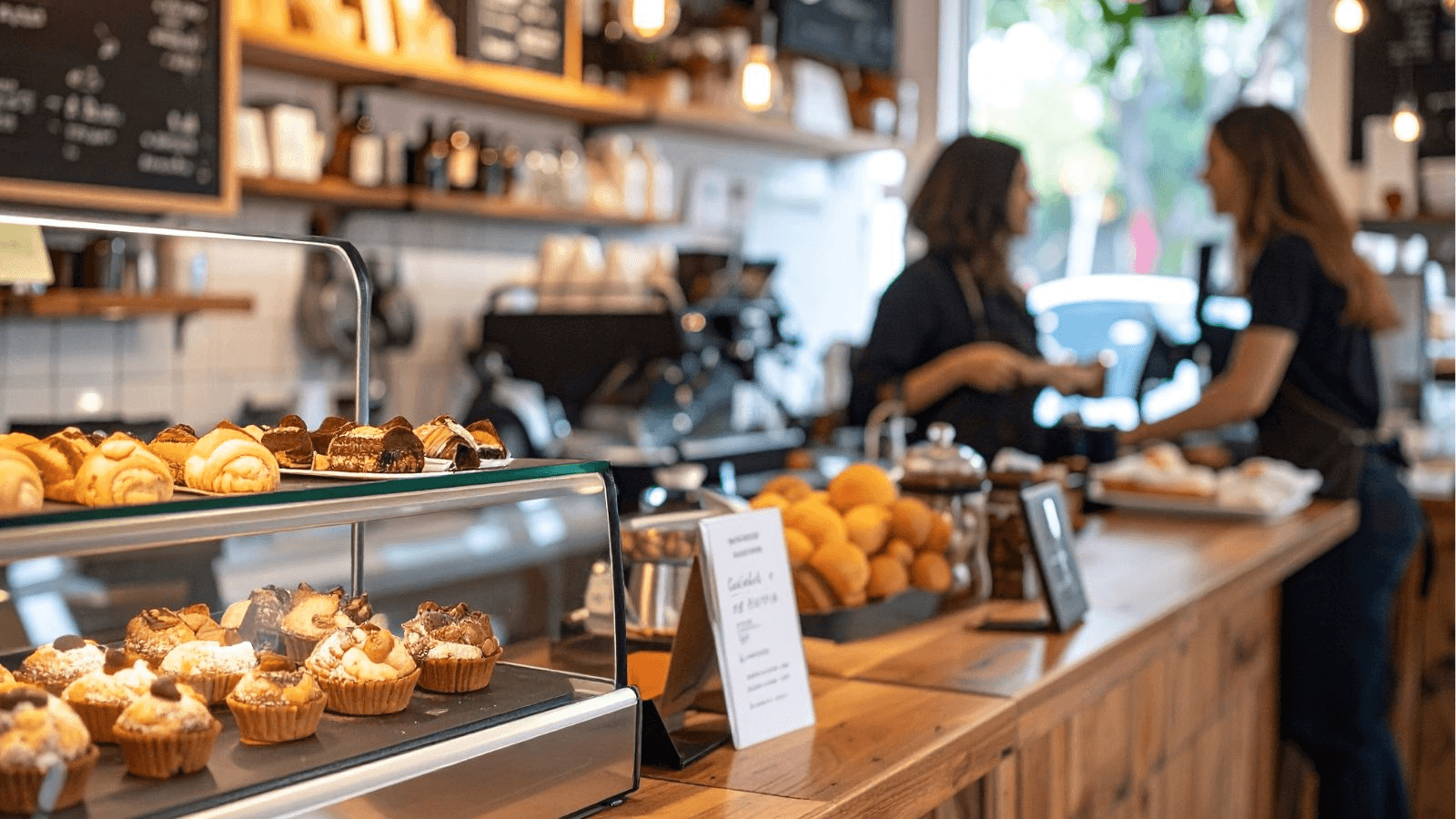 |
The small, familiar places that get people through the winter week. |
They’re not attractions. They’re not destinations.
They’re just the familiar places people fall back on when the week feels a bit off.
Readers mentioned the same kinds of comforts coming up again and again:
Nothing exciting. Just steady. And very recognisable if you live here.
These are the places people don’t recommend to visitors but rely on all the same.
Which kind of place do you default to this week a café, short walk, food stop, or staying in by the fire? |
 |
Some locals say Cambridgeshire is at its best when nothing big is happening what's your view? |
No festivals. No packed calendars. No “you must come to this”.
Just:
And for a lot of people, that’s enough.
Not every week needs filling. Not every gap needs a plan. Some stretches of the year are better left exactly as they are.
Especially here.
Are you someone who enjoys these quieter weeks — or do you get restless without plans? |
 |
Not all queues are equal (and everyone knows it) |
Not all queues are the same.
Some are fine. You expect them. You can see them moving.
Others are the kind that drain you in minutes.
The worst ones usually have one thing in common: you don’t know where you are, how long it’ll take, or what happens next.
That’s why:
But I managed to top that this week I was 49th for the GP and 3 hours later go to number 2 and they cut me off . Smoke was still coming out of my ears hours later.
It’s not the waiting that breaks people.
It’s the uncertainty. |
 |
The rule most people bend during the holiday period this holiday |
The week between Christmas and New Year runs on different rules.
Not in a dramatic way just enough to take the edge off.
Bedtimes drift. Emails pile up. Exercise plans get “revisited later”.
And for most people, that’s not failure it’s temporary common sense.
Between Christmas and New Year, routines loosen because there’s nowhere urgent to be and no real reason to rush.
A lot of people find that oddly helpful.
What did you let slip ?
Will you be repeating it next year? |
Cambridgeshire winter walks: real talk |
Winter walks in Cambridgeshire tend to fall into a few honest categories.
There’s the proper walk coat zipped up, vague purpose, mild sense of achievement.
There’s the ten-minute loop that counts because you left the house.
There’s the walk to the shop that accidentally becomes the day’s exercise.
And then there’s tomorrow.
All of them count more than people admit.
Which one are you actually doing this week proper walk, short loop, shop run, or “tomorrow”? |
The most overrated “should” this week |
This week is full of “shoulds”.
You should make the most of it.
You should see everyone.
You should start fresh later in January.
You should feel grateful even when you’re knackered.
Most of those aren’t rules.
They’re just noise.
Between Christmas and New Year, and even the first couple of weeks of January the least useful advice is telling people what they ought to be doing
Which “should” are you most happy to ignore this week?
⬜ Make the most of the break and slow start ⬜ See everyone ⬜ Start fresh but later January ⬜ Be grateful
That’s it! |
 |
January food spending: where the extra £20–£30 a week actually goes |
January food bills often feel higher, even when people swear they’re “not buying anything extra”.
The reason is rarely one big shop — it’s the quiet add-ons.
Across Cambridgeshire, households typically spend:
Over a week, that easily becomes £20–£30 extra, without anything feeling indulgent.
Claire in Ely noticed it when she checked her bank app:
“I wasn’t splurging. I was just defaulting to ‘easy’ a bit more often.”
It’s not a budgeting failure — it’s seasonal behaviour.
Why this matters:
This is exactly why local cafés, bakeries and takeaways often see steadier January trade than people expect familiarity it beats novelty right now. |
 |
The house rules that quietly disappear in January |
January is when household discipline looks strongest on paper but weakest in practice.
What usually slips first isn’t effort, but energy.
In colder months:
• average bedtimes drift later by 20–40 minutes
• screen time increases, particularly midweek
• shared meals become less rigid as schedules fragment
None of this is dramatic.
It’s fatigue, not failure.
Sally in St Ives summed it up neatly:
“We didn’t change the rules. We just stopped enforcing them every night.”
That pattern shows up every winter and usually corrects itself by late February.
What does this mean to you?
This is the season when home comfort, reliable tech, heating, and low-friction routines matter more than ideals. |
 |
The January admin backlog no one planned for |
Most people come into January expecting a financial hangover.
What they don’t expect is the admin pile-up.
Typical January delays include:
The problem isn’t avoidance — it’s timing.
Mark in Huntingdon described it like this:
“Everything needs doing at once, and none of it feels urgent enough to start after new year.”
That’s why January is often when people finally look for help not because things are worse, but because mental space is tighter.
This is peak season for services that remove friction: accountants, clinics, advisers, and trades that simply get things sorted.
Have you made a call to a expert to help you sort out that problem you put off until new year yet? |
 |
What really controls routines in January (hint: it’s not motivation) |
January routines are rarely driven by motivation.
They’re driven by constraints.
Across the county, people tell us their days are shaped by:
Dog owners in particular report walking earlier or later than usual just to catch light and avoid ice.
Lucy, who walks daily near Milton Country Park, said:
“The dog still needs out. Everything else adjusts around that.”
That’s not a lack of discipline — it’s practical prioritisation.
This is why January habits that work tend to be simple, repeatable, and anchored to real life problems and solutions not willpower.
|
Town life and village life feel very different in January |
January doesn’t land the same way everywhere.
In towns:
In villages:
Neither is better. They just demand different rhythms.
Someone in a South Cambridgeshire village summed it up neatly:
“If you miss the window, that’s it. Tomorrow’s another day.” |
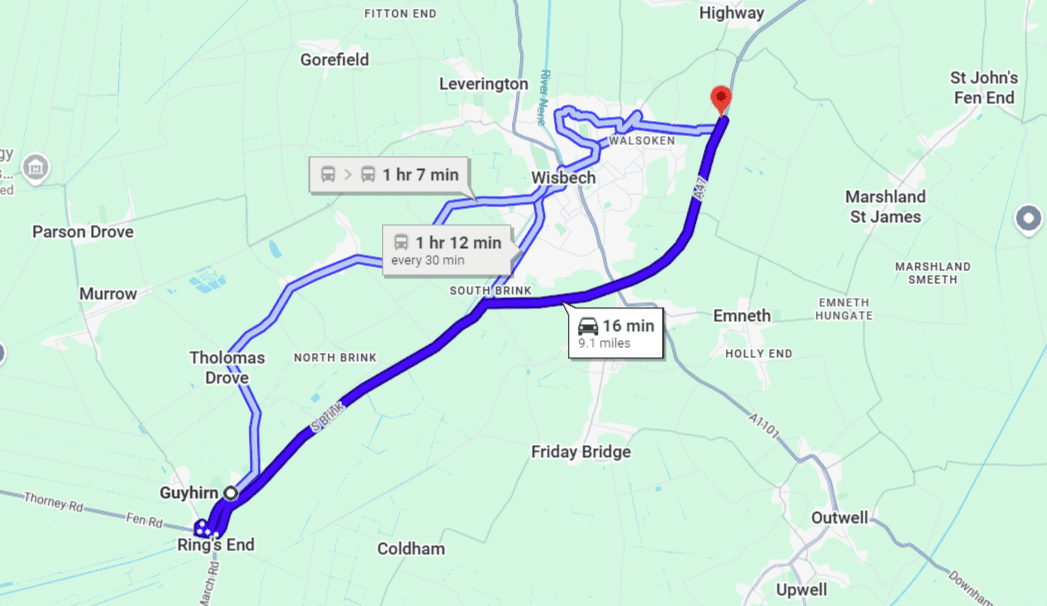 |
Why the Guyhirn–Walsoken stretch never moves the way it should |
On paper, the A47 between Guyhirn Roundabout and Walsoken should be one of the easier stretches to predict.
It isn’t.
Despite the 50 mph limit, weekday traffic here often settles closer to 35–40 mph, particularly:
The problem isn’t volume alone — it’s mixed driving behaviour.
You tend to get:
Add a single hesitation at Guyhirn Roundabout and the whole stretch compresses.
Steve, who commutes daily from Wisbech to March, said:
“You don’t mind slow traffic if it’s consistent. It’s the constant braking that drains you.”
That inconsistency is why many drivers now build an extra 10–15 minutes into journeys they technically shouldn’t need to.
Why this affects us?
This stretch quietly shapes commuting decisions, school run timing, and even where people choose to live far more than its map position suggests. |
The Ely level crossing: the delay most people still underestimate |
Ask anyone who regularly passes through Ely and they’ll tell you the same thing:
You don’t get caught out by the crossing once. You get caught out because you assume this time will be different.
It rarely is.
During peak periods, barriers can be down for:
That doesn’t sound dramatic — until you factor in:
Helen, who works in Littleport but drops children in Ely, explained:
“If you miss the window, the whole morning shifts. There’s no catching it up.”
That’s why experienced locals don’t think in minutes they think in buffer zones.
Most now plan journeys assuming:
Nothing in between.
To everyone making this journey It’s not just an inconvenience it influences daily routines, job flexibility, and how people perceive distance across the county. |
 |
GP catchment boundaries: when two streets don’t get the same access |
GP access issues are often discussed nationally but locally, the problem looks different.
In parts of Cambridgeshire, catchment boundaries split streets, not towns.
That means:
…can have completely different GP eligibility.
This affects people most in:
Anna, who moved into a new build near Cambourne last year, said:
“The surgery I can see from my road won’t take us. The alternative is further away and already stretched.”
The issue isn’t rules existing — it’s how invisible they are until you need care.
For many families, this only becomes obvious when:
Access friction quietly pushes people to explore alternatives from extended-hour clinics to private medical cover not out of preference, but practicality. |
 |
Why January feels tighter financially, even when nothing “big” has changed |
For many households, January doesn’t bring a shock it brings a squeeze.
The pressure rarely comes from one large bill. It comes from several smaller increases landing at the same time.
Across Cambridgeshire this winter, typical patterns look like:
• household energy use 15–25% higher than autumn
• weekly food spending creeping up £20–£30 without any obvious splurges
• insurance renewals and annual payments clustering early in the year
That combination is why January often feels harder than December.
Rachel in Ely noticed it when she finally sat down with her bank app:
“Nothing jumped out but everything was just a bit more expensive than it had been a few months ago.”
It’s not reckless spending. It’s winter costs stacking quietly.
This is the point in the year when people start reassessing subscriptions, policies, and financial decisions they’ve left untouched not because they’re panicking, but because visibility improves. |
 |
Mortgage rates: why waiting for them to fall isn’t always the safe option |
As of early January, buyers across Cambridgeshire are typically seeing:
• 2-year fixed mortgage rates: around 5.1%–5.4%
• 5-year fixed rates: closer to 4.6%–4.9%
The instinct to “wait until rates drop” is understandable.
But locally, that strategy isn’t always playing out as expected.
Here’s why.
On a £450,000 mortgage, a 0.5% rate drop would reduce payments by roughly £130–£150 a month.
Over the same period:
• asking prices in parts of Cambridge and South Cambridgeshire have risen £15,000–£25,000
• adding far more to total borrowing than any rate cut would remove
Tom, buying near Mill Road, put it plainly:
“I realised I wasn’t betting on rates I was betting on prices standing still. They didn’t.”
That’s why advisers locally are seeing more buyers prioritise timing certainty over chasing the perfect rate.
Not advice Just simple arithmetic many people miss. |
 |
What a 30-year fixed mortgage actually changes (and why the Netherlands thinks about housing differently) is this something which we should be considering? |
In the Netherlands, fixing your mortgage for 20 or 30 years isn’t seen as conservative, unusual, or financially naïve.
It’s just… normal.
Lenders price long-term certainty as a standard option, and many borrowers take it without a second thought.
To put real numbers on that, major Dutch banks are currently offering 30-year fixed mortgage rates around 4.5%, depending on the product and risk profile.
That means a borrower can take out a mortgage in their early thirties and know, with near certainty, what they’ll be paying well into their sixties.
That alone changes how people think about housing.
Now contrast that with the UK.
Here, most homeowners refix every two to five years.
Even though the mortgage term might be 25 or 30 years, the payment certainty rarely lasts more than a short window.
Every refix becomes a moment of vulnerability to interest rates, to market timing, to broader economic shocks.
Over the past 30 years, the average UK mortgage rate has sat at roughly 5.8% but that headline figure hides huge swings.
Rates climbed close to 9% in the late 1990s, fell dramatically in the 2010s, and then surged again after 2022.
For UK borrowers, stability has always been temporary.
That difference shapes behaviour.
Sarah, originally from Utrecht and now living in Cambridge, described the contrast like this:
“In the Netherlands you plan your life around a number you actually know.
Here, every few years you’re forced to rethink everything even if nothing else has changed.”
The Dutch approach doesn’t eliminate risk you usually pay slightly more upfront for long-term certainty.
But what you’re really buying is freedom from constant recalculation.
In the UK, homeowners are often encouraged to optimise chase the lowest rate, time the market, stay flexible.
In the Netherlands, the priority is different: lock in affordability, then get on with life.
As mortgage anxiety has crept into everyday conversations here especially around Cambridge, where prices amplify every percentage point it’s not surprising that people are starting to question whether short-term optimisation is always worth the stress.
Not because the Dutch system is “better”. But because it answers a different question.
Instead of asking “Can I beat the market?”, it asks:
“Can I live comfortably with this payment for most of my working life?”
That’s a subtle shift but for many households, it’s a powerful one. |
 |
The real risk in buying a home in Cambridge isn’t the rate — it’s volatility |
When people talk about the “risk” of buying in Cambridge, they usually mean interest rates.
That’s understandable. A quarter-point move on a large mortgage feels frightening.
But for many buyers locally, interest rates aren’t the biggest risk.
Volatility is.
Let’s put numbers on it.
A fairly typical Cambridge purchase right now looks like this:
At a rate around 5.3%, repayments are roughly £2,500 per month.
Now consider what actually causes problems for households.
A 0.5% rate change alters payments by about £130–£150 per month.
Uncomfortable, but manageable for many professional households.
What causes real stress is when multiple variables move at once:
That’s why advisers locally say the hardest conversations aren’t about affordability today they’re about resilience over time.
James, who bought near Addenbrooke’s in 2021, described it like this:
“We could afford the house. What worried us was not knowing what it would cost us in five years.”
This is where longer-term certainty changes the equation.
Not because it makes homes cheaper it usually doesn’t.
But because it removes one moving part from an already complex financial life.
In a city where:
predictability becomes its own form of security.
That’s why more buyers are now asking a different question.
Not:
“Can we stretch for this now?”
But:
“If everything else changed, could we still live with this payment?”
That’s a far more important calculation and one that Cambridge buyers are increasingly making deliberately, not emotionally. |
 |
The winter pet problem most owners don’t notice until it’s expensive |
Cold weather doesn’t usually make pets ill. It makes small issues easier to miss.
Local vets across South Cambridgeshire say winter appointments follow a pattern:
The issue is timing.
By the time spring arrives and activity levels increase, what started as mild discomfort has often progressed into:
Lucy, who owns a 9-year-old Labrador in Sawston, told us:
“He wasn’t limping he was just slower.
By the time we realised it mattered, it wasn’t a simple fix anymore.”
The non-obvious truth is this:
winter is when prevention matters most, not least.
That’s why vets see a spike in “I wish I’d checked this earlier” conversations around March and April.
Winter check-ins aren’t about treatment — they’re about catching problems while they’re still cheap, manageable, and reversible. |
 |
Condensation isn’t the problem — it’s the signal most homes misread |
Across Cambridgeshire, condensation complaints rise sharply every winter. But condensation itself isn’t the real issue.
It’s a symptom, not a fault.
In older terraces around Cambridge, Ely and Huntingdon, the most common causes are:
What surprises people is the knock-on effect.
Unchecked condensation can lead to:
Mark, who owns a Victorian terrace near Mill Road, said:
“We kept wiping the windows and thought we were on top of it. We weren’t.”
The fix is rarely extreme.
But misreading the signal delays the solution — and that’s where cost creeps in.
Understanding why condensation forms is the difference between prevention and repeated repairs. |
 |
Why January is the month local food businesses quietly survive or fail |
Food & hospitality partner lane
January is often described as “quiet” for hospitality.
That’s misleading.
For many local cafés and pubs, January is actually the most important month of the year — not for profit, but for survival.
Here’s why:
Businesses that rely on novelty struggle. Those that rely on habit don’t.
Owners we spoke to across Cambridge and St Neots and St Ives said January trade is shaped by:
One café owner in Ely put it bluntly:
“If people keep coming in January, they’ll come all year.”
This is why places that feel unremarkable on Instagram often outlast trendier competitors.
January reveals which businesses are woven into daily life — and those are the ones most worth backing.
|
 |
Why most January fitness plans fail by week three (and what actually works instead) |
Local gyms don’t judge January drop-off. They expect it.
Across Cambridgeshire, most gyms see: • a spike in attendance during the first 10–14 days of January
• followed by a sharp fall by week three
• with a smaller, more consistent group continuing through February
What’s interesting is who stays.
Gym managers in March, Huntingdon and Peterborough say the people who stick aren’t the ones with the most ambitious plans they’re the ones who lower the bar early.
Typical patterns that last:
• two short sessions instead of five long ones
• walking as a default, not a backup
• one class booked in advance, not a full timetable
Emma, who joined a Cambourne gym last January, said:
“Once I stopped pretending I’d go every other day, I actually kept going.”
The failure isn’t lack of motivation.
It’s setting targets that don’t survive contact with real life.
January fitness works when it’s built around routine, not will power and that’s where the right support makes the difference.
|
 |
Why January self-care isn’t about ‘improvement’ at all |
January is often framed as a month for change.
In reality, most people are doing the opposite they’re trying to stabilise after the crazy holiday period.
Local beauty and wellbeing professionals tell us January bookings are less about transformation and more about:
That means:
Sophie, who runs a small beauty studio near Newmarket Road, explained:
“People aren’t chasing a new look. They’re trying to feel normal again.”
That distinction matters.
January self-care isn’t indulgence.
It’s preventative maintenance the same logic people apply to cars and homes.
Why this matters especially in winter
When self-care reduces friction later, it stops being optional it becomes the sensible solution.
|
 |
Why dental appointments are easier to book in January (and why people still delay) |
Dental clinics often expect January to be one of their busiest months.
Oddly enough, January is one of the easiest months to book appointments.
And yet, bookings lag.
The reason is simple:
January is when small issues don’t feel urgent even though it’s the best time to address them.
James, who lives in Cherry Hinton, admitted:
“I know January makes sense. I just keep telling myself I’ll sort it next month.”
By the time people do act:
January is often the lowest-stress window for preventative care (check ups and hygienist visit's) but only for those who use it. |
The NHS access reality most people only learn after wasting weeks |
In Cambridgeshire, many people assume the order is simple: GP → referral → solution.
In practice, it rarely works like that.
What actually happens for a growing number of residents is:
Here’s the part people don’t realise early enough:
111 is designed for triage, not continuity. It’s good at deciding urgency, not managing ongoing issues.
That’s why many people find themselves:
Locally, this “loop” is now one of the main reasons people explore alternatives — not because they want to, but because the system struggles with anything that sits between urgent and routine. |
The Cambridgeshire housing shift people outside the city don’t hear about |
Cambridgeshire’s housing story isn’t just about Cambridge — and hasn’t been for a while.
Across St Neots, Huntingdon, Ely, March and surrounding villages, agents report the same change:
What’s changed most isn’t demand — it’s buyer behaviour.
Homes that perform best right now tend to be:
Larger or “stretch” properties outside the city are taking longer to sell unless they clearly justify their costs.
This isn’t a slowdown. It’s a recalibration — and it’s happening county-wide, not just inside the ring road. |
 |
Why rural delays cost more than people realise (and it’s not just time) |
In rural parts of Cambridgeshire, delays don’t just slow you down they force spending decisions.
Common examples we keep hearing:
Transport analysts consistently find that unreliable services cost more than slow ones, because people have to build financial backups.
That’s why:
In winter, predictability beats speed every time.
Plus if you want to go out for an evening the prospect of freezing your backside off waiting for a bus ,train suddenly seems very unappealing. |
Why next week’s issue will matter more than this one (and why that’s deliberate) |
This issue was about spotting the problems — the stuff that slows you down, costs more than it should, or just makes everyday life more annoying than it needs to be.
The next one is about staying one step ahead.
Not big life overhauls. Just the useful bits:
Cambridgeshire Spotlight isn’t here to shout headlines or churn out press releases.
It’s here to point out the things most of us only realise after they’ve wasted our time, money or tested our patience.
We’ll be back next week.
You’ll want to read it. |