
Is Your Broadband Slow — Or Is Your Wi-Fi The Real Problem? |
Buying the button is easy. The harder question is what happens at 2am when somebody presses it or cannot press it at all. |
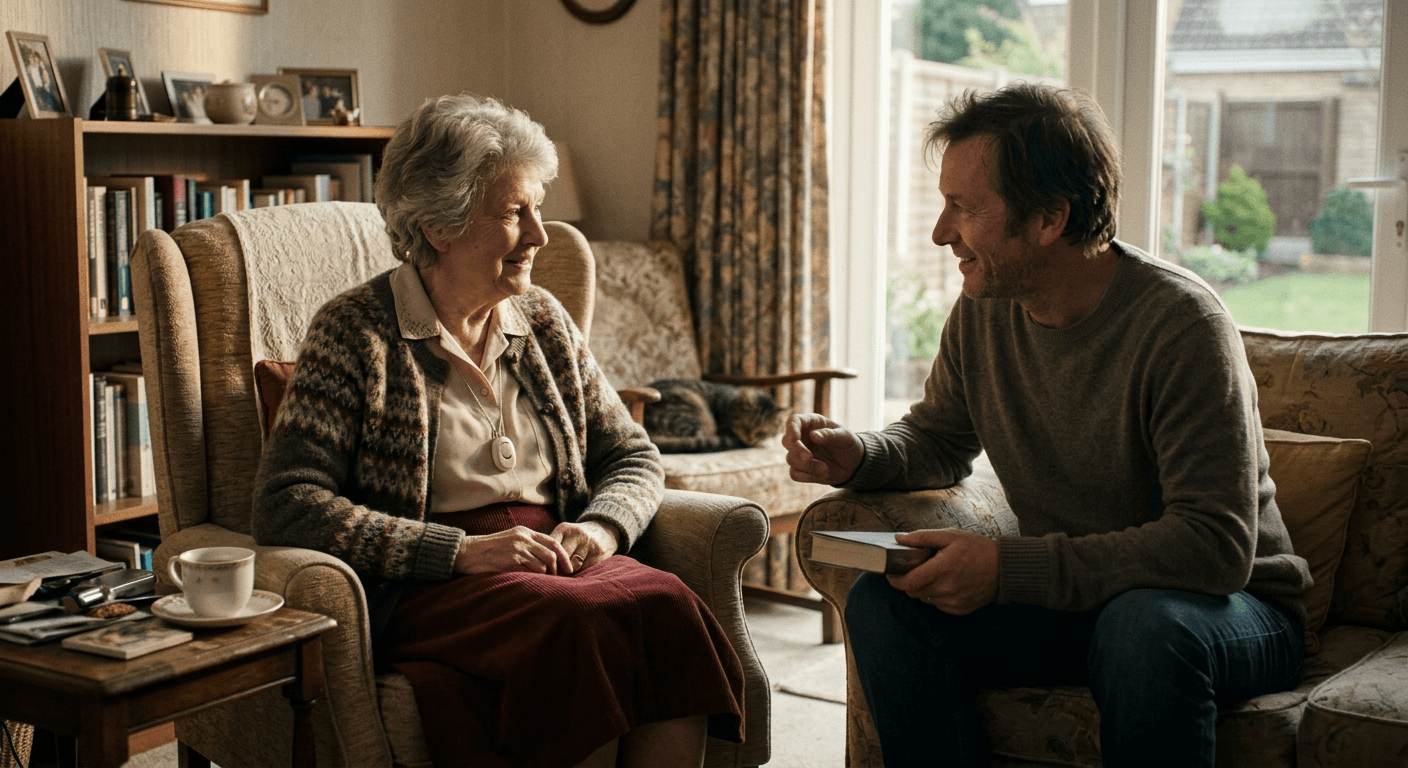
Nobody really wants to have the personal-alarm conversation.
It tends to arrive after something has happened.
Mum slipped getting out of the bath.
Dad felt dizzy in the kitchen.
A neighbour fell and nobody found them for hours . Suddenly the little pendant that once looked like something “for old people” starts looking rather more interesting.
And that is usually when families start searching online.
The problem is that the adverts make the decision look much simpler than it is.
A button.
A smiling older person.
The words peace of mind.
Job done.
Except the button is only the beginning.
The real question is:
What happens after somebody presses it?
First: would they actually use it?
This sounds obvious, but it is probably the most important question. An alarm only works if the person wears it.
Would your parent keep a pendant around their neck?
Would they wear a wrist alarm in bed?
Could they press the button with arthritic fingers?
Would they remember what it was for if they became confused?
And perhaps most importantly:
Do they actually want one?
Buying an alarm for somebody and leaving it in the box beside the telephone achieves remarkably little.
If possible, let them try the device before committing.
Put it on. Take it off. Press the button.
See whether it feels like useful backup or something they will quietly better immediately remove the moment you leave.
Who answers at 2am?
This is where the glossy brochure becomes less important.
Different alarms can contact very different people.
Some ring family.
Some contact nominated neighbours.
Some connect to a monitoring centre.
Some may have arrangements for escalating an emergency.
Those are not the same service.
Imagine Dad falls at 2.07am and presses the alarm.
Who answers?
Can they speak to him?
What if he cannot answer?
What if you are asleep, your sister is on holiday and the neighbour has their phone on silent?
That is the system you are actually buying.
One family member in Cambridge, another living miles away and a neighbour in a Fenland village can look like excellent support on a form.
At two in the morning it needs to work in real life.
What if they cannot press the button?
Some personal alarms advertise fall detection or inactivity monitoring.
That can sound like the perfect answer.
It is not magic.
Ask how the fall detection actually works.
Can it miss some falls? Can it trigger accidentally? What happens if the wearer does not answer afterwards? Does somebody call them? Does somebody contact the family? Does help get sent?
Automatic detection can be valuable, but it should be treated as another layer of protection rather than something that makes every emergency disappear.
The best alarm in the box is useless in a drawer.
Think about ordinary life. A pendant can get uncomfortable. A wrist device might be taken off at night. Someone may forget to charge it. Someone with memory problems may put it somewhere “safe” and never find it again.
So do not just ask:
“Does the alarm work?”
Ask:
“Will this person actually keep using it?”
That is a much harder question.
Check where it works
Some alarms are designed mainly for use around the home.
Others use a mobile connection and can work outside.
That difference matters enormously if the person still walks the dog, goes shopping, gardens or visits friends.
And Cambridgeshire is not one uniform patch of mobile coverage. A device that works perfectly in Cambridge should not automatically be assumed to behave exactly the same way in a village further north or out in the Fens.
Test it at the actual home.
If outdoor use matters, test that too.
And if it relies on broadband, a landline, mains electricity or a smartphone, ask what happens when one of those stops working.
Then ask what it really costsThe price on the website may not be the full price.
Check for:
A low starting price can become a much more expensive arrangement once everything is included.
But equally, the cheapest alarm is not much of a bargain if nobody dependable answers it.
Do not forget the person behind the alarm
This is the part that gets lost when the discussion becomes about technology.
A personal alarm is not really about gadgets.
It is about somebody wanting to stay independent.
And often it is about their family trying to worry slightly less without making Mum or Dad feel as though independence has been confiscated.
That balance matters.
The best arrangement is one the person understands, accepts and will actually use.
Not simply the one their children thought looked safest on a website.
Four questions before you buyBefore ordering anything, get clear answers to these:
Who answers when the alarm goes off?
What happens if the wearer cannot speak or press the button?
What does it cost once every ongoing charge is included?
Will the person genuinely wear and use it?
If the salesperson cannot answer those four questions clearly, keep looking.
Cambridgeshire County Council’s adult social-care information is also worth checking before buying privately, particularly if the person may qualify for equipment or other support.
The original package itself flagged that the local support route still needed stronger verification before publication.
A personal alarm can be genuinely reassuring.
But the reassurance does not come from the button.
It comes from knowing that when somebody needs help, there is a reliable person or service at the other end.
If your family already uses a personal alarm somewhere in Cambridgeshire, tell us what you wish you had known before choosing it.
Useful Resources
|
0 Comments
Join the conversation
Be the first to comment
Share your thoughts above.