Cambridgeshire Taste Trail: One Dish Worth Travelling For |
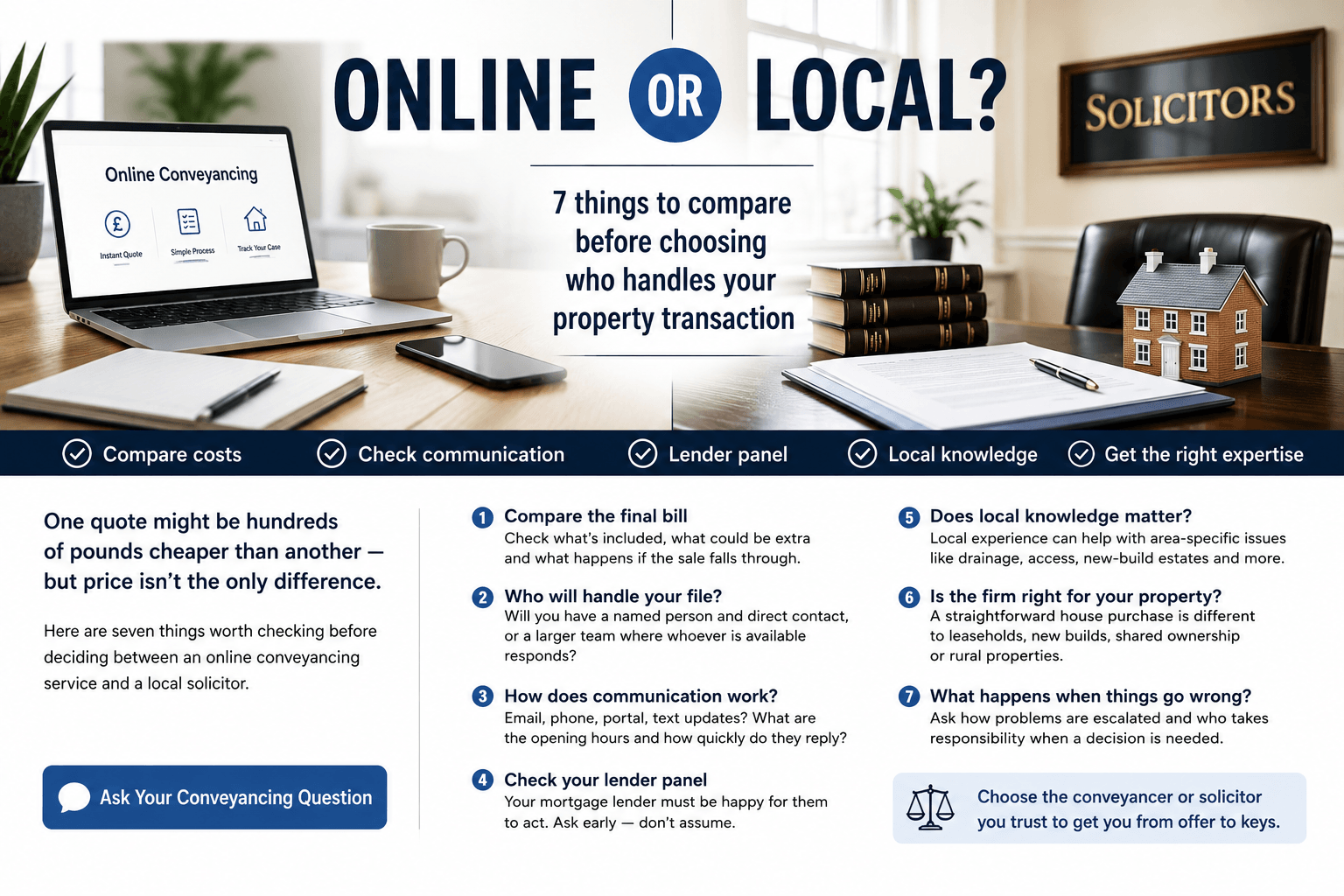
One quote might be hundreds of pounds cheaper than another but price isn't the only difference. Here are seven things worth checking before deciding who handles one of the biggest purchases you'll ever make. |
Buying a house produces an impressive collection of bills.
So when one conveyancing quote comes in at £900 and another appears to be £500, choosing the cheaper one can look obvious.
Sometimes it may be the right choice.
But conveyancing isn't a product sitting on a supermarket shelf.
You're paying somebody to handle the legal work behind what could be the largest financial transaction of your life.
So before deciding between an online conveyancing service and a solicitor down the road, compare these seven things.
1. Compare the final bill not the headline quote
That attractive online price may be perfectly genuine. But make sure you're comparing the same things.
Ask what the quote includes and what could be charged separately. Leasehold work, mortgages, gifted deposits, Help to Buy ISAs/Lifetime ISAs, additional searches, bank transfers and other circumstances can potentially affect costs depending on the provider and transaction.
Also ask:
What happens to my fees if the sale falls through?
The Law Society specifically recommends checking this because some solicitors may still charge fees if a transaction doesn't complete.
2. Find out who will actually handle your file
This is one of the most meaningful questions you can ask.
Not:
“Which company am I instructing?”
But:
“Who will actually be dealing with my purchase?”
Will you have a named person?
Can you contact them directly?
Or will your case be handled by a larger team where whoever is available responds?
Neither model is automatically wrong.
Some buyers love online portals and centralised teams.
Others want one person who knows their transaction without having to read through the file every time they call.
Know which you're buying.
3. Ask how communication actually works
Property transactions have an uncanny ability to become urgent at 4.47pm on a Friday.
So find out how updates work before you're desperate for one.
Email? Phone? Online portal? Text alerts?
Can you speak to the person handling your case?
What are the opening hours?
The Law Society itself suggests considering opening hours and whether a solicitor can provide online or text updates when comparing providers.
The important thing isn't whether the firm is online or on your high street.
It's whether their communication style suits you.
4. Check your mortgage lender will work with them
This can catch buyers out.
Most mortgage lenders maintain panels of solicitors or conveyancers they are prepared to instruct.
So if you're buying with a mortgage, ask early:
“Are you on my lender's panel?”
Don't assume.
If your chosen conveyancer can't also act for the lender, the transaction can become more complicated and potentially more expensive.
This is worth checking before instructing anyone, not three weeks into the purchase.
5. Decide whether local knowledge genuinely matters
This is where the argument gets interesting.
A conveyancer in Manchester can legally handle a purchase in Ely.
A solicitor in Cambridge doesn't automatically provide a better service simply because they're closer.
Much of modern conveyancing is carried out electronically anyway.
But local experience can become useful when an area has recurring property issues or unusual developments.
Across Cambridgeshire that might include leasehold properties, new-build estates, rural access issues, drainage and flood considerations, unusual rights of way or particular development patterns.
The question isn't:
“Are they local?”
It's:
“Do they understand the type of property I'm buying?”
That's considerably more useful.
6. A straightforward purchase and a complicated one aren't the same job
Buying a relatively conventional freehold house with a mortgage is one thing.
A leasehold flat with unusual provisions is another.
So is a new build.
Or shared ownership.
Or a property with an extension whose paperwork isn't quite where everybody expected it to be.
Or a rural property involving access or boundaries.
If anything about the property is unusual, ask the conveyancer about their experience with that particular type of transaction.
The cheapest service for a straightforward purchase isn't necessarily the best value when something complicated appears.
7. Ask what happens when something goes wrong
Everybody is efficient when nothing is happening.
The real test comes when:
The search reveals something unexpected.
The lender asks another question.
The chain threatens to collapse.
A document is missing.
The seller wants to exchange tomorrow.
Before instructing a firm, ask how problems are escalated and who takes responsibility when something needs a decision rather than another automated update.
That's often where the difference between providers becomes visible.
So — online or local?
There isn't a universal winner.
A good online conveyancing provider with clear pricing, excellent communication and the right expertise could be a better choice than a mediocre local firm.
And an experienced local solicitor who knows the area, answers the phone and understands your particular property could easily justify paying more.
The better question is:
Who do I trust to get this particular transaction from offer to keys?
Because saving £250 on conveyancing feels considerably less impressive if poor communication or inappropriate expertise creates problems in a purchase worth £300,000.
One good quality check
The Law Society operates the Conveyancing Quality Scheme (CQS) for residential conveyancing practices.
It describes CQS as a recognised quality standard covering areas including technical expertise, risk management and client service.
You can also use its official database to search for solicitors and filter for accredited specialists.
Find A Solicitor — The Law Society
|
0 Comments
Join the conversation
Be the first to comment
Share your thoughts above.