If Rates Fall In September, What Changes For Your Cambridgeshire Household? |
A show home can sell you the kitchen. Before you buy, check the bits outside the front door shops, schools, roads, green space and who actually looks after it all. |
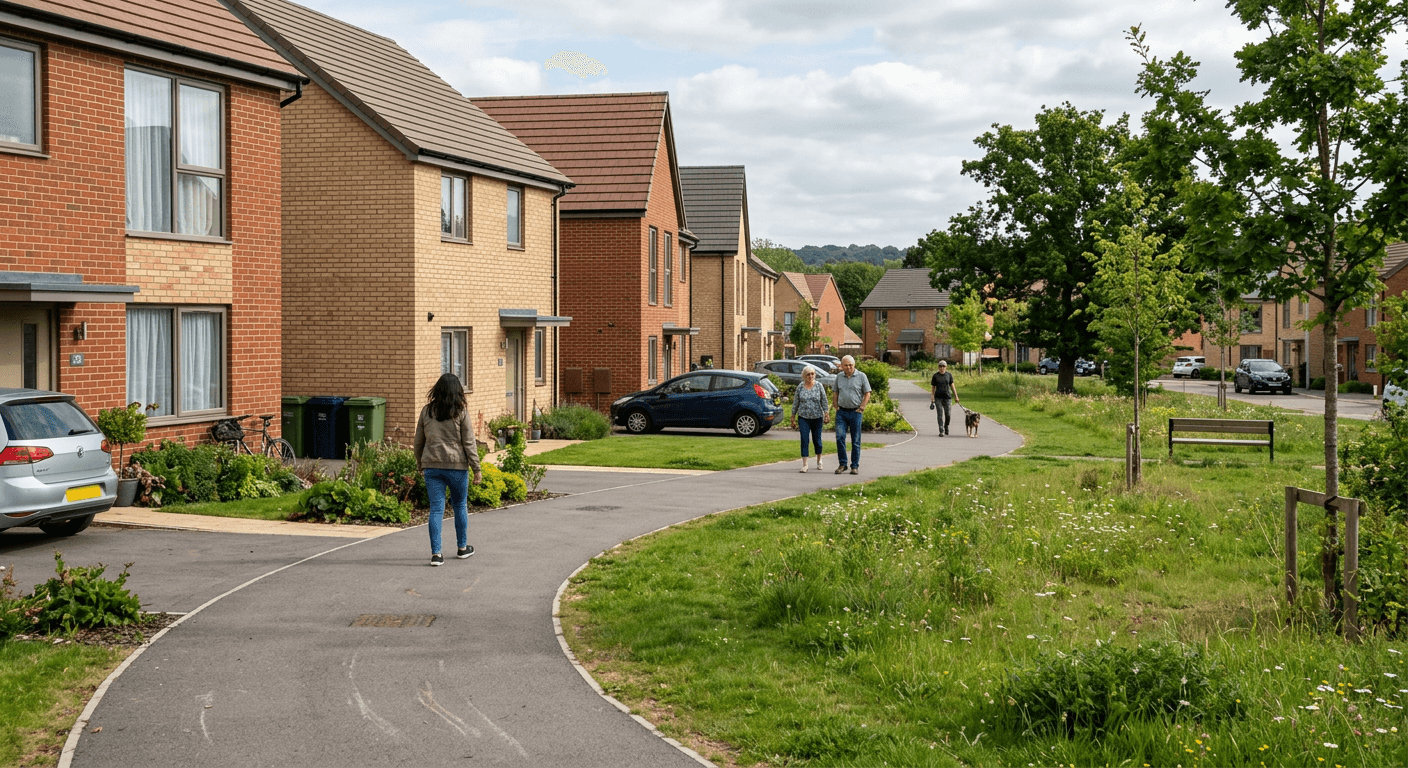
A show home is very good at making life look easy.
Everything is spotless. The storage works. The sofa fits perfectly. Nobody has left a wheelie bin in the wrong place.
Then you step outside.
That is where the more important questions start.
Can you walk to a shop? Is there somewhere children can actually play? Can you get to a bus stop without crossing a nightmare junction? Who cuts the grass, fixes the lights and sorts the drains? And what happens when the estate is full, the school run starts and it has been raining for three days?
That is the bit no scatter cushion can answer.
Look beyond the house
Some newer neighbourhoods around Cambridgeshire have been planned with much more than homes in mind.
At Clay Farm in Trumpington, for example, the Clay Farm Centre brings together a library, café, medical centre, community space and rooms for local activities.
That matters because a neighbourhood needs places where people actually go.
The same is true of larger developments such as Marleigh and Springstead Village, where plans include schools, community buildings, allotments, sports areas, open space and walking and cycling routes.
Those are not just nice additions on a brochure.
They affect whether you can leave the car at home, meet neighbours, get children somewhere safely and build a normal weekly routine.
But “planned” is not the same as “open”
This is where buyers can get caught.
A lovely artist’s impression may show a café, playground, school or community hub.
That does not mean you can use it next month.
Some facilities arrive years after the first homes.
Some depend on later phases.
Some are tied to planning conditions.
Some can sit as empty units for far longer than anyone expected.
So instead of asking:
“What is planned?”
ask:
“What is open now, what is definitely committed, and when is the rest due?”
That one question can completely change how a development feels.
Find out who owns whatThis sounds dull until something breaks.
On newer developments, roads, paths, lighting, drainage, green space and play areas may not all be looked after by the same organisation.
Responsibility can sit with the developer, a management company, a council or a mixture of all three.
That is how residents end up wondering who is supposed to fix the broken light outside their house or why the grass beside the play area has not been cut.
So ask the sales office:
Get the answers in writing.
The glossy brochure is not the place you want to discover these details later.
Walk the estate like you already live there
This is probably the best test of all.
Do not just drive from the sales office back to the main road.
Walk it. Walk to the bus stop. Walk to the nearest shop. Walk the route to the school or park. Try the junction you would actually have to cross.
And if possible, do it at the sort of time you would really use it.
A five-minute walk on a map can feel very different if it involves a muddy verge, poor lighting or three lanes of traffic.
Look for the boring little things
The things that make a place work are often not dramatic.
A bench. A safe crossing. Somewhere to lock a bike. A path that still works in winter. A patch of shade. A café people actually use. A room where local groups can meet. A useful bus route.
That is often the difference between a housing development and somewhere that starts to feel like a neighbourhood.
And not every new place needs to recreate an old village on day one.
A good connection to an existing high street or town centre can be just as valuable as building everything inside the estate.
The important thing is knowing what you are actually buying into.
Before your next viewing, ask these seven questions
What can I use today?
What is promised later — and when?
Which facilities are actually tied to planning commitments?
Who maintains the roads, lighting, drainage and green space?
What will I pay in estate or management charges?
Can I get to school, work, shops and public transport safely without always using the car?
Is there anywhere people naturally meet, rather than simply drive past each other?
A new house can be excellent while the neighbourhood around it is still half-finished.
So enjoy the show home.
Just do not let the kitchen worktop make the whole decision for you.
Would you rather buy the better house in the weaker location, or the smaller house in a neighbourhood that already works.
USEFUL LINKS / SOURCES
|
0 Comments
Join the conversation
Be the first to comment
Share your thoughts above.