That Online Bargain Looks Brilliant. Is The Website Real? |
Fake shops can look every bit as polished as real ones. Before you pay, check these five things especially if the price feels almost too good. |
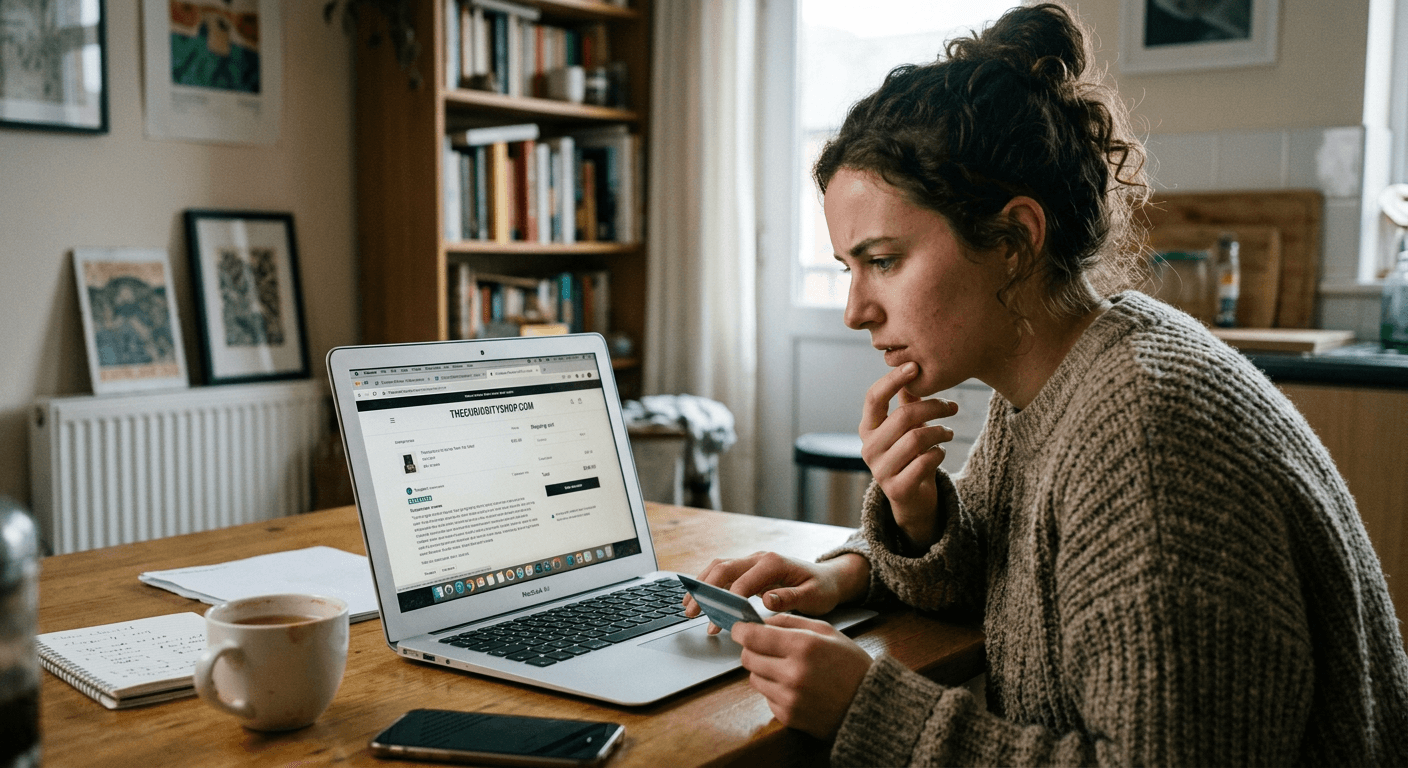
A fake shopping website does not always look fake.
It can have glossy product photos, neat menus, convincing branding and a price that makes you think you’ve beaten everyone else to the deal.
That is exactly why people get caught.
So before you type in your card details, give the site a one-minute test.
1. Look at the actual web address
Not the logo.
Not the page title.
The address at the top of your browser.
Scam sites often use something that looks almost right an extra word, a tiny spelling change or a different ending.
If you arrived through a surprising email, text or social post, don’t trust the link just because the page looks familiar.
Open a fresh browser tab and find the retailer yourself.
And one important myth to kill off: the padlock does not prove the shop is genuine.
It only means the connection is encrypted.
Crooks can have padlocks too.
2. Ask why the deal is so cheap
A genuine sale is one thing.
A £400 product suddenly appearing for £79 with a countdown saying ONLY 3 LEFT deserves a bit more suspicion.
Scam shops love urgency because urgency stops people checking.
If the deal disappears the moment you take two minutes to compare prices elsewhere, it probably was not much of a deal.
3. Check the pages nobody gets excited about
Returns. Contact details. Delivery information. Privacy.
Very boring.Very useful.
Can you work out who actually runs the shop?
Is there a real way to contact them?
Does the returns policy make sense?
If the entire business seems to exist only on one shiny product page, that is not reassuring.
4. Search the shop — not just the product
Do not rely on five glowing reviews sitting underneath the Buy Now button.
Search the retailer’s name separately.
Try the company name plus words such as reviews, scam, refund or complaints.
One angry customer proves very little.
But repeated stories about goods never arriving, refunds disappearing or the company suddenly changing name should make you stop.
5. Watch how they want your money
If an unfamiliar shop insists on a bank transfer, that is a major warning sign.
Cards and payment services with buyer protection can give you more options if something goes wrong.
And an ordinary online shop does not need your banking password, one-time security code or a photograph of your ID just to sell you a pair of trainers.
If the checkout starts asking questions that make you think why on earth do they need that?, stop.
The 30-second test before you pay
Ask yourself:
Is this definitely the right website?
If two or three things feel wrong, forget the bargain.
There will be another toaster.
Already paid?
Move quickly.
Contact your bank or card provider and tell them exactly what happened.
If you reused the same password on the fake site, change it anywhere else you use it.
Keep screenshots, emails, receipts and messages.
Suspected online-shopping fraud can be reported through Report Fraud, while Citizens Advice can help with consumer problems. Cambridgeshire County Council also points residents towards consumer and scam support.
If somebody is actively threatening you, impersonating police or trying to take more money, treat that as a different level of problem and contact the police through the appropriate route.
The best online bargain is not the one with the biggest red discount label.
It is the one where you know who is taking your money and what happens if the parcel never turns up.
Have you ever abandoned an online purchase because something just did not feel right? What gave it away? |
0 Comments
Join the conversation
Be the first to comment
Share your thoughts above.