Could Eight New Homes Save Meldreth’s British Queen Pub? |
In parts of Cambridge, the rules on what you can burn and what stove you can use are different. A quick check now could save smoke, hassle and a very avoidable fine. |
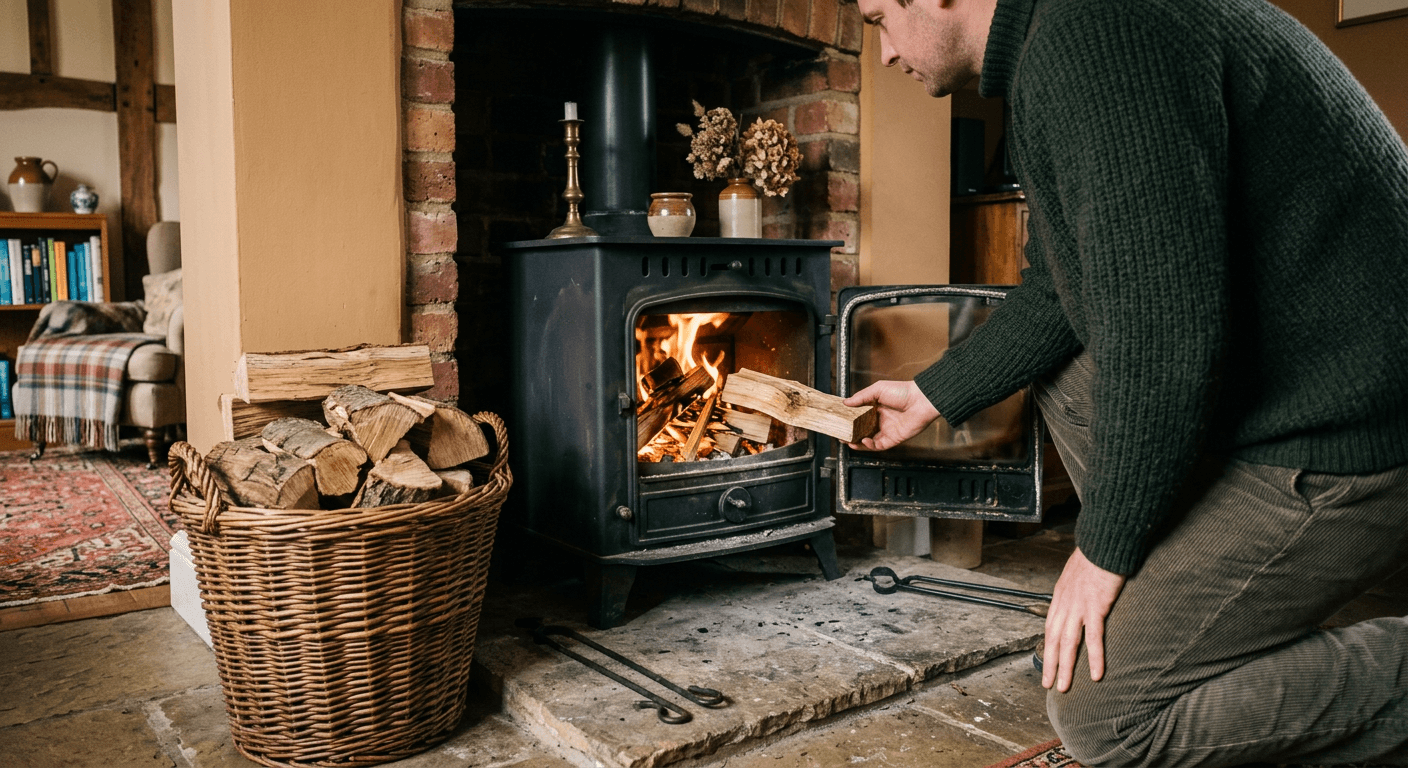
The first properly cold evening arrives.
Someone finds the matches.
Someone else says, “Go on then.”
And suddenly the wood burner becomes the most popular thing in the house.
Before you light it, there is one slightly less cosy question worth asking:
Are you in a smoke-control area?
Because that can change what you are allowed to burn and, in some cases, whether your stove can legally burn wood at all.
Cambridge is where the main local complication startsCambridge currently has three smoke-control areas covering parts of the west and centre of the city.
Those rules are still in force.
South Cambridgeshire and East Cambridgeshire currently report no smoke-control areas.
That does not mean anything goes.
You still cannot turn the stove into a convenient disposal system for old shelving, painted timber or whatever has been lurking behind the shed since 2019.
But the specific smoke-control rules are different depending on where you live.
If you are inside a smoke-control areaThis is the important bit.
If your home is inside one of Cambridge’s existing smoke-control areas, you can only burn wood or logs in a Defra-approved exempt appliance.
If your stove is not approved for that use, you need to use authorised smokeless fuel instead.
And this is where people can get caught.
A stove being described as a “wood burner” does not automatically mean it is approved for burning wood in a smoke-control area.
You need the actual model.
Check it against the official Defra list.
Do not rely on:
“the previous owner said it was fine”
“my neighbour has the same one”
or
“there’s definitely a sticker somewhere behind it”.
Those are not especially strong legal documents.
Check the address too
Cambridge City Council provides a smoke-control map and street lists.
Use them.
Because boundaries are not always as neat as you would expect. One end of a road can feel identical to the other while the legal designation says otherwise.
If your address sits near a boundary and you are not sure, ask the council rather than guessing.
That is a much easier conversation than one that begins with a complaint about smoke.
Damp logs are a miserable bargainEven outside a smoke-control area, the fuel matters.
Wood should be properly seasoned and dry.
Cambridge City Council advises using wood with the Ready to Burn logo and moisture content below 20%.
Wet logs smoke more, burn badly and generally give you the worst of both worlds:
less heat and more irritation.
There is something particularly annoying about paying good money for firewood and then watching it sulk in the stove.
And no, the old wardrobe does not count as firewood
Do not burn:
However satisfying it may feel to finally dispose of that broken bookcase.
Those materials can release harmful pollutants and may also damage the stove or flue.
A wood burner is a heating appliance.
It is not a tiny domestic skip with flames.
What about the proposed citywide change?
Cambridge is also working towards a citywide smoke-control order.
But the important word there is: proposed.
It is not yet the rule applying across the whole city.
The existing three smoke-control areas are still the ones that matter today.
So if you read an old headline saying Cambridge is “going citywide”, do not assume the new system has already started.
Check the council’s latest page before lighting up.
What if your chimney is smoking heavily?
That is not something to ignore.
Inside a smoke-control area, chimney smoke can lead to enforcement action.
Cambridge City Council can investigate complaints and issue financial penalties for continuing breaches.
And even outside those areas, persistent smoke can still become a nuisance issue.
So if the chimney is belching smoke across the neighbour’s washing line every evening, “but we’re not in a smoke-control area” is not the strongest defence.
The seven things to check before autumn really starts
Before using the stove, check:
The short version is straight forward:
Living outside a smoke-control area does not turn the stove into a household incinerator.
And living inside one does not necessarily mean you cannot burn wood.
It just means the stove and fuel have to meet the rules.
So by all means enjoy the first fire of autumn.
Just check the map before the matches.
If you have ever discovered that your road sits on an awkward smoke-control boundary or inherited a stove with absolutely no clue what model it is tell us where in Cambridgeshire it happened.
|
0 Comments
Join the conversation
Be the first to comment
Share your thoughts above.