
Main Article Headline |
Article Sub Headline |
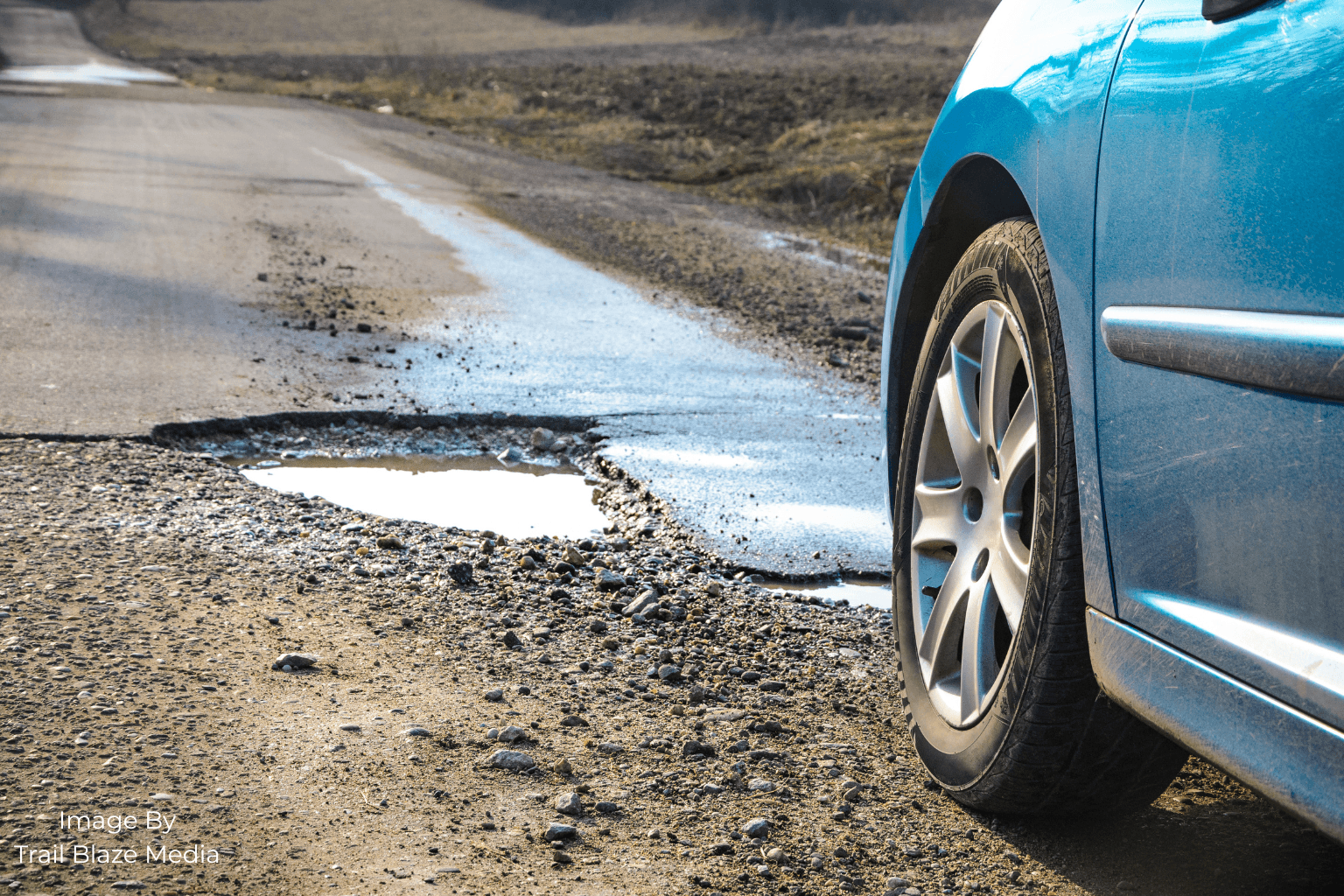
There are stretches of road around Huntingdonshire where driving can feel less like travelling and more like sitting an unexpected theory test.
National speed limit.
Then 30.
Then 40.
Then another national speed limit.
Add a junction, a bend warning, a weight restriction, a temporary sign and perhaps a traffic cone that's been there long enough to receive post.
By the time you've processed all that, the road itself delivers the important message.
THUD.
Pothole.
Cambridgeshire doesn't appear to have a shortage of signs telling us what the road is supposed to be doing.
The road underneath them can be another matter entirely.
The Road Nobody Uses Looks Magnificent
There's another little mystery familiar to anyone who drives around the county.
One week, an insignificant-looking close suddenly receives beautiful new tarmac.
Smooth. Dark. Almost luxurious.
You briefly consider moving there just to experience it every morning.
Then you turn onto a busy road used by thousands of cars and find cracks, patches, dips and holes that appear to have been handed down through several generations.
There may be perfectly good engineering reasons why one road gets resurfaced before another.
Cambridgeshire County Council says its programme uses condition data to prioritise work rather than simply choosing whichever road looks worst from a passing car.
But that's not how it feels through a steering wheel.
And that's the interesting bit.
What makes perfect sense on a highways spreadsheet can look completely baffling when you're driving over it.
Fenland Has A Particularly Good Excuse
Some of Cambridgeshire's strangest roads aren't simply suffering from neglected potholes.
The ground underneath them is moving.
According to Cambridgeshire County Council's soil-affected roads information, 93% of Fenland's road network is classified as soil-affected.
Across Cambridgeshire, more than 1,800 kilometres of road sit on peat or similarly weak soils.
Peat expands and contracts as conditions become wetter and drier. The road above moves with it.
That's how you end up with cracking, slopes, bumps and occasionally holes forming because gaps have developed underneath the road surface.
And fixing it isn't necessarily a matter of sending somebody out with a bucket of tarmac.
The council says repairing a peat-affected road can cost up to five times as much as repairing a road built on more stable ground.
Sometimes the road has to be reconstructed much deeper down.
Suddenly some of those Fenland roads make rather more sense. They aren't necessarily badly behaved roads.
They're roads built on badly behaved ground.
Although The Signs Are Definitely Doing Well
This is where the numbers become irresistible.
Cambridgeshire's £58.3 million highways programme for 2026/27 includes £36.5 million for carriageway maintenance and £2.5 million specifically for soil-affected roads.
It also includes £1.6 million for renewing road signs and lines.
The programme includes maintenance of more than 1,600 road signs and renewal of 800 kilometres of road markings.
You can see the full Cambridgeshire highways programme here. Nobody is suggesting road signs aren't necessary.
Quite the opposite.
When the road suddenly changes speed, bends sharply or develops the sort of surface that rearranges the contents of your glovebox, knowing what's coming is rather important.
But there is something wonderfully Cambridgeshire about encountering a beautifully maintained warning sign beside a road surface that appears to be demonstrating exactly why the warning was necessary.
And Now They're Experimenting On One
There is some genuinely interesting work happening behind the scenes.
The B1099 Upwell Road near March is being used for a trial of different ways of repairing roads built on weak soils.
Instead of repeatedly patching the symptoms, the idea is to find treatments that survive the movement underneath for longer.
That's important because conventional resurfacing can only achieve so much if the thing supporting the road keeps shifting.
If the experiment works, some of the county's most troublesome roads could eventually benefit.
Which would be good news.
Although part of us hopes they leave at least one ridiculous stretch untouched for future generations.
Otherwise, how will we explain Cambridgeshire driving to our grandchildren?
Show Us Cambridgeshire's Most Baffling Road
This one needs local knowledge.
Where is the Cambridgeshire road that makes absolutely no sense to you?
Maybe it's a pothole that has been there so long you instinctively steer around it.
Perhaps it's a tiny road with magnificent new tarmac while the busy road beside it resembles the surface of the moon.
Or perhaps you've found the ultimate collection of speed-limit and warning signs within a few hundred yards.
Tell us the road, village or town in the comments - and what makes it ridiculous.
Photos are even better.
We may turn the best nominations into a follow-up:
Cambridgeshire's Roads That Make Absolutely No Sense.
Add your comments below ... |
0 Comments
Join the conversation
Be the first to comment
Share your thoughts above.