
The Autumn Bill Most Likely To Catch Cambridgeshire Households Out |
Before the heating goes back on, check your meter, direct debit and controls. A few minutes now could stop a nasty winter surprise. |
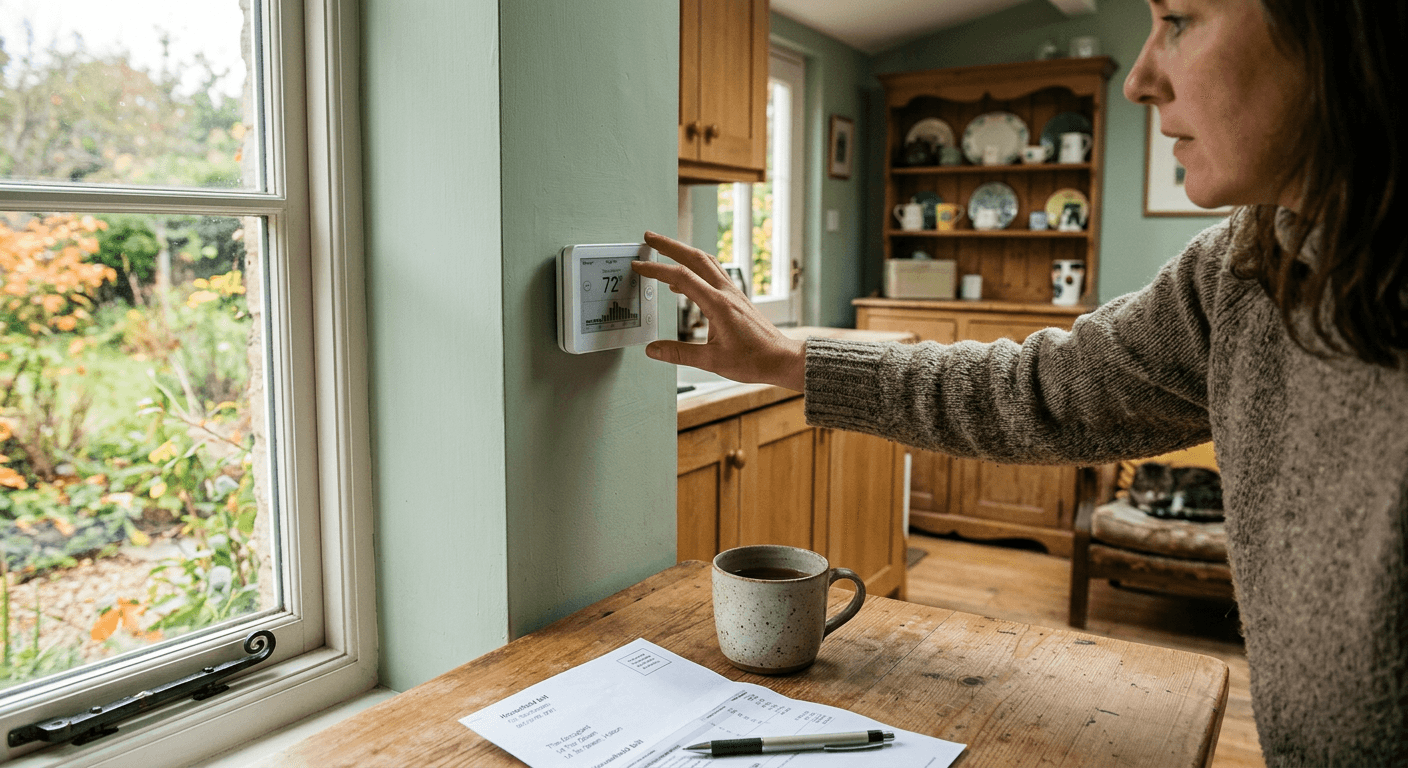
If one household cost is most likely to catch people out as autumn routines begin, it’s energy.
The heating goes back on, hot-water use often rises and the price cap is due to increase at exactly the point many households start using more gas and electricity.
From 1 October to 31 December 2026, Ofgem’s price cap is £1,723 a year for a typical household paying by direct debit. That is a 4% rise on the previous period.
Don’t read that as a prediction of your own bill.
The figure is an illustration based on typical use.
Your actual cost depends on how much energy you use, where you live, your tariff and how you pay.
Still, it gives the autumn check a clear target: energy before everything else.
The first job is a meter reading
Take a gas and electricity meter reading before you turn the heating back on, then send it to your supplier.
It gives you a clean starting point and helps prevent estimated readings from muddying the next bill.
If you already have a smart meter, check that readings are being sent properly and that your supplier’s account shows recent usage.
A smart meter sitting in the corner with an old figure on the screen isn’t much help if the supplier is still estimating your bills.
Then look at the direct debit
A direct debit is usually spread across 12 payments to smooth out the expensive winter months.
That can make it feel oddly generous in summer and painfully small in winter, even when the supplier is trying to collect enough across the year.
Check your account balance, your latest annual-use estimate and the amount being taken each month.
If the payment has changed sharply, or the numbers don’t seem to match your household, ask the supplier to explain the calculation and review it.
The Ofgem figure is not a bill you can simply compare with your own payment.
It is a national reference point.
The helpful comparison is your household’s recent usage and the tariff you’re actually on.
Check the tariff and standing charges
It’s easy to focus on the unit price and miss the standing charge: the daily amount paid even when very little energy is used.
Check both, along with the payment method listed on your account.
If you’re on a fixed tariff, find out when it ends and what happens next.
If you’re on a variable tariff, check the current rates shown by your supplier.
Don’t switch just because a headline price looks lower; make sure it applies to your region, usage and payment method.
Cambridgeshire households also have local routes for help.
Cambridgeshire County Council directs residents in Cambridge City, Fenland, Huntingdonshire and East Cambridgeshire to PECT’s home energy support service.
Households in South Cambridgeshire are directed to LEAP.
The council’s winter support information lists PECT on 0800 802 1773 and LEAP on 0800 060 7567, alongside information about heating grants, warm hubs and benefits support.
That is a better first stop than guessing from a social media post or waiting until a large bill lands.
Give the heating controls a test
Before the first properly cold morning, check the thermostat, programmer and thermostatic radiator valves.
Make sure the timer still has the right days and times, particularly after the clocks change or a power cut.
Check the boiler thermostat too.
Energy Saving Trust says heating and hot water account for more than half of household energy spending.
So a heating system that comes on too early, runs for empty rooms or has controls nobody understands can add to the bill.
This isn’t about sitting in a freezing house to prove a point. It’s about heating the rooms you use, at the times you need them, and knowing how to change the settings.
If the boiler needs a service or the controls are broken, deal with that before winter turns it into an emergency.
The bit to settle now is not the exact pound figure for every home.
Nobody can give that without your usage, postcode, tariff and payment method. the autumn question is simpler: do you know what your household is paying for, and does the monthly payment still make sense?
Ofgem’s next price-cap period, from January to March 2027, will need checking once it is published.
For now, take the reading, inspect the account and test the heating controls before the first cold snap does the checking for you.
Have you found a Cambridgeshire energy-saving service, grant or household check that genuinely helped?
Tell us which town or district it covers, so we can build a follow-up around local recommendations rather than guesswork.
USEFUL LINKS / SOURCES
|
0 Comments
Join the conversation
Be the first to comment
Share your thoughts above.