
Cambridge Is Planning 50,000 More Homes. Can The Infrastructure Keep Up? |
The question is whether roads, water, schools and public transport will arrive with them. |
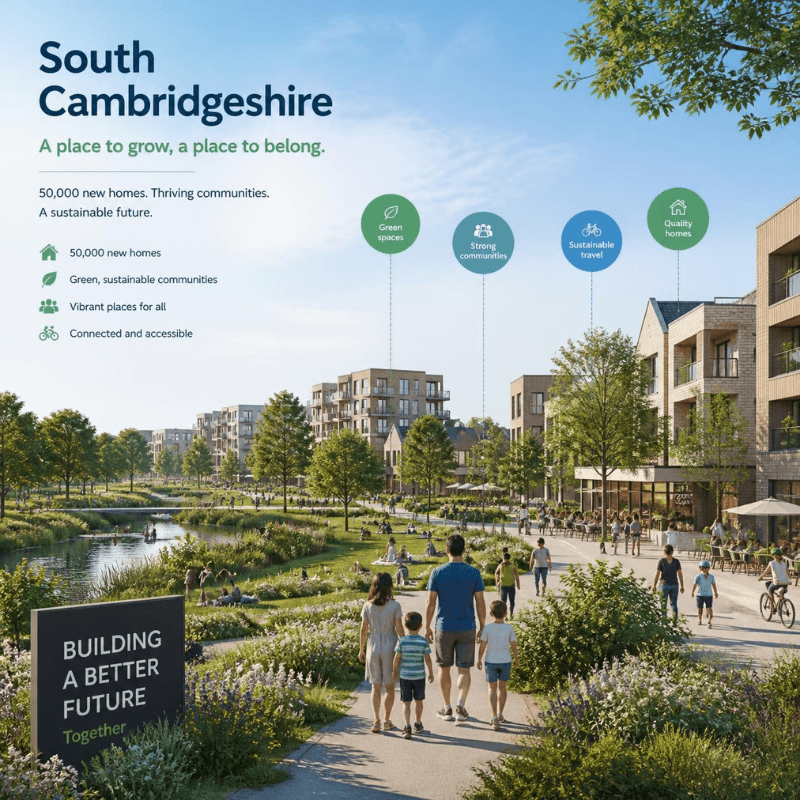
Cambridge is going to grow.
The real argument is whether the city and surrounding South Cambridgeshire can grow without leaving residents stuck with the bill and the inconvenience.
The proposed Greater Cambridge Local Plan is designed to accommodate more than 50,000 homes between 2024 and 2045, alongside thousands of new jobs.
Around 37,000 homes are already covered by existing permissions or allocations, according to the councils.
More than 10,000 homes received permission across Greater Cambridge between April 2024 and March 2025 alone.
So this isn’t a 'sometime in the future' idea on a planning officer’s desk.
It is already changing the scale of what Cambridge and its neighbouring communities will have to absorb.
The plan is supposed to put homes, workplaces, services, green space and transport into one map.
That is better than allowing development to happen in disconnected pieces.
But a map is not a bus route, a GP surgery or a working sewage system.
Cambridgeshire County Council has warned that growth must not accelerate before questions about water and sewage capacity, transport, highways maintenance, flooding, energy and environmental management are settled.
Government analysis of the proposed Greater Cambridge Development Corporation also recorded concerns that infrastructure delivery has been slow, piecemeal or out of step with population and employment growth.
That sounds like a very large gap between approving a new neighbourhood and making it function as one.
There is a second issue: control.
The proposed development corporation is intended to improve coordination and delivery of the plan.
Supporters can reasonably argue that Greater Cambridge needs a body with enough clout to join up housing, jobs and infrastructure.
Cambridge City Council has raised concerns about the detail of the government’s proposals, including local control and the scale of development.
That leaves the practical test.
Can a new system get the right roads, public transport, schools, healthcare, water, drainage and affordable homes in place at the pace new development demands?
And can residents see clearly who is responsible when it doesn’t happen?
The Local Plan is still a proposal, not a finished answer.
Its Regulation 19 consultation is due to run from 3 August to 25 September 2026, after which an independent Planning Inspector will consider whether it is legally compliant and sound. (in other words is the idea legal and realistic taking in to consideration many of the points we have highlighted)
The final results of that process, and the performance of any development corporation, are not known yet.
But the direction is clear:
Greater Cambridge is planning for major growth.
The debate should now move beyond “homes or no homes”.
It should be about the deal for existing residents and new arrivals.
If you live in Cambridge or South Cambridgeshire, what should be delivered before the next wave of homes: better buses, water capacity, schools, affordable housing or something else?
Tell us the specific location or service you think should be investigated first. |
0 Comments
Join the conversation
Be the first to comment
Share your thoughts above.